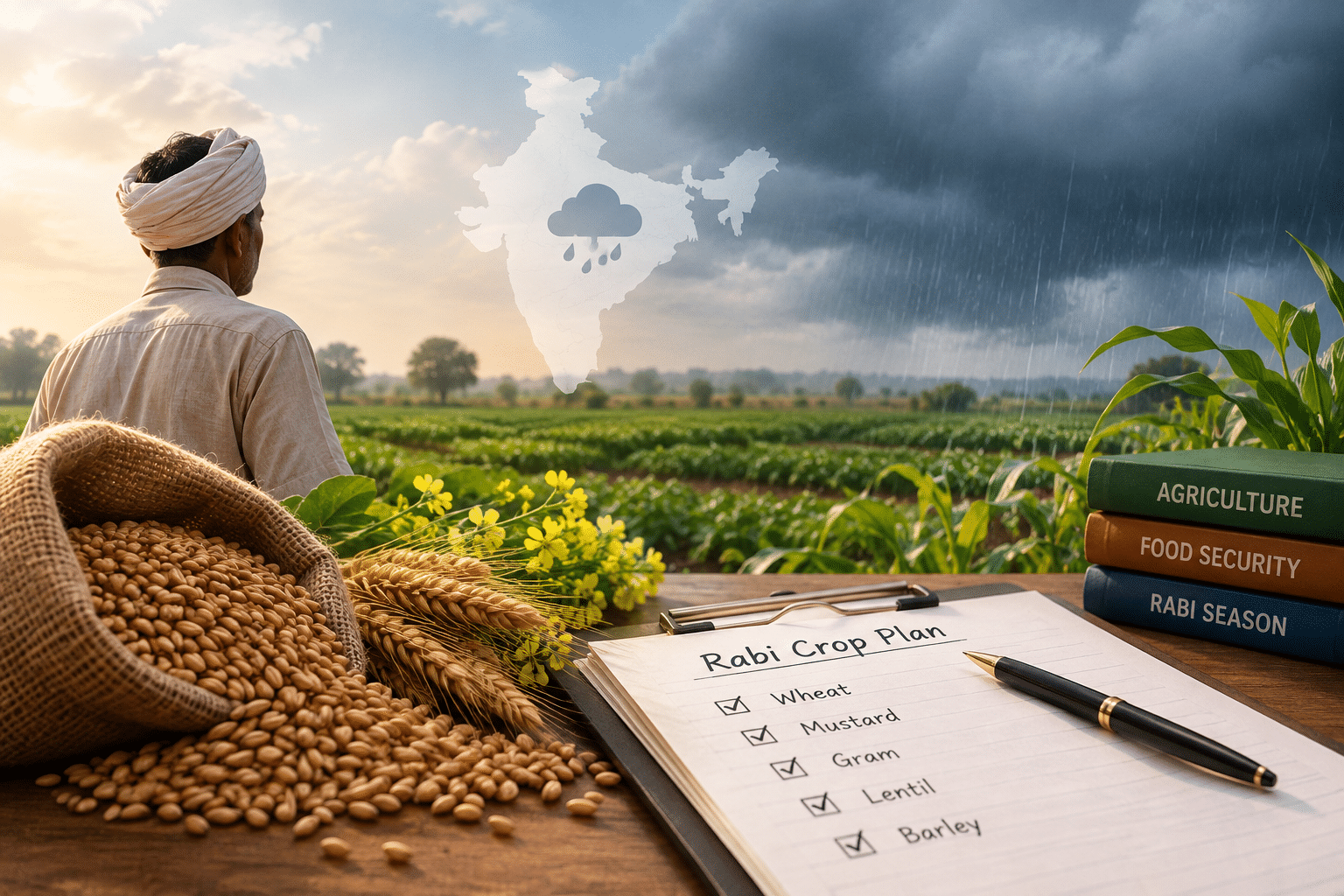
India’s Agriculture Ministry has stepped up preparations for the upcoming Rabi season, with states being asked to assess soil moisture, water availability, seed supplies and fertiliser requirements ahead of winter crop sowing.
The move comes amid concerns over deficient monsoon rainfall and changing weather conditions, which could affect soil moisture and reservoir levels in some agricultural regions. The government is working with states to prepare crop-specific strategies for areas that may face water-related challenges during the Rabi season.
Rabi crops, including wheat, pulses and oilseeds, are generally sown from October onwards. Adequate soil moisture and irrigation availability are important for their establishment and growth.
According to the Economic Times report, states are assessing district-level conditions, including residual soil moisture, groundwater availability and reservoir levels. Areas facing weaker water availability may be considered for alternative crops or shorter-duration varieties.
The Agriculture Ministry is also preparing for a National Rabi Conference, expected to take place later in September. The meeting is intended to bring states together to discuss crop planning and strategies for regions affected by rainfall shortages.
Weather conditions have become an important factor in agricultural planning. The Agriculture Ministry is therefore focusing on measures that can help farmers adapt to variations in rainfall and water availability.
The South Zone Regional Agricultural Conference held in Hyderabad on September 18 also highlighted this concern. According to All India Radio, contingency plans are being prepared for more than 100 southern districts affected by reduced rainfall associated with El Niño conditions. Proposed measures include dedicated seed banks and greater promotion of crops requiring less water.
The conference also highlighted the importance of soil health, balanced fertiliser use, natural farming and stronger access to agricultural technologies.
The South Zone conference brought together agricultural officials and experts from states including Karnataka, Telangana, Andhra Pradesh, Tamil Nadu and Kerala.
Karnataka presented improved pulse production practices, while other states showcased approaches related to weather variability, precision farming, high-value horticulture and agricultural marketplaces.
These discussions reflect a wider focus on making agriculture more resilient to changing weather conditions while improving productivity and resource efficiency.
The preparations for the Rabi season underline the growing importance of water management, crop planning and climate-resilient agriculture.
For farmers, timely access to suitable seeds, irrigation information and crop-specific guidance can become particularly important when rainfall patterns are uncertain. For the wider agricultural sector, better planning can also help strengthen food production and reduce disruptions caused by weather-related risks.
The government’s upcoming Rabi discussions are expected to focus on crop strategies for affected areas, availability of agricultural inputs and measures to support production during the winter cropping season.
As India moves towards the next agricultural season, the focus is increasingly shifting from simply responding to weather challenges to planning farms around water availability, soil conditions and crop suitability.