📍 Bengaluru ENG
Mogg's News
Farmland · Land & Investment · Bengaluru
Advertisement
Advertisement
Latest
Upcoming Event: Doctor's Wellness & Wealth Conclave — August 23rdGrow your wealth with secure farmlandSubscribe now to catch every update!Upcoming Event: Doctor's Wellness & Wealth Conclave — August 23rdGrow your wealth with secure farmlandSubscribe now to catch every update!
← Home
Home Investment
Investment

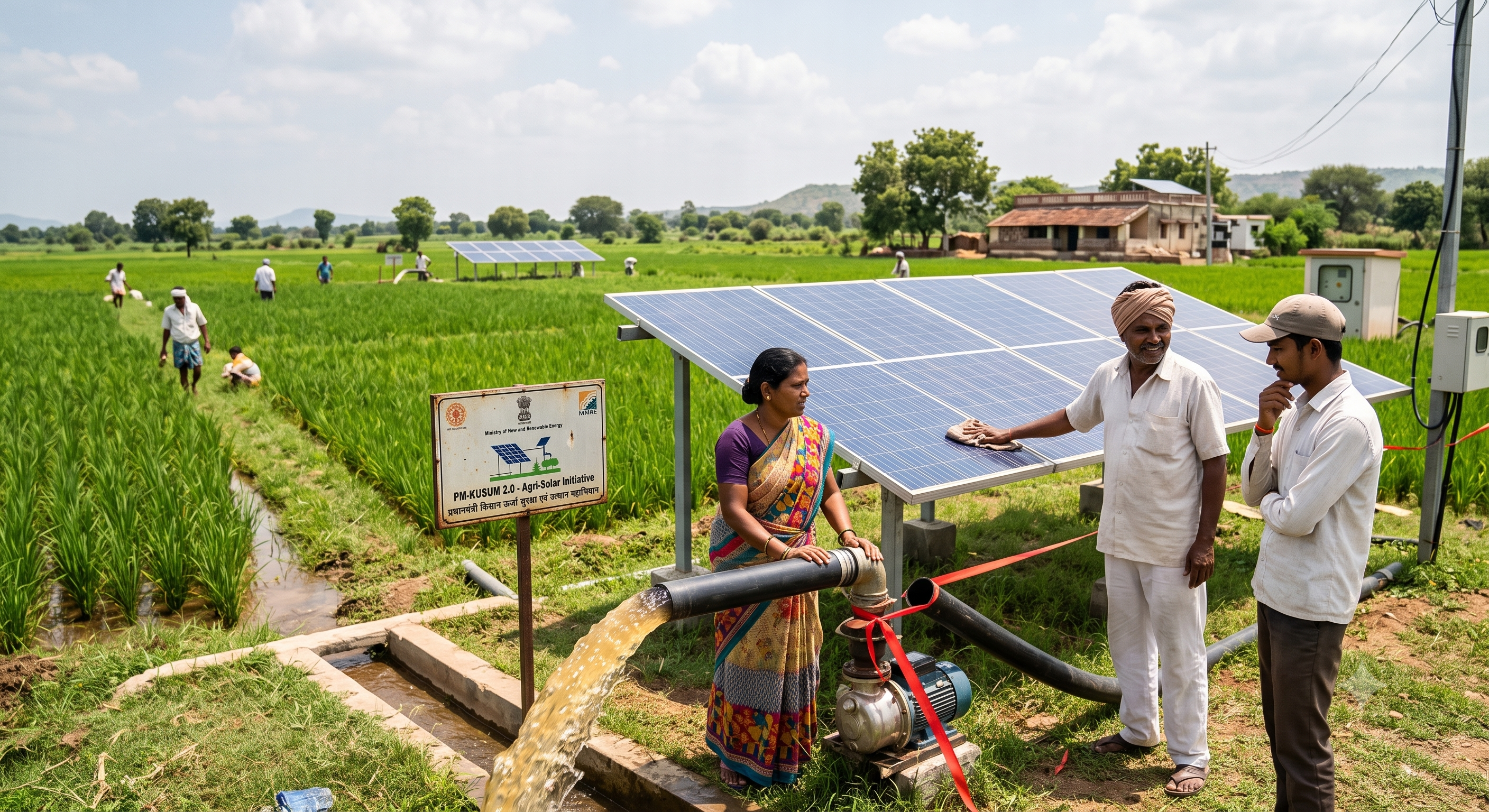
Government Prepares ‘PM-KUSUM 2.0’ to Expand Agri-Solar Power Across India

Building on the foundation of its flaghip agricultural solar program, the Ministry of New and Renewable Energy (MNRE) has unveiled plans for PM-KUSUM 2.0. The upgraded framework aims to accelerate the adoption of clean energy in the farming sector following the successful solarization of over 10 lakh agricultural pumps nationwide.

MN
By Mogg's News Desk
Published: July 27, 2026, 09:15 IST · Updated: July 27, 2026, 14:32 IST · 5 min

NEW DELHI — Building on the foundation of its flaghip agricultural solar program, the Ministry of New and Renewable Energy (MNRE) has unveiled plans for PM-KUSUM 2.0. The upgraded framework aims to accelerate the adoption of clean energy in the farming sector following the successful solarization of over 10 lakh agricultural pumps nationwide.

While the initial phase concentrated heavily on individual solar pump installations, PM-KUSUM 2.0 shifts significant focus toward feeder-level solarization. Under this approach, entire agricultural electricity feeders will be powered by dedicated solar plants, streamlining energy distribution to rural areas and ensuring reliable daytime power supply for irrigation.

Beyond modernizing irrigation infrastructure, the updated policy introduces new economic avenues for agricultural landholders:

Land Leasing Opportunities: Farmers and landowners can lease barren or uncultivated land to power distribution companies (DISCOMs) or independent power producers to set up solar plants.

Stable Revenue Stream: Leasing unused acreage offers cultivators a steady, long-term source of passive income to hedge against crop yield fluctuations and seasonal weather risks.

Grid-Connected Generation: Cultivators setting up grid-tied solar setups can sell excess electricity back to local DISCOMs, turning farms into local clean energy hubs.

By scaling up distributed solar generation across rural networks, PM-KUSUM 2.0 is designed to relieve the financial burden on state power utilities, reduce reliance on heavily subsidized grid electricity, and cut carbon emissions from diesel-powered pumps.

Detailed operational guidelines and state-wise implementation targets for PM-KUSUM 2.0 are expected to be rolled out by the ministry in the coming months.


#Investment #NEWDELHI #ManagedFarmland #MoggsEstates
Advertisement
Advertisement

Related Stories

Farms

Soil Health Engineering as an Asset Value Multiplier: Capitalizing on Regenerative AgTech and Managed Farmland Yields in India

India’s institutional agricultural sector is undergoing a profound structural shift where soil health is no longer viewed merely as an ecological metric, but as a critical lever for underlying real estate asset valuation and long-term risk management.

August 5, 2026 · 10 min
Agriculture

AI is Reshaping Indian Agriculture: What It Means for the Future of Managed Farmland

Artificial Intelligence (AI) is no longer just a buzzword in India's technology sector—it is steadily becoming a practical tool in agriculture. With the Government of India encouraging digital farming through initiatives such as the Digital Agriculture Mission, AI-powered technologies are beginning to transform how farms are managed, monitored, and maintained. For investors, landowners, and managed farmland developers, this shift represents more than technological progress. It signals a future where data-driven decisions, efficient resource management, and sustainable farming practices can improve both agricultural productivity and the long-term value of farmland.

August 5, 2026 · 10 minutes
Agriculture

Fertilizer Demand Holds Steady Across Key Agricultural Belts Despite Weather Volatility

Despite initial monsoon delays and uneven rainfall distribution across several farming regions, fertilizer consumption in India has shown remarkable resilience. According to the latest data from the Ministry of Chemicals and Fertilizers, combined consumption of major inputs—including Urea and Di-Ammonium Phosphate (DAP)—recorded only a marginal dip through mid-2026 compared to the previous year.

July 28, 2026 · 5 min