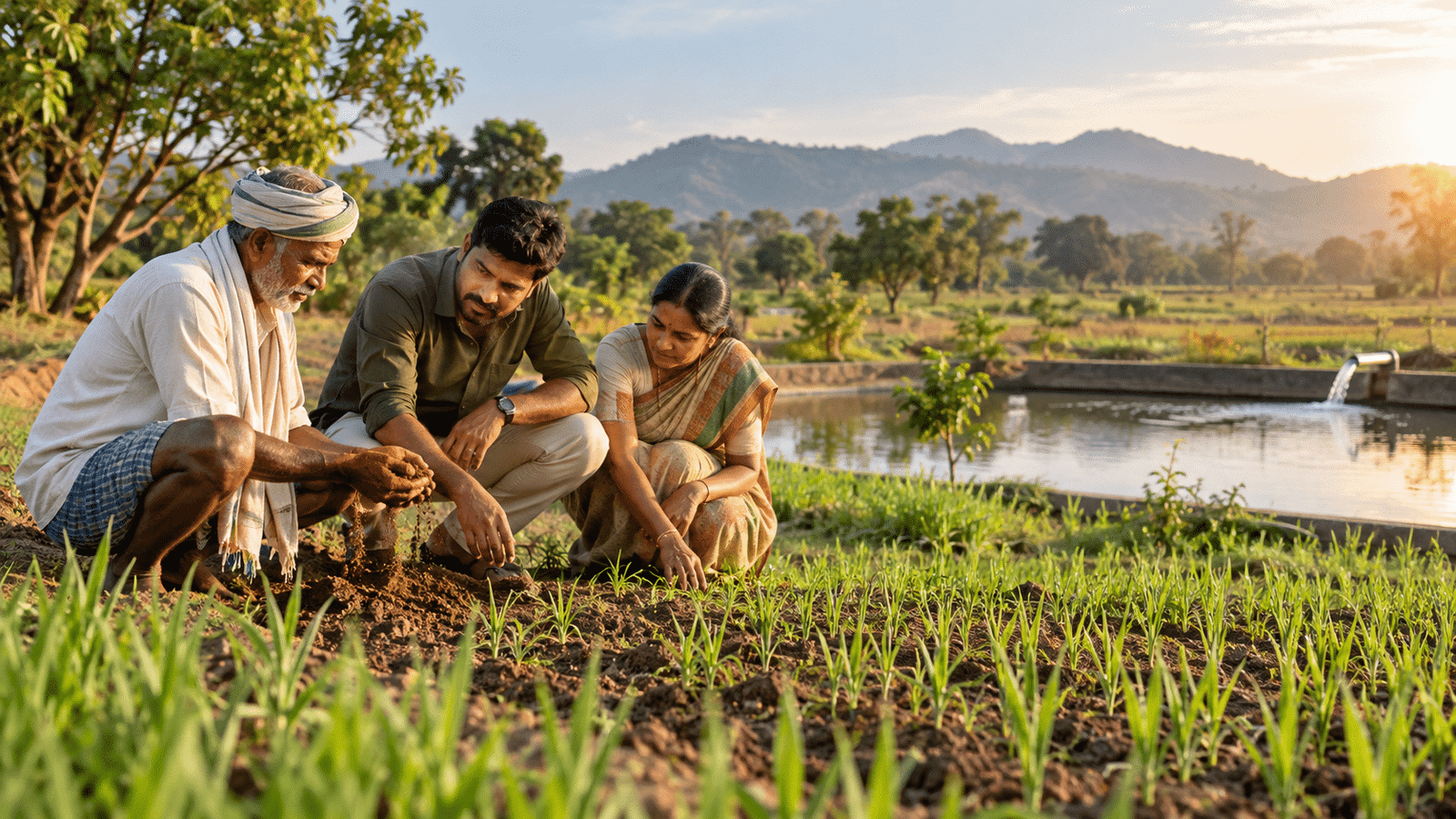
India is preparing for the upcoming rabi farming season with a renewed focus on water conservation, soil moisture and climate-resilient agriculture.
On September 28, 2026, Union Agriculture Minister Shivraj Singh Chouhan urged state governments to plan winter crop cultivation scientifically, considering the effects of the recently concluded kharif season.
The minister highlighted the need to assess water availability, soil moisture, irrigation requirements and fertiliser supply before making decisions about the next cropping season.
The announcement comes after an uneven monsoon affected agricultural conditions in several parts of India. Some regions experienced drought and water scarcity, increasing the importance of careful planning for the months ahead.
The rabi season is India’s winter cropping season. Farmers generally begin sowing rabi crops after the southwest monsoon, with harvesting taking place during the following spring and summer months.
Major rabi crops include:
Wheat
Chickpea
Mustard
Barley
Lentils
These crops have different water requirements and growing conditions. Their suitability depends on factors such as soil type, temperature, rainfall and irrigation facilities.
For this reason, farmers need to consider local agricultural conditions before deciding which crops to cultivate.
The southwest monsoon plays an important role in replenishing soil moisture, reservoirs and groundwater.
When rainfall is insufficient or unevenly distributed, farmers may face challenges during the following cropping season.
The government has therefore emphasised the importance of planning rabi cultivation according to available water resources.
This approach can help farmers avoid selecting crops that require more water than their land can reasonably support.
Soil moisture supports seed germination and early crop development.
When soil moisture is low, farmers may need to provide additional irrigation to establish crops successfully.
Monitoring soil conditions can help determine when irrigation is necessary.
Efficient irrigation helps farmers manage limited water resources.
Depending on the crop and local conditions, methods such as drip irrigation, sprinkler systems and carefully scheduled watering can improve water-use efficiency.
The choice of irrigation method should consider soil type, crop requirements and the availability of water.
Crop selection is another important part of agricultural planning.
Farmers need to consider the amount of water available, local climate conditions and the expected duration of the growing season.
Choosing crops suited to these conditions can help reduce unnecessary pressure on irrigation resources.
Karnataka is among the states facing agricultural challenges following the recent rainfall deficit.
On September 28, the Union Agriculture Minister announced that a central team would visit Karnataka on October 3 to assess the drought situation.
The assessment is intended to examine conditions in the state following drought declarations by state authorities.
The development highlights the importance of monitoring agricultural conditions at the regional level rather than relying only on national rainfall figures.
For farmers and agricultural land managers in Karnataka, soil moisture, groundwater availability and irrigation planning will remain important considerations as the next cropping season approaches.
For managed farmland communities, the latest agricultural developments highlight the importance of responsible land and water management.
A well-maintained farm requires more than healthy trees and green surroundings. It also needs careful attention to soil conditions, seasonal weather and water resources.
Here are three practical considerations for managed farmland operators.
Monitor soil moisture: Regular observation of soil conditions can help guide irrigation and maintenance decisions.
Plan water use: Water requirements should be assessed according to the crops and trees being maintained.
Choose suitable plants: Fruit trees, crops and other vegetation should be selected according to local soil, climate and water availability.
These practices can support better farm management, although their results depend on local conditions and proper implementation.
India’s focus on scientific rabi planning reflects the importance of adapting agricultural practices to changing weather and water conditions.
As the next farming season approaches, farmers will need to consider soil moisture, irrigation facilities and suitable crop choices before beginning cultivation.
For managed farmland operators, the same principle applies: understanding the land and managing natural resources carefully are essential parts of responsible agriculture.
The key takeaway: Sustainable farming begins with making informed decisions about soil, water and crops. Careful planning today can help farms prepare for the agricultural challenges of tomorrow.