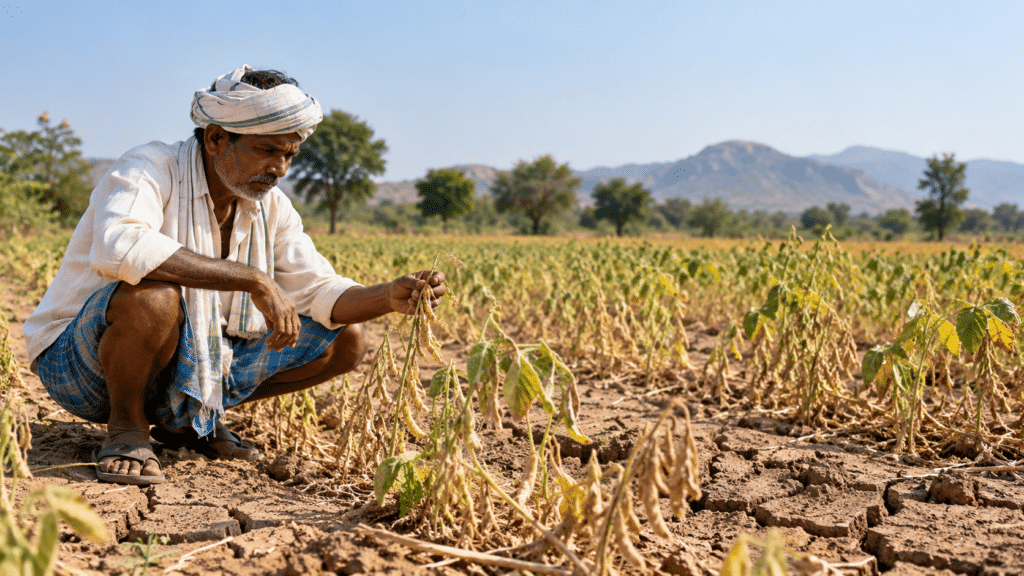
The University of Agricultural Sciences (UAS), Bengaluru, has opened its three-day Krishi Mela 2026 at the GKVK campus. With erratic rainfall, long dry spells, and falling groundwater levels challenging farmers, the event highlights drought management tools, new crop varieties, and farm innovations.
Agriculture Minister PM Narendra Swamy inaugurated the event. He said drought-tolerant varieties and dryland farming practices are essential for sustainable agriculture, especially since much of Karnataka’s farmland depends on rainfall.
The minister released three varieties developed by the university:
The state is extending drought relief of up to Rs 5,000 per acre, along with crop insurance, drinking water, and fodder support. The minister also said Karnataka plans to offer Rs 4,500 in financial assistance under the Negila Yogi scheme for farmers with up to three acres. The aid would cover sowing, harvesting, or ploughing using free government tractors. The scheme is still under discussion.
One of the highlights is the Krishi Robot, developed by the Centre of Excellence on Watershed Management at UAS GKVK. The device scans Land Resource Inventory (LRI) cards issued by the government after land surveys. It then provides soil fertility details and crop-specific fertilizer recommendations.
The robot gives voice-based advice in the local language, so farmers do not need smartphones or manual data entry. Dr Pruthvi Raj, who explained the model, said it is the first initiative of its kind in India. It aims to reach small and marginal farmers who may find mobile apps difficult to use.
A Panchkalyani buffalo from Gujarat, weighing around 1,850 kg, is among the attractions. Its owner, Krishnamurthy of Sri Krishna Goshale in Begur, said the four-year-old animal gives 12 to 13 litres of milk a day, with fat content of 7 to 9 per cent.
Union Minister of State Shobha Karandlaje inaugurated the agricultural exhibition stalls. She said research and modern technology are improving productivity and incomes. She also stressed the need for better market access, fair prices, food processing, and value addition, so that farming can become a profitable enterprise.