NEW DELHI — In a bid to boost farm incomes and accelerate digital transformation across India’s agricultural sector, the Union Budget has introduced targeted financial packages for high-value crop cultivation alongside major funding for artificial intelligence in farming.
The announcement outlines dedicated support for cash-crop sectors—specifically coconut, cashew, and tree-plantation models—while committing ₹150 crore to deploy Bharat-VISTAAR, a multilingual AI advisory engine for rural communities.
To increase land productivity and diversify farming revenue streams, the government is expanding incentive structures and infrastructure support for high-yielding commercial crops.
High-Value Plantations: Financial allocations aim to scale up sustainable cultivation of lucrative tree species, providing long-term economic security for landholders.
Coconut & Cashew Sectors: Specialized funds will focus on plantation rejuvenation, post-harvest processing facilities, and quality-sapling distribution to strengthen domestic production and export capabilities.
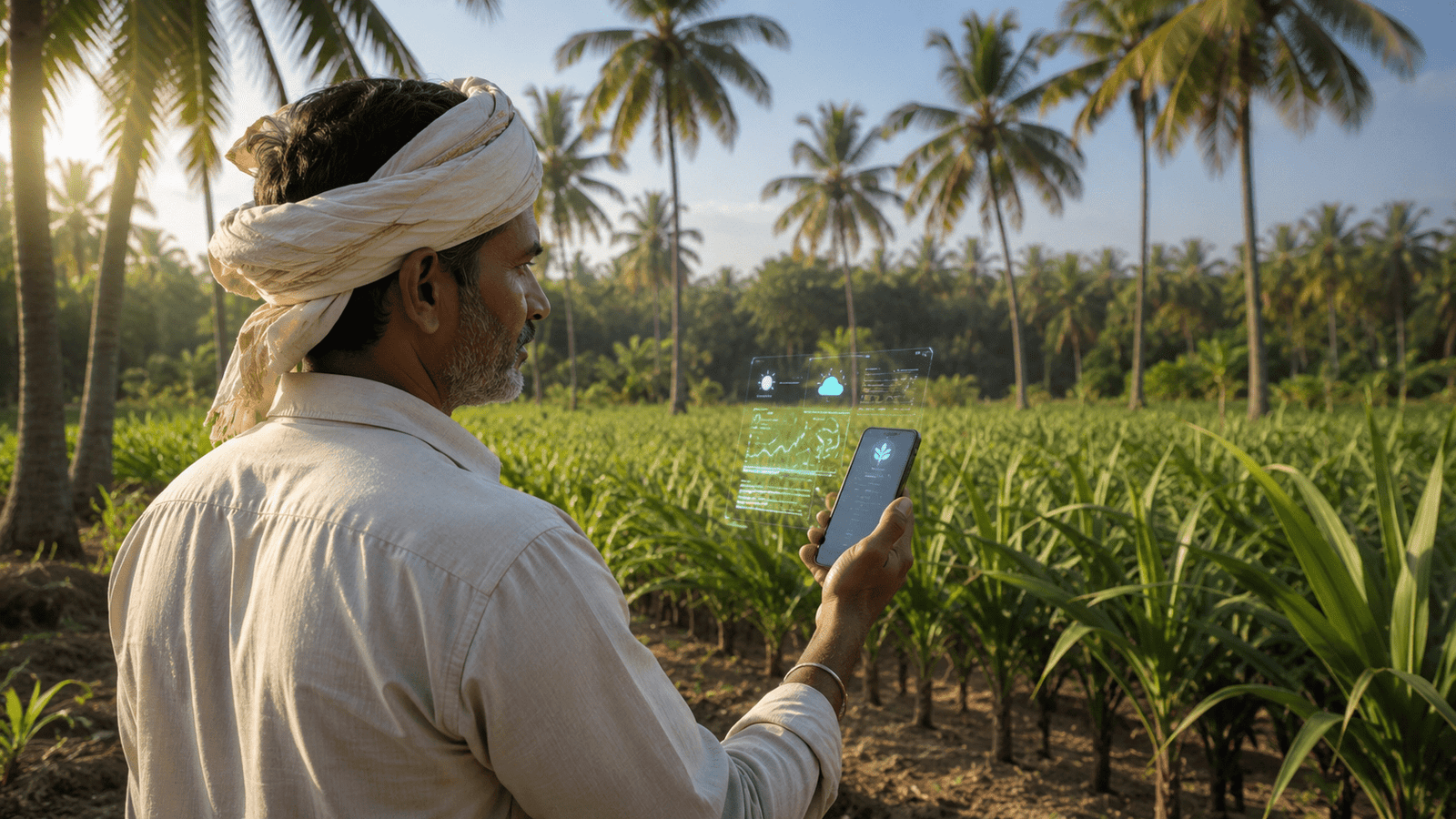
A major highlight of the digital agriculture push is the launch of Bharat-VISTAAR. Backed by a ₹150 crore outlay, this generative AI framework is tailored to bridge the information gap for rural growers.
Multilingual Accessibility: The AI system operates across multiple vernacular languages, allowing farmers to interact in their native dialects via voice or text messages.
Real-Time Guidance: Cultivators can access personalized, site-specific assistance regarding weather patterns, pest management, soil health diagnostics, and market arrival prices.
Democratizing Precision Farming: By translating complex agronomic data into direct advice, the initiative seeks to bring precision farming techniques to smallholders without requiring technical expertise.
Agricultural economists note that combining high-value crop support with accessible AI tech creates a dual engine for rural growth. While high-value plantations offer strong long-term yields, real-time AI guidance helps minimize crop losses and input costs during daily farming operations.