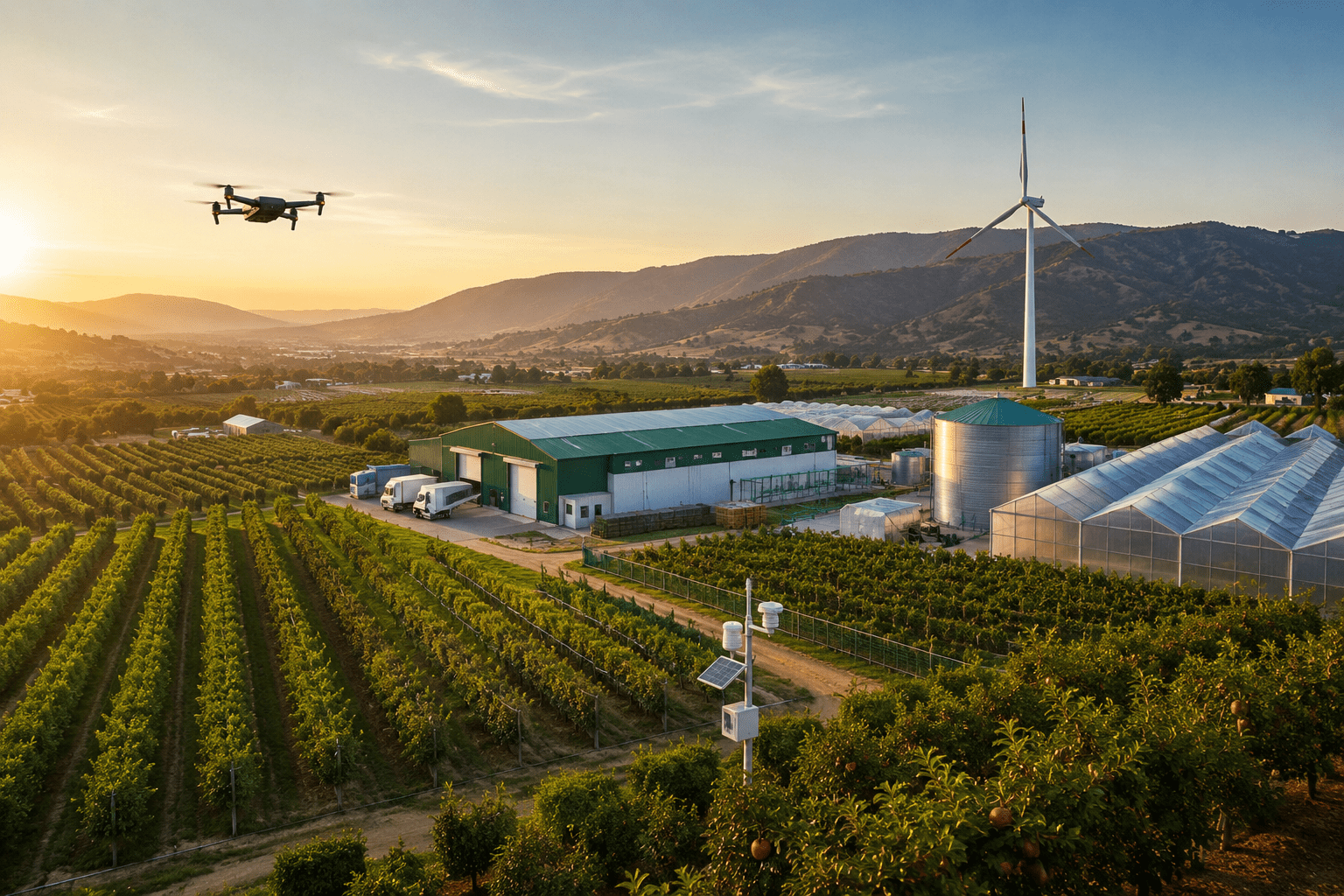
India’s managed farmland sector is entering a new phase of growth following NABARD’s introduction of a ₹25,000 crore refinance facility aimed at strengthening agricultural infrastructure. The initiative is expected to improve access to financing for projects focused on high-value horticulture, climate-resilient farming, and cold-chain development.
For investors, developers, and agribusiness companies, the announcement represents more than just additional funding. It signals stronger institutional support for modern farming and could accelerate the development of professionally managed agricultural projects across southern and western India.
As financing becomes more accessible and infrastructure improves, managed farmland is increasingly being viewed as a long-term investment that combines productive agricultural operations with the potential for steady land appreciation.
Access to affordable capital has long been one of the biggest challenges for large-scale agricultural development. With NABARD providing refinance support to eligible lending institutions, financing costs for agricultural projects could become more competitive, allowing developers to invest in better irrigation systems, post-harvest infrastructure, and modern cultivation practices.
These improvements have the potential to increase operational efficiency while reducing risks associated with crop handling and storage. Better infrastructure also makes it easier for farm operators to scale production and improve supply chain reliability.
Industry experts believe that professionally managed farmland could attract greater participation from institutional investors, agritech companies, and private investment firms looking to diversify beyond traditional real estate.
One of the biggest opportunities created by the refinance programme is the expansion of cold-chain infrastructure.
A significant share of India’s fruits and vegetables is lost after harvest because of limited storage and transportation facilities. Investments in pack houses, controlled-atmosphere storage, refrigerated logistics, and farm-gate collection centres can help reduce these losses and improve the quality of produce reaching consumers.
Improved storage also allows farmers and farm managers to avoid distress selling during periods of excess supply, giving them greater flexibility to market produce at more favourable prices.
Technology is becoming an important part of professionally managed farmland.
Many large agricultural projects now use solar-powered drip irrigation, IoT-based soil moisture sensors, weather monitoring stations, satellite imagery, and drone-assisted crop monitoring to improve farm management.
These technologies help optimise irrigation, reduce unnecessary fertilizer use, monitor crop health in real time, and support better planning throughout the growing season. The result is improved resource efficiency and more informed farming decisions.
Reliable land documentation remains one of the most important considerations for agricultural investment.
Digital platforms such as Karnataka’s Bhoomi portal and Maharashtra’s MahaBhulekh have made land record verification faster and more transparent. Combined with drone surveys and detailed due diligence, these systems help reduce uncertainty during land acquisition.
Investors are also paying closer attention to state-specific agricultural land regulations, ensuring that projects comply with existing legal requirements while remaining focused on productive cultivation.
Regions around Bengaluru, Mysuru, Nashik, Pune, and parts of Telangana continue to attract interest because of their favourable climate, improving infrastructure, and proximity to large consumer markets.
As cold-chain facilities expand and logistics networks become stronger, agricultural land in well-connected locations may benefit from increased demand. While returns will continue to depend on factors such as crop selection, management quality, water availability, and market conditions, many investors view these regions as having strong long-term potential.
NABARD’s ₹25,000 crore refinance initiative reflects the growing importance of modern agricultural infrastructure in India’s rural economy. By supporting better financing, stronger supply chains, and technology-led farming, the programme could encourage more professionally managed farmland developments over the coming years.
For investors, the opportunity extends beyond land ownership. Success will increasingly depend on selecting projects with clear legal titles, sustainable farming practices, efficient infrastructure, and experienced management teams.
As agriculture continues to modernise, managed farmland is gradually evolving into a more structured and professionally managed asset class—one that offers the potential for both productive income and long-term capital appreciation when approached with careful planning and due diligence.