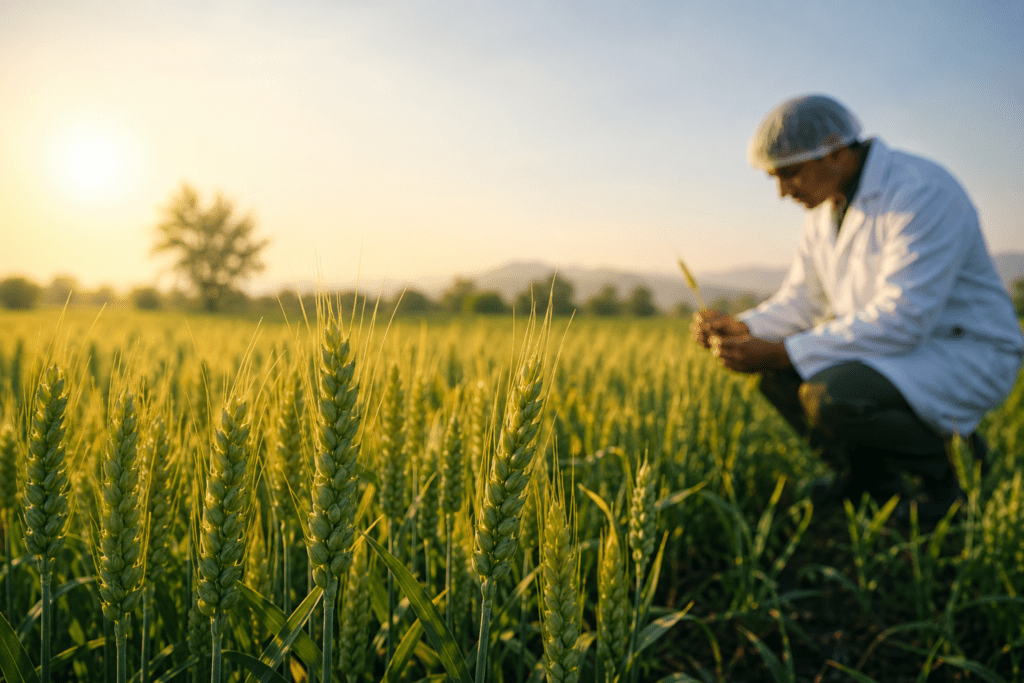
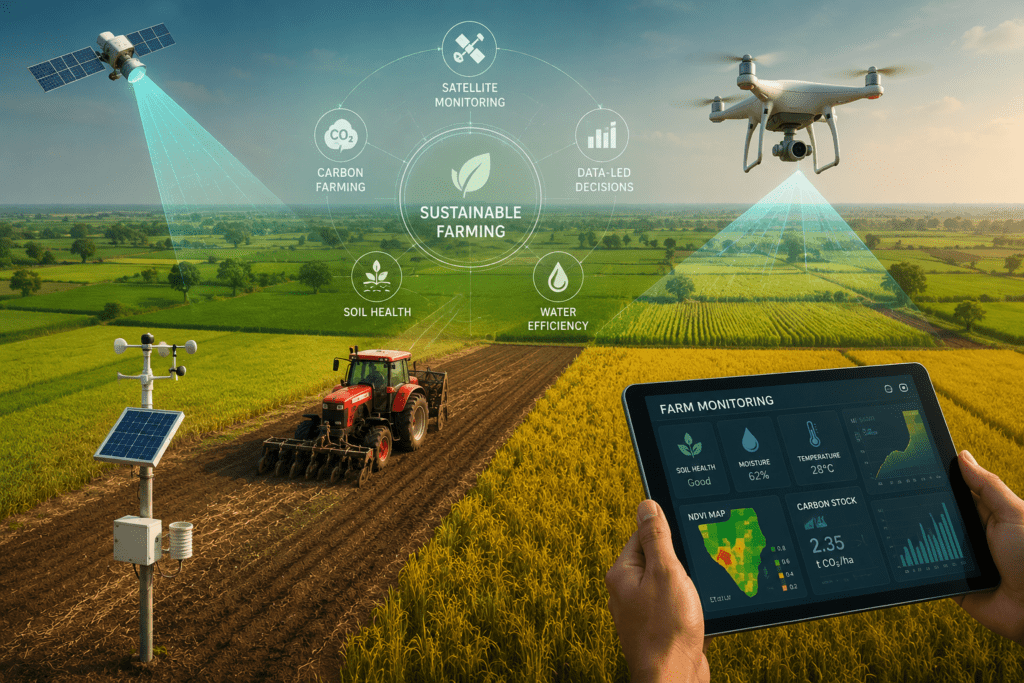
India is putting a stronger focus on natural farming as farmers, researchers and agricultural institutions prepare to meet at the National Conference on Natural Farming 2026.
The three-day conference will take place from September 9 to 11 at Umiam, Meghalaya. More than 400 participants from 21 states and 51 agricultural institutions are expected to take part.
The event will focus on practical ways to make farming more sustainable, resilient and economically viable.
The National Conference on Natural Farming 2026 (NCNF 2026) is being organised by the Central Agricultural University, Imphal.
The conference will include 95 natural farming practitioners who will share their experiences and farming methods. Agricultural institutions and farmer organisations will also participate.
The organisers aim to connect field experience with scientific research.
This could help identify farming practices that are both environmentally responsible and practical for farmers.
Farmers are facing several challenges today.
These include changing weather patterns, soil degradation, biodiversity loss and pressure on farm incomes. The conference will examine how natural farming can respond to some of these challenges.
Natural farming focuses on farming systems that work more closely with natural processes.
The approach can include soil-health practices, biological plant protection and the use of locally available resources.
However, the conference organisers have also stressed the need for scientific validation, certification and farmer training.
NCNF 2026 will focus on six major themes:
These themes cover both farm-level practices and wider agricultural policy.
The discussions will also explore integrated farming systems.
Such systems can bring together crops, livestock, horticulture, agroforestry and fisheries within one farming ecosystem.
Healthy soil is essential for long-term agricultural productivity.
The conference will examine ways to restore soil fertility and improve farm health.
This is important because soil degradation can reduce the ability of farms to maintain productivity over time.
Better soil management can also support biodiversity and improve the resilience of farming systems.
Sustainability alone is not enough.
Farmers also need farming methods that make economic sense.
The organisers have therefore highlighted the need to develop natural farming in a systematic and economically viable manner. Farmer education and capacity building will be important parts of that process.
The conference will allow farmers to share practical experiences.
This can help researchers and policymakers understand what works in real farming conditions.
Natural farming does not mean ignoring modern science.
The conference will bring together agricultural universities, research organisations and farming practitioners.
This creates an opportunity to combine traditional farming knowledge with scientific research.
Evidence-based practices can help determine which methods are suitable for different crops, soils and climates.
The conference will also focus on the agricultural challenges and opportunities of India’s Northeast.
The region has diverse landscapes and farming systems.
Integrated approaches involving agriculture, horticulture, livestock, fisheries and agroforestry could play an important role in supporting rural livelihoods.
The organisers plan to include a field visit to a practising natural farmer. The experience will contribute to the conference’s recommendations and outcomes.
The three-day event will feature 26 technical and knowledge-sharing sessions.
Participants will discuss evidence-based farming practices and share farmer experiences through presentations and videos.
The conference is also being organised with several agricultural institutions, including ICAR, the North East Centre for Technology Application and Reach, Rani Lakshmi Bai Central Agricultural University, Dr. Rajendra Prasad Central Agricultural University and Gujarat Natural Farming Science University.
The conference comes at a time when agriculture is dealing with greater weather uncertainty and pressure on natural resources.
Farmers need approaches that can protect soil, manage water and maintain productivity.
Natural farming is one area being explored as part of this wider transition.
Its long-term success will depend on evidence, farmer acceptance, suitable markets and economic viability.
The National Conference on Natural Farming 2026 is more than a discussion about farming techniques.
It brings together farmers, scientists, universities and policymakers around common agricultural challenges.
The conference motto, “One Farm, One Ecosystem, One Health,” reflects its integrated approach to soil, crops, livestock, fisheries, the environment and human well-being.
As the conference begins on September 9, attention will be on the practical recommendations that emerge from the discussions.
For Indian agriculture, the bigger goal remains clear: build farming systems that are productive, resilient and sustainable for the future.