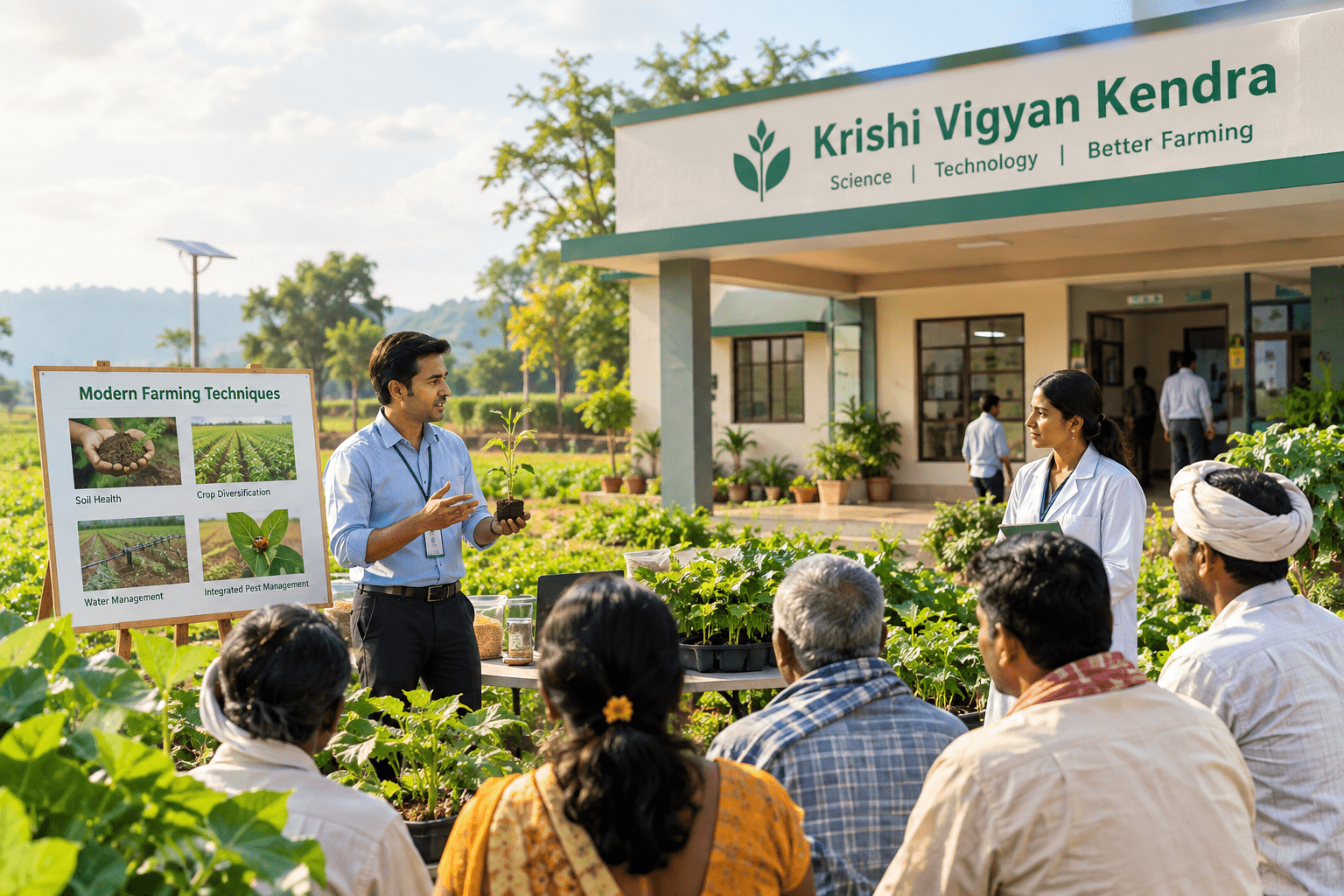
India is preparing for a major upgrade of its Krishi Vigyan Kendras (KVKs), the farm science centres that connect agricultural research with farmers.
The government has approved changes to staff pay scales, allowances and promotion rules. It also plans to strengthen infrastructure and staffing across KVKs.
KVKs play an important role in taking new agricultural knowledge to the field.
They help farmers understand improved cultivation methods, farm technologies, crop practices and emerging challenges.
The latest reforms aim to make these centres better equipped to support farmers at the district level.
A major part of the plan focuses on 300 priority KVKs.
The government has targeted their infrastructure and logistics upgrades for completion by March 2027.
The plan includes better facilities, adequate staffing and stronger institutional support.
States have also been asked to provide timely funding and speed up implementation.
The reforms will cover pay, allowances and promotion pathways for KVK employees.
States will also take responsibility for funding National Pension System contributions and retirement benefits for KVK personnel.
The government has asked states to fill vacant positions quickly. This is intended to give KVKs enough manpower to carry out their work effectively.
The government is also planning Incubation-cum-Skill Centres across KVKs.
These centres are expected to be established by December 2028.
Each centre will be connected with local agricultural businesses, technical institutions and district-level opportunities.
The goal is to support skills, innovation and rural entrepreneurship.
KVKs are already involved in frontline agricultural demonstrations.
Under the 2026–27 Cluster Frontline Demonstrations programme, work is taking place across 24 states through 353 KVKs and districts.
The programme targets 12,349 hectares, with 9,750 hectares already covered at the time of the review.
These demonstrations are designed to help farmers see improved practices directly in the field.
One major concern raised during the review was delayed funding.
Officials stressed that funds must reach KVKs on time, especially for seasonal farm programmes.
Timely delivery is important because agricultural activities depend heavily on crop calendars and weather conditions.
The review also highlighted the need for quality seeds to reach farmers at the right time.
The KVK upgrade comes at a time when Indian agriculture is facing changing weather, new technologies and rising demand for better farm productivity.
Stronger KVKs could help reduce the gap between agricultural research and field-level adoption.
For farmers, the value of these centres lies in practical knowledge that can be tested and applied locally.
Agriculture is changing rapidly.
Farmers now need access to better technology, climate-resilient practices, improved seeds, market knowledge and new business opportunities.
Strengthening KVKs could make them important local hubs for this transition.
The government’s latest plan therefore goes beyond staff reforms. It aims to build stronger agricultural support systems closer to farming communities.
Focus Keyphrase: Krishi Vigyan Kendra
SEO Title: Krishi Vigyan Kendras Set for Major Upgrade in 2026
Slug: krishi-vigyan-kendra-upgrade-2026
Meta Description: Krishi Vigyan Kendras will receive staff, infrastructure and skill development reforms as India strengthens agricultural support for farmers.