Artificial Intelligence (AI) is no longer just a buzzword in India’s technology sector—it is steadily becoming a practical tool in agriculture. With the Government of India encouraging digital farming through initiatives such as the Digital Agriculture Mission, AI-powered technologies are beginning to transform how farms are managed, monitored, and maintained.
For investors, landowners, and managed farmland developers, this shift represents more than technological progress. It signals a future where data-driven decisions, efficient resource management, and sustainable farming practices can improve both agricultural productivity and the long-term value of farmland.
Agriculture has always depended on factors that are difficult to predict, from changing weather conditions to pest attacks and fluctuating soil health. Today, AI is helping reduce some of that uncertainty.
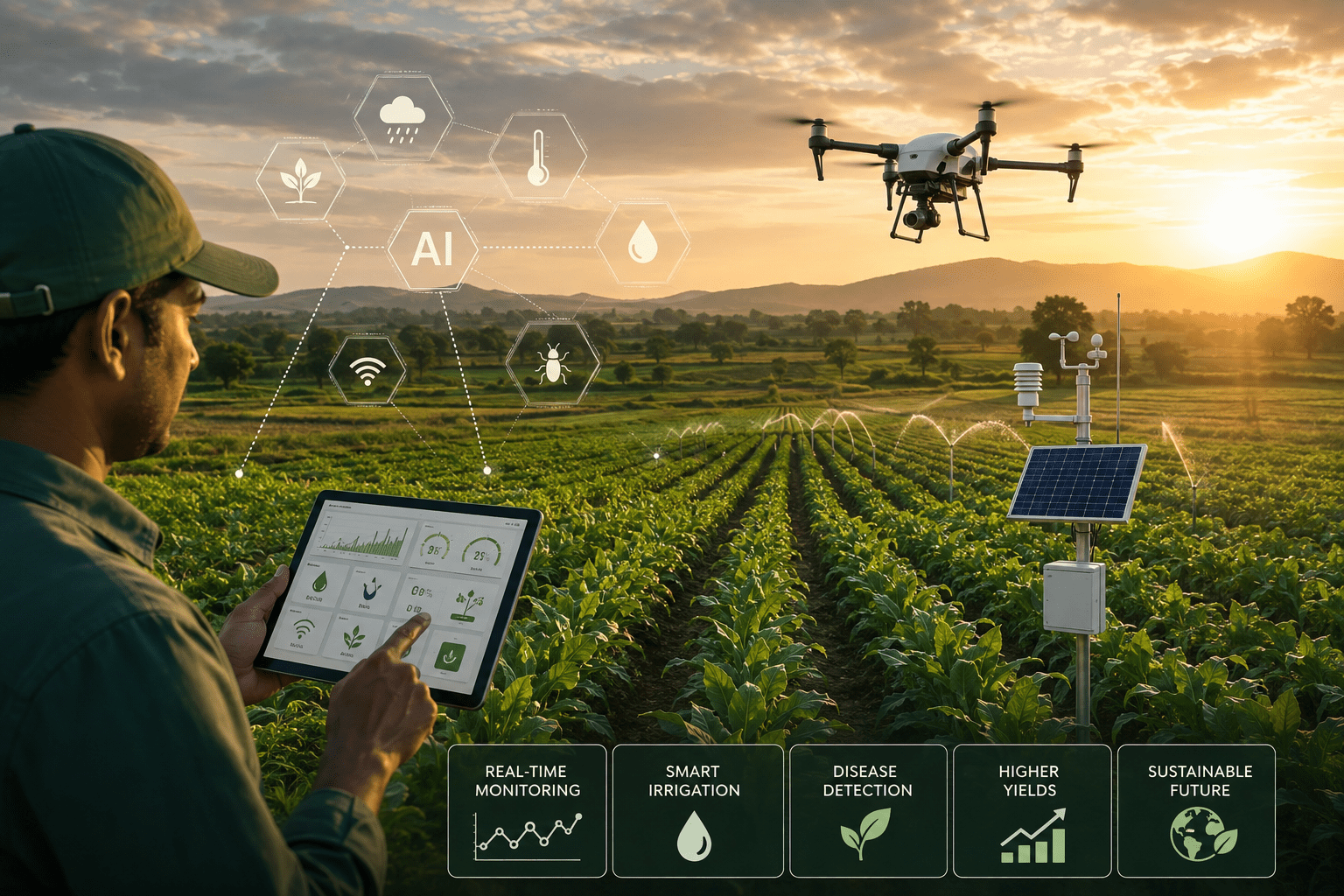
Using satellite imagery, weather forecasts, sensors, drones, and machine learning, farmers can monitor crop health more accurately and respond to issues before they become major problems. Instead of relying solely on traditional farming practices, decisions are increasingly being supported by real-time data.
This allows farm managers to optimize irrigation, monitor soil moisture, identify crop diseases early, and plan farming activities more efficiently.
Managed farmland projects are among the earliest adopters of modern agricultural technologies because they are professionally operated and can implement new systems consistently across larger areas.
Many managed farmland developments are now integrating technologies such as:
While the level of adoption varies across different regions, these technologies are helping improve operational efficiency and support more informed farm management.
Rather than replacing traditional farming knowledge, AI complements it by providing timely insights that help farmers make better decisions.
India’s agricultural sector is undergoing a gradual digital transformation supported by government initiatives focused on technology adoption.
Programs promoting digital agriculture, the use of Kisan Drones, precision irrigation under the Pradhan Mantri Krishi Sinchayee Yojana (PMKSY), Soil Health Cards, and digital farmer databases are helping create a stronger technological foundation for the sector.
These initiatives are making modern farming tools more accessible while encouraging better water management, efficient use of inputs, and sustainable cultivation practices.
Although widespread AI adoption is still evolving, the direction is clear—technology is becoming an essential part of India’s agricultural future.
Technology is also making farmland transactions more transparent.
States such as Karnataka and Maharashtra have digitized land records through platforms like Bhoomi and MahaBhulekh, allowing buyers and investors to access ownership information more easily during the due diligence process.
While legal verification and professional guidance remain essential before purchasing agricultural land, digital records have significantly simplified documentation and reduced the chances of errors in land records.
For investors considering managed farmland, this growing digital infrastructure adds another layer of confidence to the buying process.
Farmland has traditionally been valued for its ability to preserve wealth over the long term. Today, technology is adding a new dimension to that value.
AI-powered insights can help improve farm planning, optimize resource utilization, and support sustainable agricultural practices. Better water management, timely disease detection, and efficient monitoring may contribute to healthier crops and smoother farm operations.
For professionally managed farmland projects, these advancements can create long-term operational advantages while supporting responsible land stewardship.
As climate patterns become more unpredictable, the ability to monitor and respond quickly to changing field conditions is becoming increasingly valuable.
Modern agriculture is no longer focused solely on increasing production. It is equally about using natural resources responsibly.
AI-powered systems can assist in monitoring irrigation requirements, reducing unnecessary water usage, and identifying potential crop stress before it spreads across an entire farm.
Combined with precision farming techniques, these technologies support sustainable agriculture while helping farmers make more efficient use of available resources.
This balance between productivity and environmental responsibility is likely to shape the next generation of managed farmland developments across India.
Artificial Intelligence is still in the early stages of transforming Indian agriculture, but its influence is growing steadily. As digital infrastructure improves and more farming operations embrace technology, managed farmland is expected to become smarter, more efficient, and increasingly resilient.
For investors, the future value of agricultural land will depend on more than just its location. Factors such as water availability, professional farm management, sustainable practices, digital infrastructure, and technological adoption are becoming equally important.
India’s agricultural landscape is entering a new phase where innovation and traditional farming work together. Managed farmland that embraces these advancements is well positioned to meet the evolving needs of both agriculture and long-term investment, creating opportunities that extend far beyond the boundaries of conventional farming.