India’s agricultural sector is moving into a new phase. The focus is no longer only on increasing crop production. Farmers, policymakers, researchers and businesses are paying greater attention to sustainability, technology, rural value chains and long-term resilience.
This shift was highlighted at the 3rd National Sustainable Agriculture Summit & Awards 2026, held in New Delhi on August 7. The event brought together stakeholders from across the agricultural ecosystem to discuss how India can build a stronger and more self-reliant rural economy.
Agriculture today covers much more than growing crops.
Dairy, fisheries, livestock, agricultural technology, sustainable inputs and rural markets are becoming important parts of the sector. This broader view was one of the key themes of this year’s summit.
The event was organised around two major tracks. The first focused on dairy, nutrition, fisheries and livestock. The second looked at crops, agricultural inputs, technology and rural value chains.
This approach reflects a wider change in Indian agriculture. Farmers need better access to markets, technology, finance and infrastructure. At the same time, businesses are looking for more efficient and sustainable ways to connect farms with consumers.
Sustainable agriculture is also becoming an important part of India’s long-term economic strategy.
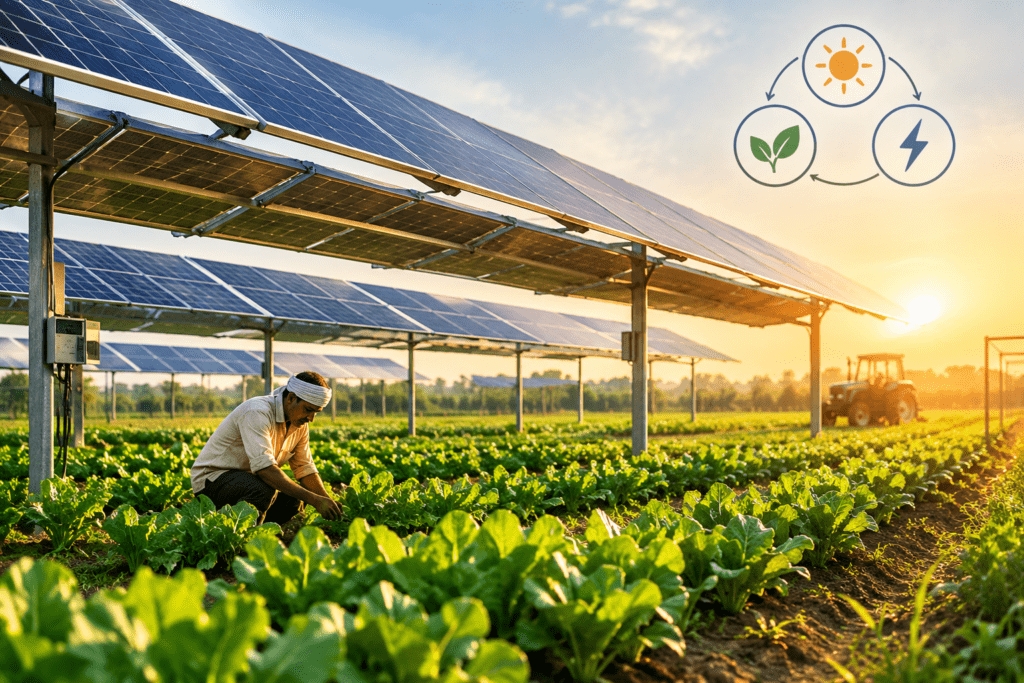
Farmers are facing several challenges, including changing weather patterns, rising input costs and pressure on natural resources. As a result, farming methods that protect soil, conserve water and reduce unnecessary inputs are receiving more attention.
The summit placed strong emphasis on areas such as regenerative farming, sustainable agricultural inputs and technology. These developments show that sustainability is increasingly being viewed as part of agricultural growth rather than as a separate environmental issue.
For landowners and agricultural investors, this trend is important. Productive land is not only a physical asset. Its long-term value can also depend on soil health, water availability, farming practices and the ability to maintain productivity over time.
Technology is another major force reshaping Indian agriculture.
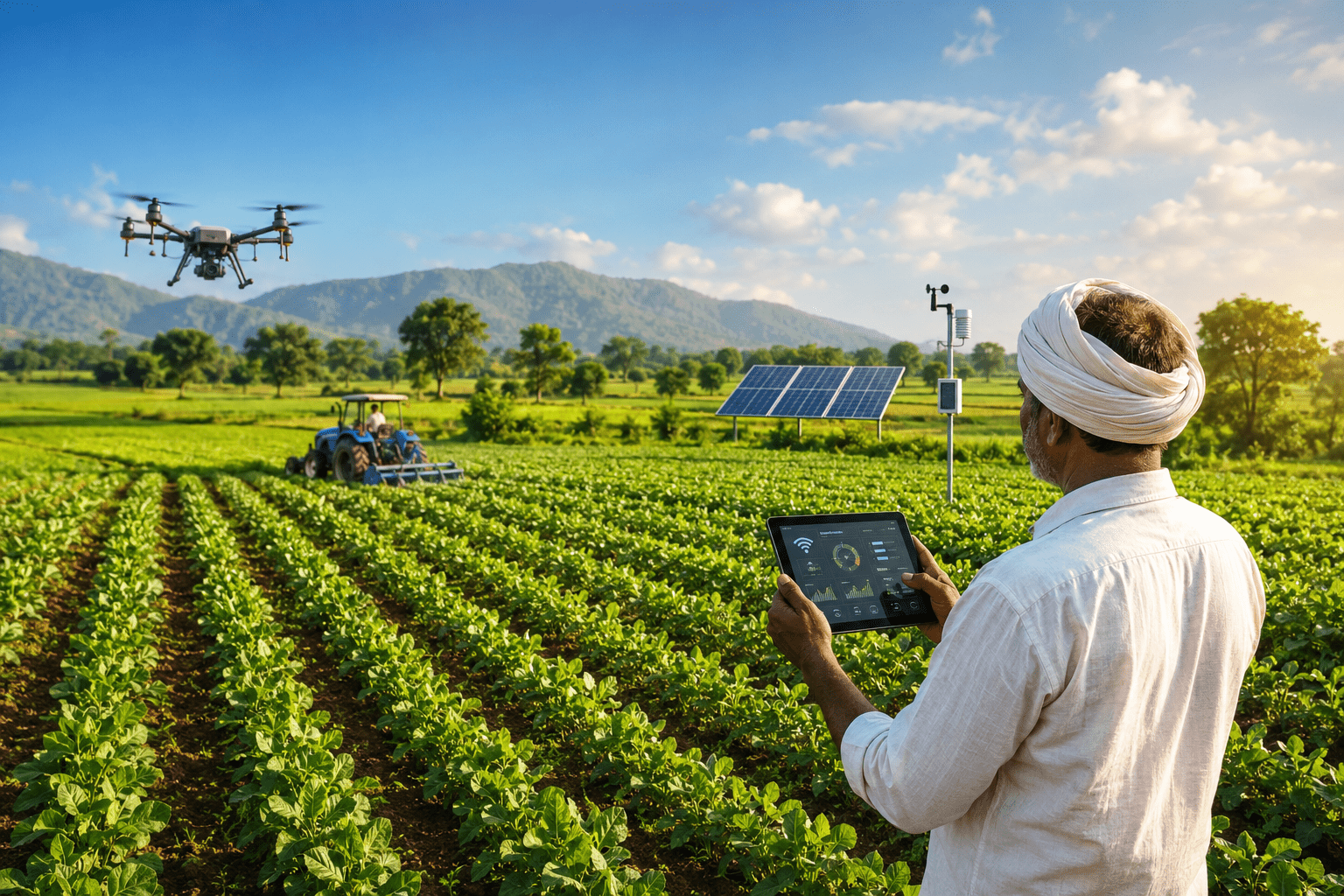
Digital tools, precision farming, better farm data and improved supply-chain systems can help farmers make more informed decisions. New agricultural technologies are also being developed to monitor crops, identify problems and improve resource use.
Recent research has further highlighted this trend. An August 2026 study introduced AgriField-40K, an agricultural computer-vision dataset designed to support precision agriculture research. The researchers found that lightweight AI adaptation methods could achieve strong results while using fewer trainable parameters.
Such developments point towards a future where technology works alongside farmers rather than replacing them.
The objective is simple: use better information to make farming more productive, efficient and resilient.
Another important theme is the development of rural value chains.
Farmers do not operate in isolation. Their income is affected by everything from agricultural inputs and storage to transportation, processing and market access.
A stronger value chain can help reduce inefficiencies between the farm and the final consumer. It can also create opportunities for businesses involved in food processing, logistics, agricultural technology and rural infrastructure.
This creates an interesting investment perspective.
As India’s agricultural economy becomes more organised, opportunities may extend beyond the farm itself. Investments connected to storage, processing, farm management, technology and sustainable production can all play a role in the wider agricultural ecosystem.
The renewed focus on sustainable agriculture also brings attention back to the importance of land.
Farmland remains one of the fundamental assets behind India’s agricultural economy. But modern farmland is increasingly being viewed through a wider lens.
Location matters. So do soil quality, water resources, access, farming systems and long-term land management.
This is particularly relevant around rapidly developing cities such as Bengaluru. As urban areas expand, agricultural land around major growth corridors is attracting interest from people who want to own a tangible asset while staying connected to nature and farming.
However, farmland should not be treated simply as another real estate product. Its agricultural character and long-term productivity remain important.
This is where professional farm management can become relevant. Managed farmland models can bring together land ownership, agricultural planning, maintenance and regular farm operations under a structured management approach.
India’s growing focus on sustainable agriculture is also receiving international attention.
In June 2026, Andhra Pradesh’s Andhra Pradesh Community Managed Natural Farming (APCNF) programme won the 2026 Food Planet Prize, an environmental award worth $1.5 million. The programme was recognised for its large-scale effort to promote natural farming and climate-resilient agriculture.
According to reporting on the programme, APCNF had reached around 18 lakh farmers across Andhra Pradesh and was being replicated in other parts of India and abroad. Its approach relies heavily on community participation, women-led groups and farmer-to-farmer learning.
The recognition is significant because it shows that sustainable farming is not limited to small experimental projects. Large agricultural communities can also adopt practices designed to improve soil health, reduce dependence on synthetic inputs and strengthen resilience.
Agricultural investment is also becoming more closely connected with sustainability.
For many investors, farmland offers something different from conventional financial assets. It is a physical asset linked to land, agriculture and long-term use.
But the modern investment conversation is becoming more sophisticated.
Instead of looking only at land prices, buyers are increasingly likely to consider questions such as:
These questions are especially important when considering farmland near Bengaluru, where urban growth and agricultural land can exist close to each other.
The growing interest in managed farmland reflects this change. Instead of leaving landowners to handle every aspect of farming themselves, managed models can provide structured support for agricultural operations and maintenance.
The developments of 2026 show that Indian agriculture is entering a period of transition.
The conversation is expanding from simply producing more food to building a stronger agricultural ecosystem. Sustainability, technology, rural infrastructure, value chains and farmer participation are becoming central to this transformation.
The Sustainable Agriculture Summit & Awards 2026 is one example of this broader movement. Its focus on crops, technology, rural markets, livestock and sustainable practices reflects how closely these areas are now connected.
For landowners, investors and people interested in farming, the message is clear.
The future of agriculture will not be shaped by land alone. It will be shaped by how that land is managed, how resources are used and how farming connects with the wider economy.
As India continues to invest in a more resilient agricultural sector, farmland could become an increasingly important part of conversations around sustainability, rural development and long-term asset ownership.
India’s agricultural story is changing.
The emphasis on sustainable farming, technology and rural value chains shows that agriculture is becoming more connected to the country’s broader economic and environmental goals.
For those looking at farmland as an asset, this creates a new perspective. Productive land, responsible management and sustainable farming practices can work together to create value that extends beyond ownership.
The next chapter of Indian agriculture may not simply be about growing more.
It may be about growing smarter, managing better and building a more sustainable relationship with the land.