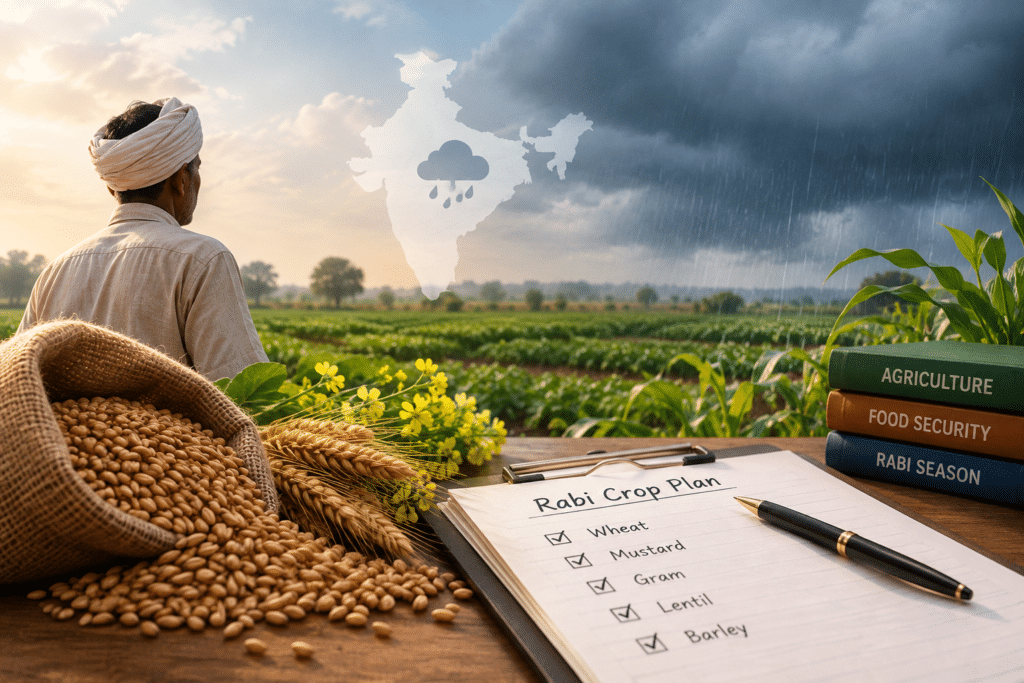
India has renewed its focus on dryland agriculture as the Dryland Congress 2026 concluded in New Delhi.
The three-day Congress ended with the adoption of the Delhi Declaration on Drylands.
The declaration calls for greater cooperation, innovation and knowledge sharing to strengthen farming in dryland regions.
The Congress was organised by the Indian Council of Agricultural Research (ICAR) and the International Crops Research Institute for the Semi-Arid Tropics (ICRISAT).
The Congress brought together more than 800 scientists, policymakers, farmer representatives and development partners.
Participants came from Asia, Africa and the Americas.
They discussed ways to improve agricultural systems in areas facing water shortages, land degradation and climate stress.
The event was held under the theme “Transforming Dryland Agriculture with South-South Cooperation.”
The discussions covered six major areas:
These areas are closely connected to the future of farming in dry regions.
The biggest outcome of the Congress was the Delhi Declaration on Drylands, also known as 3D.
The declaration provides a shared direction for improving dryland agriculture.
It focuses on collaboration between countries and institutions across the Global South.
The aim is to share useful agricultural knowledge and scale innovations that can work in similar farming conditions.
The declaration was endorsed during the closing session by participating governments, institutions, partners and delegates.
Drylands cover a large part of the world’s land.
They are also home to more than two billion people.
Many communities in these regions depend on farming for their livelihoods.
However, dryland farmers often face difficult conditions.
These include:
These challenges can make farming less predictable.
Improving resilience is therefore becoming an important agricultural priority.
The Congress placed strong emphasis on science and innovation.
Researchers are developing better crop varieties and farming methods for challenging environments.
These technologies can help farmers manage climate stress.
They can also improve the use of limited natural resources.
The focus is not only on developing new solutions.
It is also on making proven solutions available to farmers.
Dr M.L. Jat, Secretary of the Department of Agricultural Research and Education and Director General of ICAR, called for stronger systems to connect research with farming practices and policy.
Data was another major focus of the Congress.
Dryland farming can be affected quickly by changes in rainfall, soil moisture and temperature.
Reliable data can help identify these changes earlier.
It can also support better agricultural planning.
Dr Jat stressed the need for strong data and information systems for dryland agri-food systems.
Such systems could help researchers and policymakers understand risks more clearly.
They could also support better decisions at the farm level.
The Congress also highlighted the idea of living laboratories.
These spaces can connect researchers, farmers and policymakers.
New farming methods can be tested under real conditions.
Farmers can then provide feedback based on their experience.
This can make agricultural research more practical.
It can also help successful ideas move from research centres to farms more quickly.
Climate change is creating new challenges for agriculture.
Dryland regions are particularly sensitive to rainfall changes.
A delayed monsoon can affect crop growth.
Long dry periods can also increase pressure on soil and water resources.
This makes climate-resilient farming increasingly important.
Farmers need methods that can work under changing conditions.
Better seeds, improved water management and stronger soil health practices can all contribute to resilience.
A major theme of the Congress was cooperation between countries in the Global South.
Many developing countries face similar agricultural challenges.
Farmers in India may experience problems that are also seen in parts of Africa or Asia.
Sharing successful solutions can therefore save time and resources.
The Congress called for stronger South-South and triangular cooperation to accelerate agricultural innovation.
The approach aims to move useful knowledge across regions with similar farming conditions.
The closing session also saw new partnerships and collaborations.
Agreements were announced involving ICRISAT and several organisations.
These included the Global Crop Diversity Trust, Avior Life Sciences, NIFTEM and Wipro Limited.
Partnerships were also announced with the Angul and Rayagada district administrations in Odisha.
The collaborations are expected to support innovation and action in dryland agriculture.
The Congress also recognised agricultural innovations through the ISSCA Global Awards 2026.
The first edition received 170 nominations from 34 countries.
The awards covered several areas.
These included crop improvement, natural resource management, climate resilience, digital agriculture, agribusiness and livestock technologies.
The awards highlighted solutions that could potentially be adapted across different regions.
Karnataka also featured among the recognised agricultural innovations.
The state’s Krishi Bhagya initiative received recognition in the Natural Resource Management and Climate Resilience category.
The initiative focuses on supporting farmers in dryland areas.
Its recognition at an international agricultural platform brings attention to approaches developed for climate-sensitive farming conditions.
This is particularly relevant for Karnataka, where rainfed agriculture plays an important role in several regions.
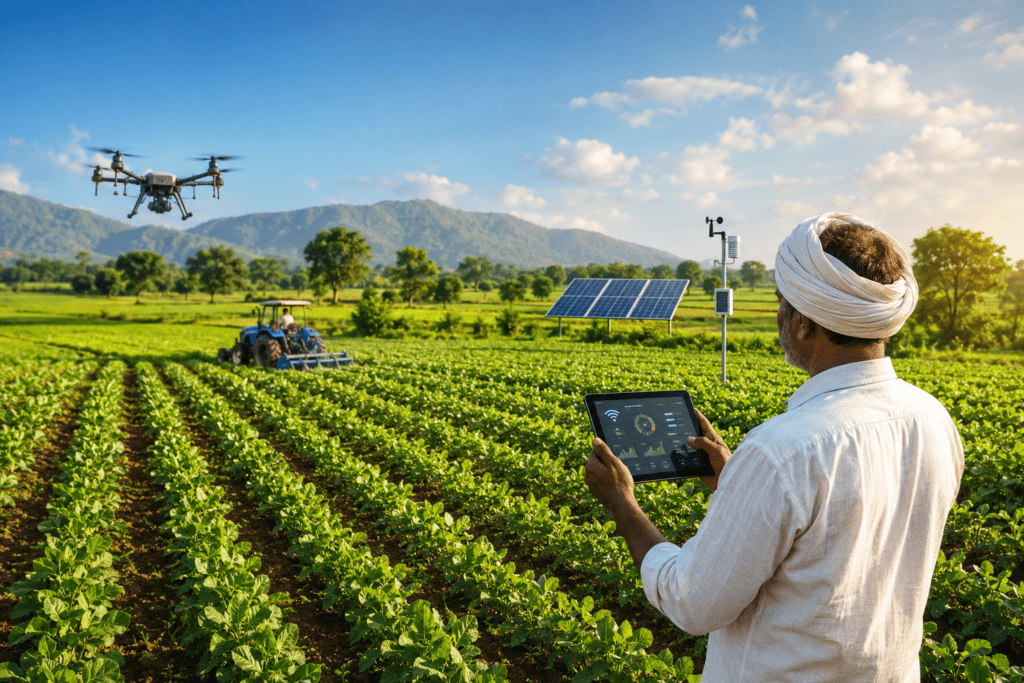
Technology also featured strongly at the Congress.
The awards recognised digital agriculture initiatives from Andhra Pradesh and Gujarat.
These examples show how digital systems are becoming part of agricultural planning.
Digital tools can support farmers through better information.
They can also help governments monitor agricultural conditions and improve extension services.
For dryland regions, timely information can be especially valuable.
Seed systems were another key theme of the Congress.
The right seed variety can make a difference in difficult farming conditions.
Farmers need varieties that suit local climates and soil conditions.
They may also need crops that can perform under limited water availability.
Research into better seed systems can therefore support agricultural resilience.
It can also help protect food production in regions facing climate pressure.
The Congress also included gender and youth inclusion among its key themes.
Young people can bring new ideas and technology into farming.
Women also play important roles across agricultural value chains.
Their participation can strengthen rural communities.
Including both groups in agricultural programmes can help make innovation more inclusive.
It can also create new opportunities for rural employment and entrepreneurship.
One of the strongest messages from the Congress was the need to move beyond discussions.
Research must reach farmers.
New technologies must work under real conditions.
Policies must support practical adoption.
Farmers must also have access to knowledge and training.
This connection between research and implementation will be important for the future of dryland agriculture.
The Dryland Congress comes at an important time for agriculture.
Farmers are facing pressure from climate change, water scarcity and changing markets.
These challenges cannot be solved through one technology or one policy.
They require a combination of better science, stronger institutions and farmer participation.
The Delhi Declaration provides a framework for greater cooperation.
The next step will be turning these ideas into action.
The conclusion of the Dryland Congress 2026 marks an important moment for sustainable farming.
The event brought together scientists, policymakers, farmers and development organisations.
Its focus was clear.
Dryland farming needs solutions that are resilient, practical and scalable.
Better data can improve decisions.
Science can develop stronger farming solutions.
Partnerships can help successful ideas reach more farmers.
The Dryland Congress 2026 has placed resilient farming back at the centre of the agricultural conversation.
The Delhi Declaration calls for greater cooperation, innovation and collective action.
For farmers working in challenging environments, these efforts could help create more reliable and sustainable farming systems.
The future of dryland agriculture will depend not only on how farmers adapt.
It will also depend on how quickly science, policy and innovation can work together.