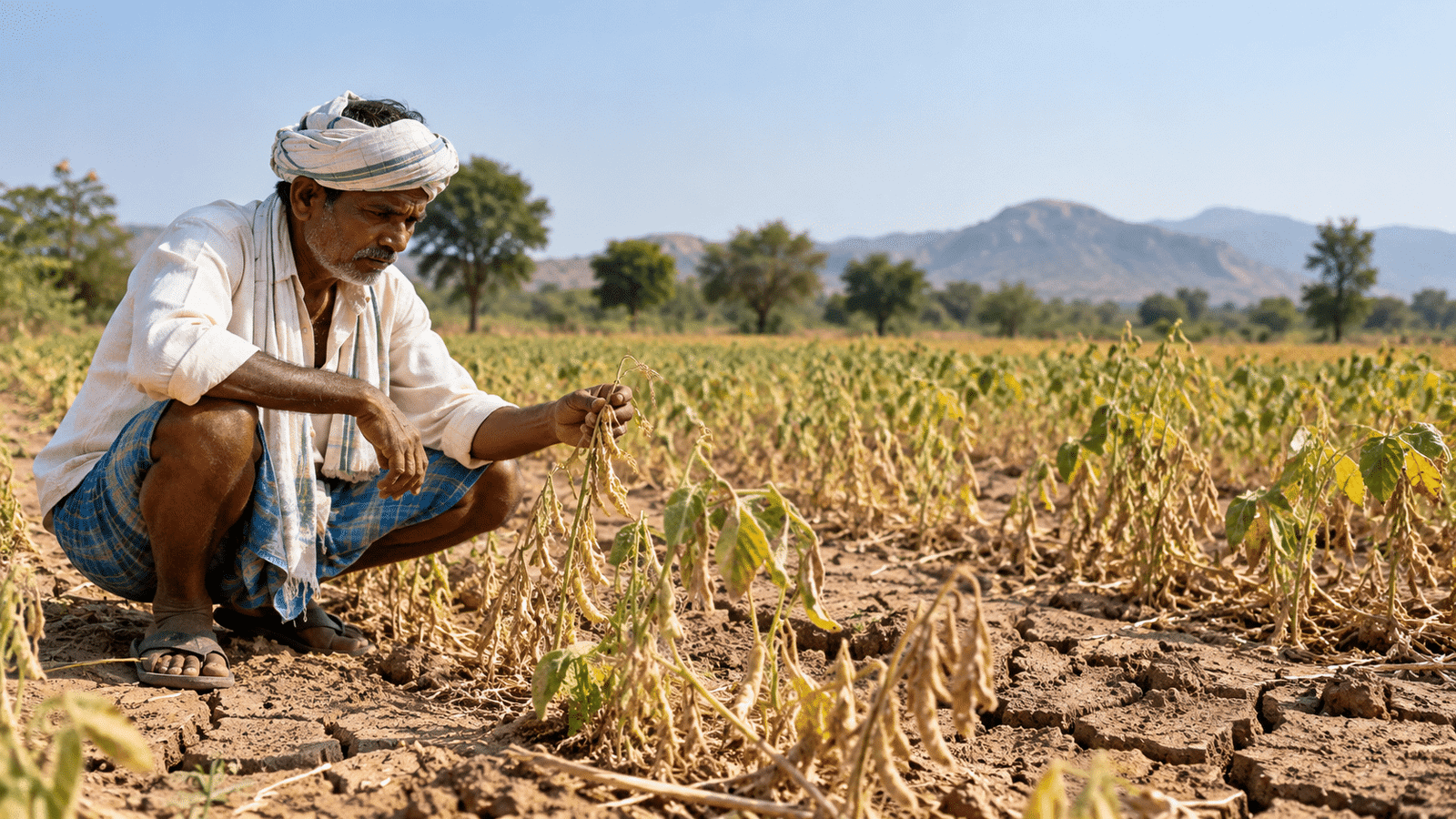
Karnataka’s agricultural sector is facing a serious drought challenge, with estimated losses reaching approximately ₹46,000 crore, according to a report published on October 12, 2026. The state government has sought financial assistance from the Centre to support drought-affected farmers.
Karnataka’s farmers are dealing with the effects of deficient monsoon rainfall, crop damage and declining water availability. The state has reported widespread agricultural losses, increasing the need for financial assistance and better water management.
According to recent reporting, 217 of Karnataka’s 240 taluks have been officially declared drought-affected. The state government has submitted a request for central assistance to help address the crisis.
The situation highlights how changing rainfall patterns can affect farm productivity, rural livelihoods and agricultural planning.
Agriculture depends on sufficient water at the right stages of crop growth. When rainfall is inadequate or irregular, farmers may struggle to establish crops, maintain healthy plants and protect their harvests.
Several challenges can arise during prolonged dry conditions.
Insufficient soil moisture can affect seed germination, plant growth and crop development. In severe cases, crops may fail before reaching harvest.
The impact varies according to crop type, soil conditions, irrigation access and the duration of the dry spell.
Low rainfall can reduce the replenishment of reservoirs, groundwater and other water sources.
Farms that depend on rainfall may face immediate difficulties, while irrigated farms can also experience pressure if their water supplies decline.
When crops are damaged, farmers may lose expected income while still having to meet expenses for seeds, fertilisers, labour and other agricultural inputs.
This can affect their ability to prepare for the next cropping season.
The Karnataka government has announced an initial relief payment of ₹2,500 per eligible farmer, with approximately 50 lakh farmers expected to benefit from the first instalment.
The state has also discussed measures concerning loan recovery and restructuring to reduce pressure on affected farming households.
The state government has requested additional financial assistance from the Centre. The final support available to farmers will depend on official assessments, eligibility requirements and the implementation of relief measures.
Although drought cannot always be prevented, responsible farm management can help reduce some of its effects.
1. Harvest rainwater. Farm ponds and suitable rainwater-harvesting systems can help capture water when rainfall occurs.
2. Improve soil moisture retention. Mulching and adding suitable organic matter can help reduce evaporation and support soil structure.
3. Use water efficiently. Drip irrigation and carefully planned watering schedules can help direct water towards plant roots where appropriate.
4. Choose climate-suitable crops. Crop varieties should match local soil, rainfall and water availability.
5. Monitor farm conditions. Regularly checking soil moisture, tree health and water supplies can help farm managers respond before problems become more severe.
These measures cannot eliminate drought damage, but they can form part of a broader strategy for climate-resilient farming.
For managed farmland operators, Karnataka’s drought situation is a reminder that land management must account for changing environmental conditions.
Maintaining farmland requires more than planting trees and keeping the landscape green. It also involves monitoring water resources, protecting soil health and choosing vegetation suited to local conditions.
For orchards and fruit-bearing trees, appropriate mulching, irrigation planning and regular monitoring can help manage water stress. Young trees may require particular attention during prolonged dry periods.
At Mogg’s Estates, this topic is relevant to the broader principle of responsible farmland management: understanding the land and managing natural resources carefully are essential to maintaining a healthy farm.
Karnataka’s drought crisis underlines the importance of combining immediate farmer assistance with long-term water conservation and climate-resilient agricultural practices.
Financial relief can help affected households manage immediate pressures. Over time, improved water management, soil conservation, suitable crop selection and reliable weather information can also support better farm preparedness.
The results will depend on local conditions and the effective implementation of these measures.
Key takeaway: Karnataka’s drought situation highlights the importance of protecting farm livelihoods today while preparing agricultural land for increasingly uncertain weather conditions.