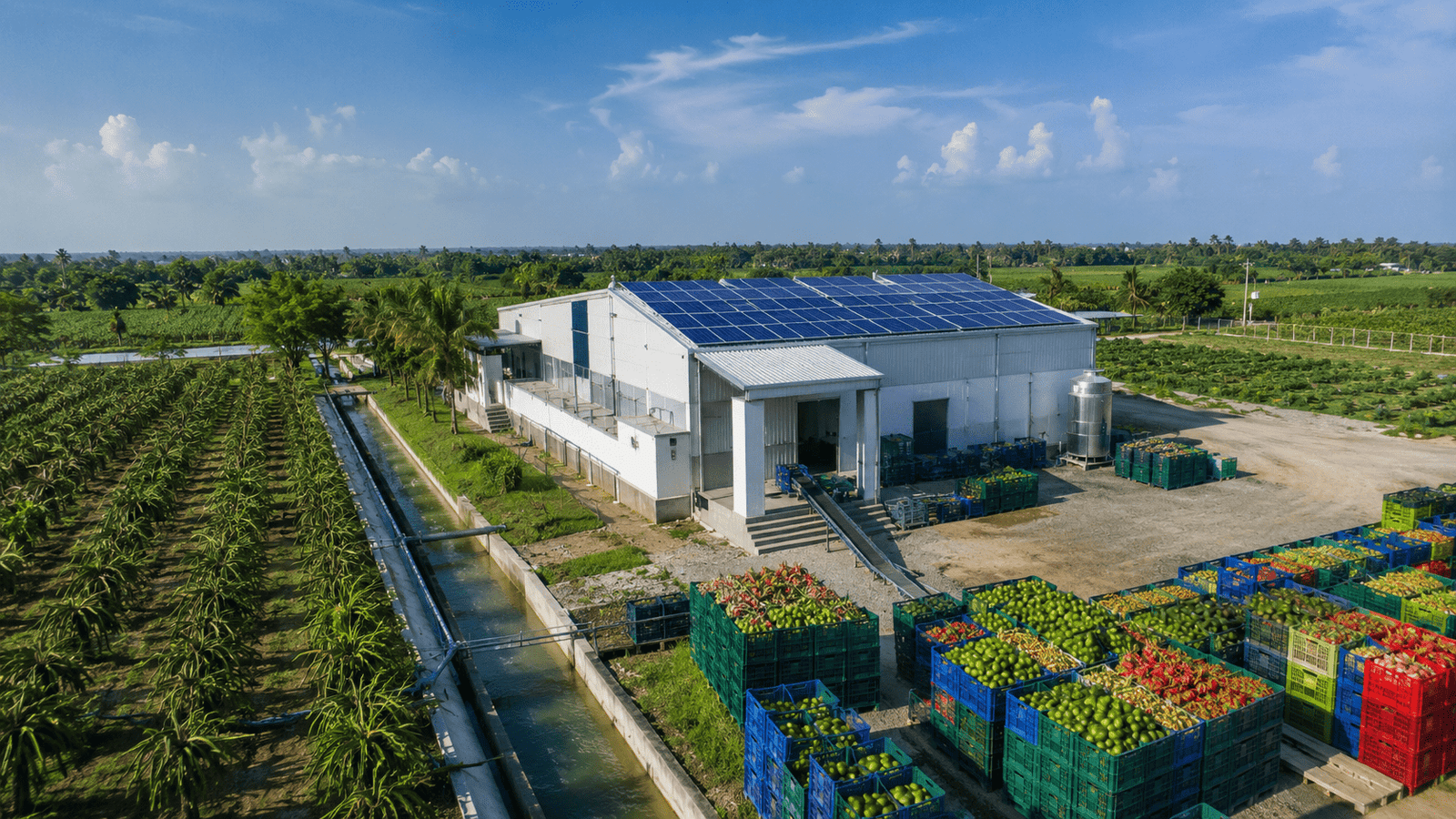
India’s Agriculture Infrastructure Fund (AIF) is encouraging investment in modern farm infrastructure. The ₹1 lakh crore scheme supports individual landowners, agri-entrepreneurs, and Farmer Producer Organizations (FPOs).
The scheme helps farmers and businesses access funding for projects such as cold storage units, packhouses, solar dryers, and sorting facilities.
A major benefit is the 3% annual interest subvention on eligible loans of up to ₹2 crore. This can reduce the cost of setting up essential infrastructure on agricultural land.
As a result, farmland is increasingly becoming more than just a place to grow crops. With the right infrastructure, it can become a productive and value-added agricultural asset.
The AIF aims to improve India’s post-harvest infrastructure. It focuses on reducing losses and improving the way agricultural produce is stored, processed, and transported.
Here are some of the key financial benefits.
Eligible borrowers can receive a 3% interest subvention on loans of up to ₹2 crore.
The benefit is available for a maximum period of 7 years. This can make it easier for farmers and agri-businesses to invest in farm infrastructure.
Eligible loans can also receive credit guarantee support through CGTMSE.
This can reduce the need for traditional collateral for qualifying borrowers. The government also supports the applicable guarantee fees under the scheme.
Agricultural infrastructure projects often require significant upfront investment.
The AIF provides structured repayment options to help borrowers manage these investments alongside their agricultural cash flows. Depending on the project and lending arrangement, borrowers may also receive a suitable moratorium period.
Modern infrastructure can improve both the productivity and commercial potential of agricultural land.
For example, a farm with access to cold storage, packhouses, sorting facilities, and solar drying units can handle produce more efficiently.
This can create several advantages for landowners.
Farmers often have to sell perishable crops soon after harvesting. This can become a problem when market prices are low.
On-farm cold storage can provide additional flexibility.
Instead of selling immediately, growers may be able to store their produce and wait for a better market opportunity.
A significant amount of agricultural produce can be lost between harvesting and reaching the consumer.
Better storage, sorting, and primary processing facilities can help reduce these losses.
Farm-gate infrastructure also reduces the distance that fresh produce needs to travel before it is properly handled or stored.
Infrastructure can help farmers move beyond basic crop production.
A farm equipped with storage and processing facilities can potentially create additional revenue opportunities. These may include better produce handling, value addition, leasing opportunities, and improved market access.
This can make well-developed farmland more attractive to farmers, agricultural businesses, and long-term investors.
The role of farmland is changing.
Earlier, agricultural land was mainly valued based on its location, soil quality, water availability, and crop productivity. Today, infrastructure is becoming another important part of the equation.
Cold storage, irrigation systems, solar power, packhouses, processing facilities, and efficient logistics can improve the overall usability of agricultural land.
Government initiatives such as the Agriculture Infrastructure Fund can help accelerate this transformation by making infrastructure financing more accessible.
For investors, the development of agricultural infrastructure can create an important distinction between basic farmland and managed, infrastructure-supported farmland.
A well-planned agricultural property can combine:
Together, these features can improve the long-term economic potential of the property.
However, infrastructure alone does not guarantee higher returns or land appreciation. Actual outcomes depend on factors such as location, crop selection, water availability, infrastructure quality, market demand, operating costs, and land regulations.
India’s agricultural sector is moving towards a more organized and infrastructure-driven model.
As investment increases in storage, processing, irrigation, renewable energy, and farm-gate logistics, agricultural land can become an increasingly productive asset.
The Agriculture Infrastructure Fund is one of the initiatives supporting this transition.
For landowners and agricultural entrepreneurs, the opportunity is not only to own farmland but also to build a more efficient agricultural ecosystem around it.