📍 Bengaluru ENG
Mogg's News
Farmland · Land & Investment · Bengaluru
Advertisement
Latest
Grow your wealth with secure, managed farmland●Unlock High Returns with Premium Farmland Investment●Subscribe now to catch every update!●Grow your wealth with secure, managed farmland●Unlock High Returns with Premium Farmland Investment●Subscribe now to catch every update!●
← Home
Home › Agriculture
Agriculture

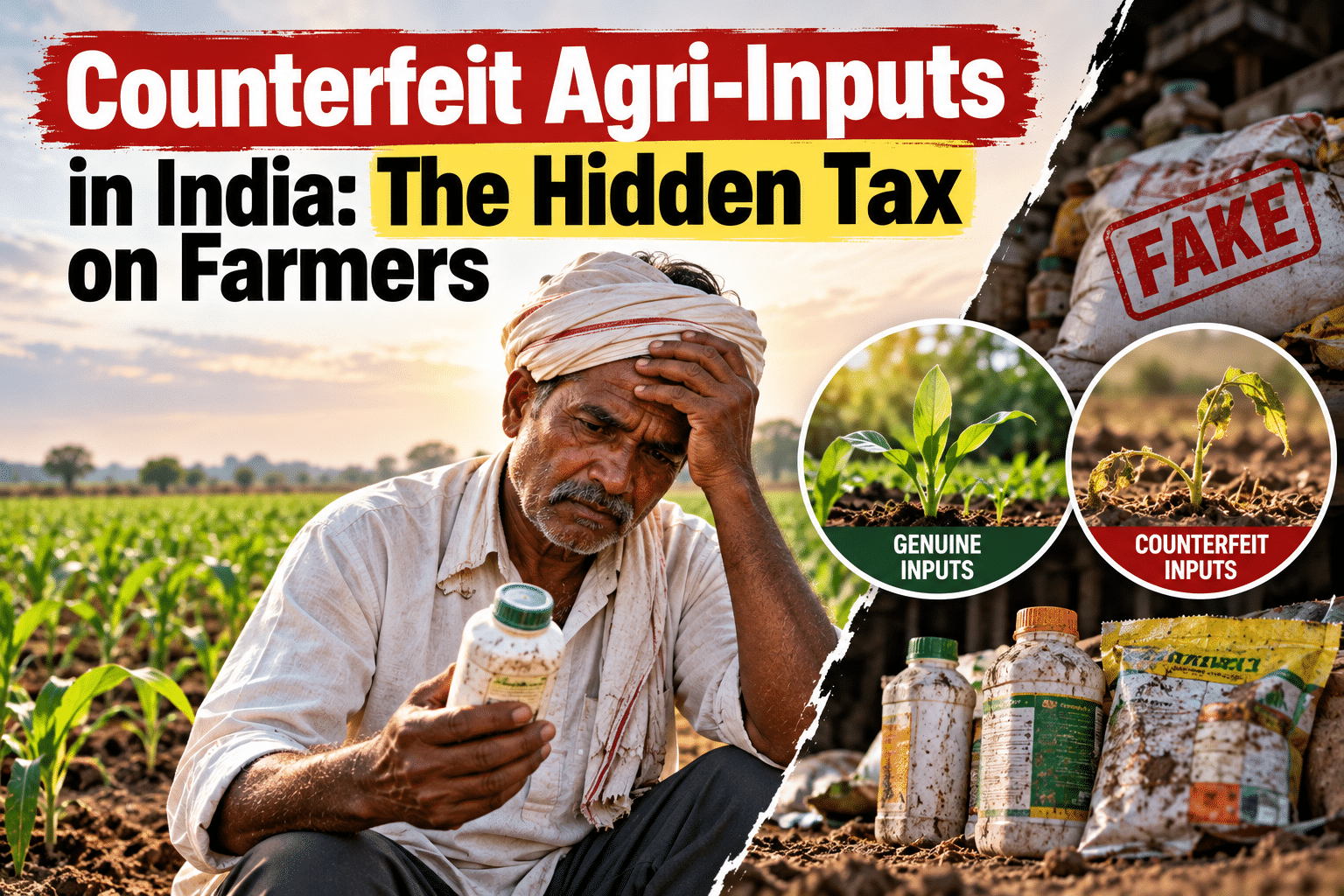
Counterfeit Agri-Inputs in India: The Hidden Tax on Indian Agriculture

Counterfeit agricultural inputs, such as fake pesticides, adulterated fertilisers, and spurious seeds, are costing Indian farmers heavily. Industry estimates suggest 25 to 33 per cent of pesticides sold in India may be counterfeit, causing roughly 10 million tonnes of food loss each year. Farmers often discover the fraud only after their crops fail, losing their investment and sometimes falling into debt. The author argues this is more than a compliance issue, since it erodes the trust that agriculture depends on and threatens food security.

A
By Abdulrazak
Published: October 31, 2026, 09:15 IST · Updated: October 31, 2026, 14:32 IST · 3 min

Every year, Indian farmers lose money to a cost that does not appear in any government budget or official record. Counterfeit agri-inputs, including fake pesticides, adulterated fertilisers and spurious seeds, drain resources from the farm sector and put the country’s food security at risk.

Counterfeit agri-inputs are fake or substandard products sold under the names of genuine brands. They include pesticides with the wrong active ingredients or diluted strength, fertilisers mixed with cheap fillers, and seeds that fail to germinate or perform as promised. Many of these products look almost identical to the real thing, so farmers often cannot tell the difference at the point of sale.

The deception usually comes to light only after the crop has failed. By then, the farmer has already spent money on seed, land preparation, labour, and inputs. A failed crop can leave a family with debt and no income for the season. Because the loss arrives weeks or months after the purchase, it is difficult for farmers to trace the product back to the seller or to seek compensation.

An industry analysis cited by the author estimates that 25 to 33 per cent of pesticides sold in India may be counterfeit. The same estimate puts annual food losses at around 10 million tonnes. These figures come from industry estimates rather than official government data, so they should be read as indicative of the scale of the problem rather than as precise measurements.

Even so, the impact is significant. Food lost to crop failure reduces supply, and farmers who lose money struggle to invest in the next season. Over time, this weakens the productivity of the farm sector.

The author argues that counterfeiting is more than a regulatory matter. It erodes trust between farmers, dealers and companies, and trust is essential to how agriculture works. When farmers cannot rely on the products they buy, they may hesitate to adopt improved inputs, even when those inputs are genuine and beneficial.

Smallholder farmers have the least room to absorb losses. A single failed crop can wipe out their savings, push them further into debt, and make them vulnerable to unfair lending. Larger farms may be able to recover from a bad season. Small farms often cannot.

Addressing counterfeit inputs requires coordinated action. Experts commonly point to several measures:

Counterfeit agri-inputs are a hidden tax on Indian agriculture, paid by the farmers who can least afford it. Protecting them means protecting the trust that the farm sector depends on, and that trust is essential to ensuring the country’s food security.
#Agriculture #ManagedFarmland #MoggsEstates
Advertisement · 728 x 120

Related Stories

Lifestyle

India Hosts World Circular Economy Forum 2026 as Sustainable Living Takes Centre Stage

The World Circular Economy Forum 2026 has begun in Gandhinagar, Gujarat. The global event is being held from September 15 to 18. This is the first time the forum is being hosted in South Asia. More than 2,000 participants from over 65 countries are attending the event. The forum focuses on recycling, reuse, resource efficiency and sustainable living. It also looks at how businesses, governments and communities can reduce waste.

September 15, 2026 · 10 minutes
Farms

Farmer Producer Organisations Increase Agri Trade on NCDEX as Digital Markets Expand

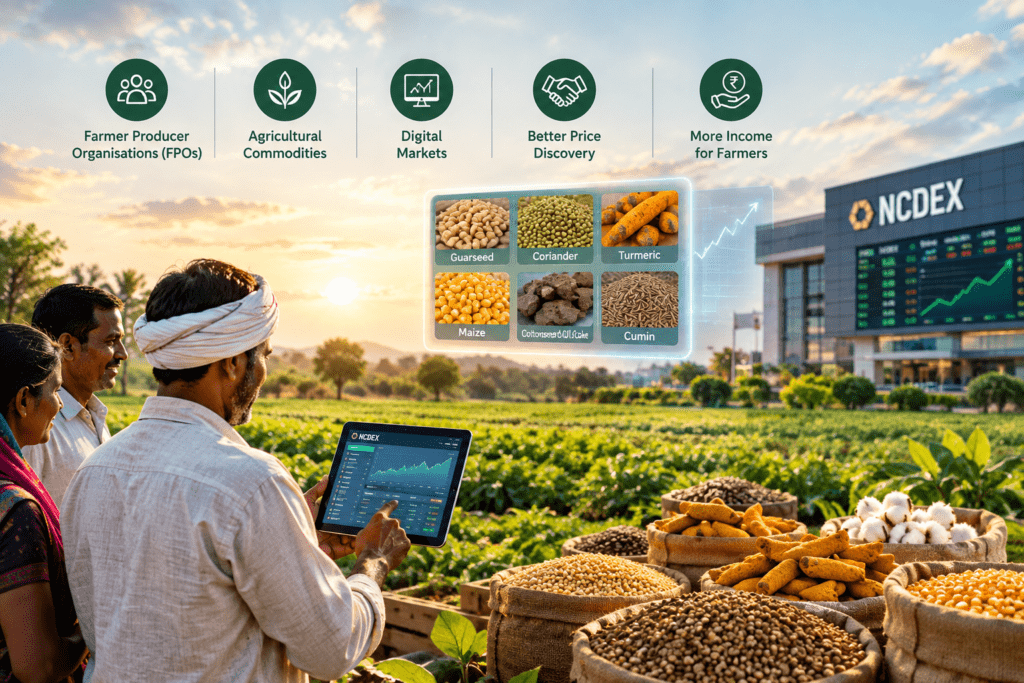
FPOs Increase Agricultural Trade on NCDEX Farmer Producer Organisations are becoming more active in India's organised agricultural markets. During the first five months of the 2026–27 financial year, 75 FPOs traded around 0.15 million tonnes of agricultural commodities on NCDEX. The total value of these trades reached about ₹57 crore between April and August 2026. The growth shows how farmer collectives are exploring digital commodity markets to sell agricultural produce and access new marketing options.  The development could strengthen the connection between farmers, commodity markets and organised agricultural trade.

September 12, 2026 · 10 minutes
Agriculture

Dryland Congress 2026 Calls for New Push to Make Farming More Resilient

Dryland Agriculture Takes Centre Stage in New Delhi India has renewed its focus on dryland agriculture as the Dryland Congress 2026 concluded in New Delhi. The three-day Congress ended with the adoption of the Delhi Declaration on Drylands. The declaration calls for greater cooperation, innovation and knowledge sharing to strengthen farming in dryland regions. The Congress was organised by the Indian Council of Agricultural Research (ICAR) and the International Crops Research Institute for the Semi-Arid Tropics (ICRISAT). 

September 15, 2026 · 10 minutes
" in single-news.php (uses $post_id which is already set inside your while(have_posts()) loop — if your loop has closed by this point, move this snippet inside the loop instead) -->