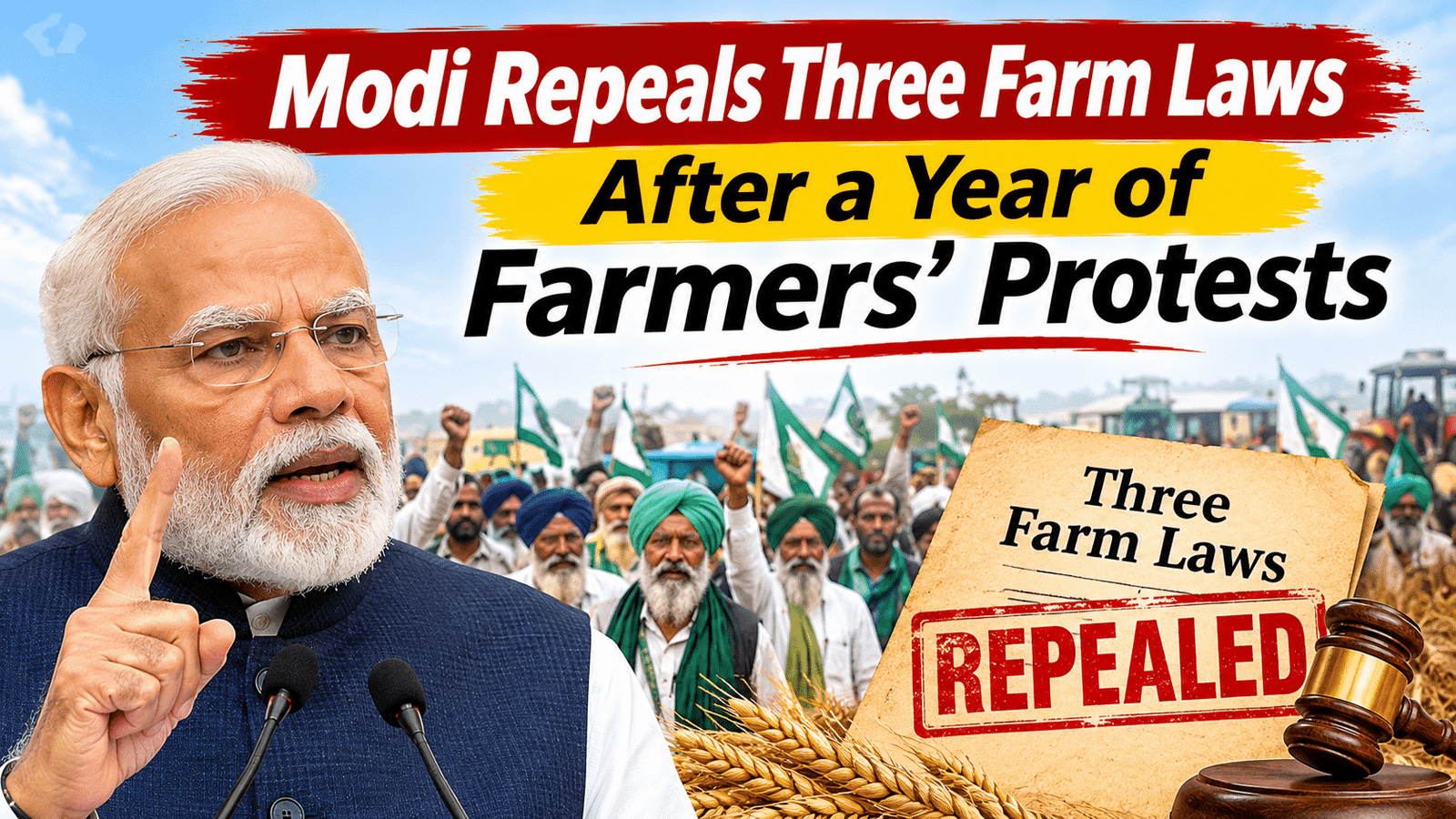
On November 19, 2021, Prime Minister Narendra Modi announced that the government would repeal three agriculture laws that farmers had protested for more than a year. The decision was a major reversal for the government, which had earlier insisted the laws were necessary.
The laws were introduced in September 2020 to deregulate the farm sector. They allowed farmers to sell produce to buyers outside government-regulated wholesale markets, where growers are assured a minimum price. The government said the reforms would reduce waste and inefficiency and create better prices and new opportunities for farmers.
Farmers feared the changes would lower the prices they received and weaken the support system that protects them. Small farmers said the laws made them vulnerable to competition from large businesses, and they worried that price support for staples such as wheat and rice could eventually disappear.
Farmers camped by major roads around New Delhi for nearly a year. The protests drew national and international attention, including support from activists and celebrities. The movement turned violent on January 26, 2021, when protesters stormed the historic Red Fort. One protester died, and scores of farmers and police were injured.
Modi announced the repeal in a national address marking the birth anniversary of Guru Nanak. He said the government had failed to convince small farmers of the laws’ benefits and asked protesters to return home. The repeal was to be carried out in the next session of Parliament. The announcement came months before important state elections in Uttar Pradesh and other northern states with large rural populations.
The repeal did not settle every issue. Farmers continued to demand legal minimum support prices for all crops, not just rice and wheat. Critics also said the decision left unresolved questions about the cost and structure of farm subsidies and price supports. Some food and policy experts argued that the reforms would have attracted investment and technology into agriculture.