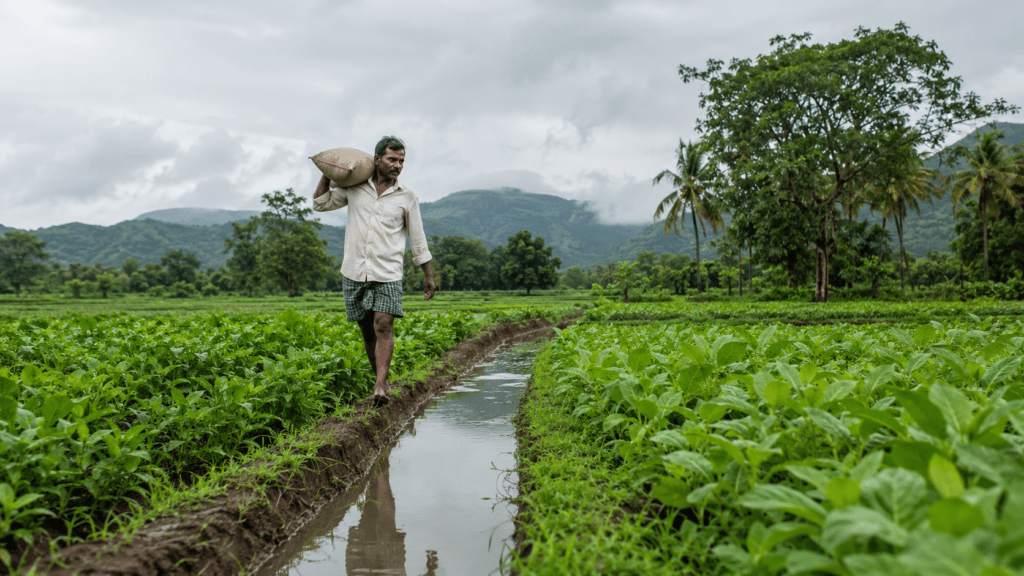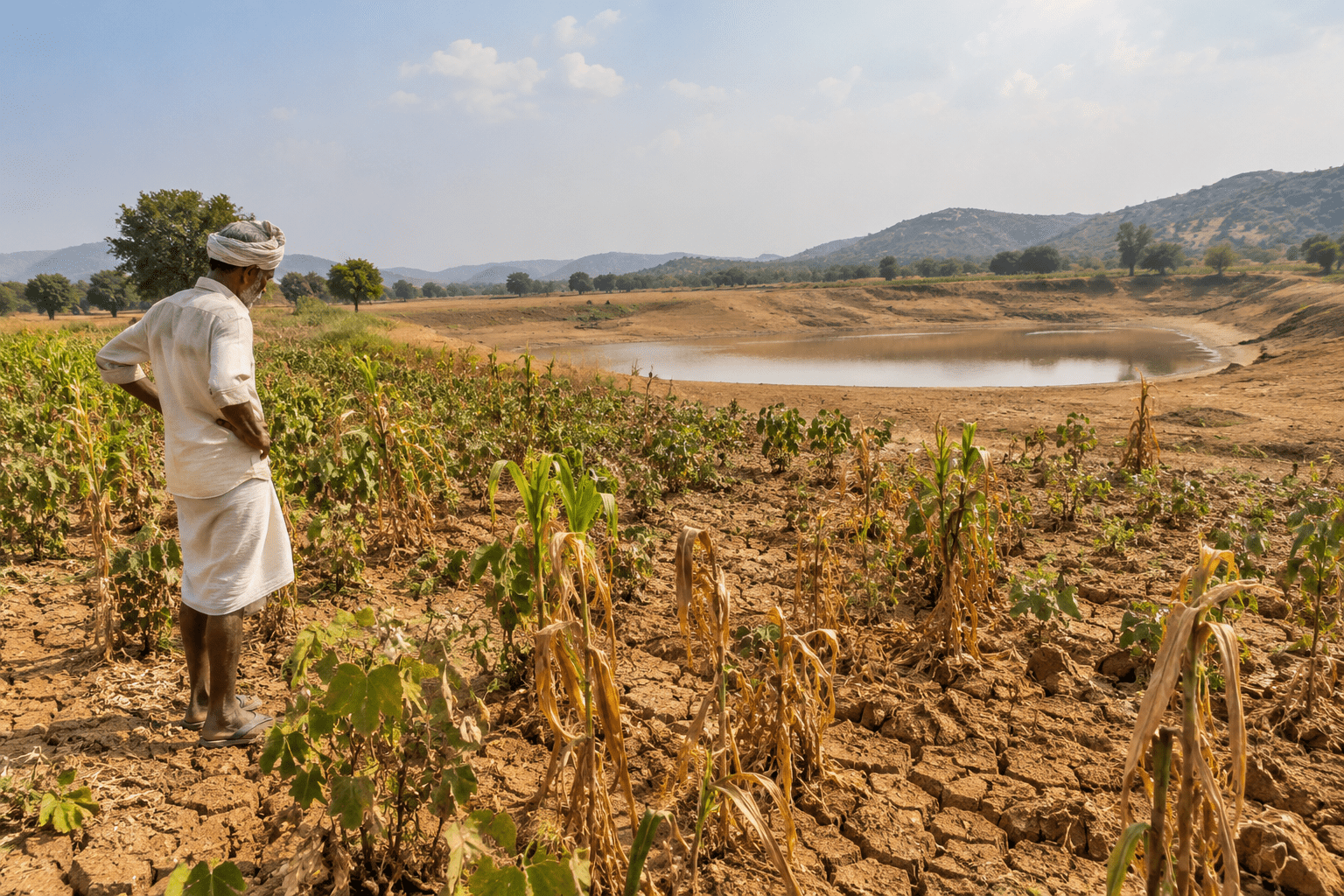
Karnataka’s farms are facing increasing pressure as the state continues to experience a weak monsoon. As of September 7, 2026, 122 taluks have reportedly received no rain for three consecutive weeks. The prolonged dry spell is raising concerns over agricultural and horticultural production across the state.
Officials estimate that around 50% of agricultural and horticultural harvests could be affected if the rainfall situation does not improve. The concern is particularly important for farmers who depend on the monsoon for crop growth and soil moisture.
The latest developments show that the situation is not limited to a small number of farming regions.
Karnataka’s drought review committee is assessing rainfall conditions, crop damage and other indicators. State minister Eshwar Khandre said 180 to 200 taluks could be declared drought-hit by the end of September if the situation continues.
This would represent a significant expansion from the 101 taluks already declared drought-affected under the applicable criteria, according to recent statements from the state government.
Monsoon rainfall plays a major role in Karnataka agriculture.
Farmers depend on timely rainfall for sowing, crop development and maintaining soil moisture. A prolonged dry spell can therefore affect both standing crops and upcoming agricultural activity.
The impact can vary by crop and location. Areas with access to reliable irrigation may have greater protection than farms that depend mainly on rainfall.
The current situation also comes after a weak monsoon pattern across India. Reuters reported that India’s rainfall was 35% below normal in June, while August also recorded deficient rainfall. The lack of moisture has affected crops such as cotton, soybean, corn and rice.
Lower farm output can create several challenges for rural communities.
When crops fail or yields decline, farmers may face lower income while still having to meet cultivation expenses. These costs can include seeds, fertilisers, labour, irrigation and other farm inputs.
A reduction in production can also affect local agricultural supply chains. Traders, agricultural workers, transporters and other rural businesses depend on regular farm activity.
The situation is therefore bigger than crop production alone. A prolonged drought can affect the wider rural economy.
The state government is continuing to assess the situation.
Recent reports indicate that drought conditions are being reviewed using rainfall and crop-related indicators. Additional taluks may be added to the drought list if they meet the required criteria.
The government has also been inspecting affected regions. During a recent visit to drought-hit areas in Gundlupet and Chamarajanagar, Karnataka Deputy Chief Minister G. Parameshwara reviewed crop damage, fodder availability and employment-related concerns.
The latest drought concerns also highlight the importance of water management in agriculture.
Earlier this month, the Union government reviewed the Watershed Development Component of Pradhan Mantri Krishi Sinchayee Yojana (WDC-PMKSY) and stressed the need to speed up watershed projects.
The programme focuses on improving water availability, land productivity and farmer livelihoods.
For Karnataka farms, better watershed development can help improve water retention and reduce dependence on unpredictable rainfall over the longer term.
The current drought situation highlights a wider challenge facing agriculture: greater weather uncertainty.
Farmers need reliable access to water, timely weather information, suitable crop planning and effective risk-management tools. At the same time, improving soil health and water conservation can help farms become more resilient.
For policymakers, the immediate priority is assessing crop damage and supporting affected farming communities. Over the longer term, investment in irrigation, watershed development and climate-resilient farming practices will become increasingly important.
September rainfall will remain important for Karnataka’s agricultural outlook.
If rainfall improves, some crops may recover depending on their growth stage and local conditions. However, a continued dry spell could increase crop losses and put further pressure on farm incomes.
For now, Karnataka’s drought assessment remains an evolving situation. The number of affected taluks and the eventual scale of crop losses will depend on rainfall, crop conditions and government assessments in the coming weeks.