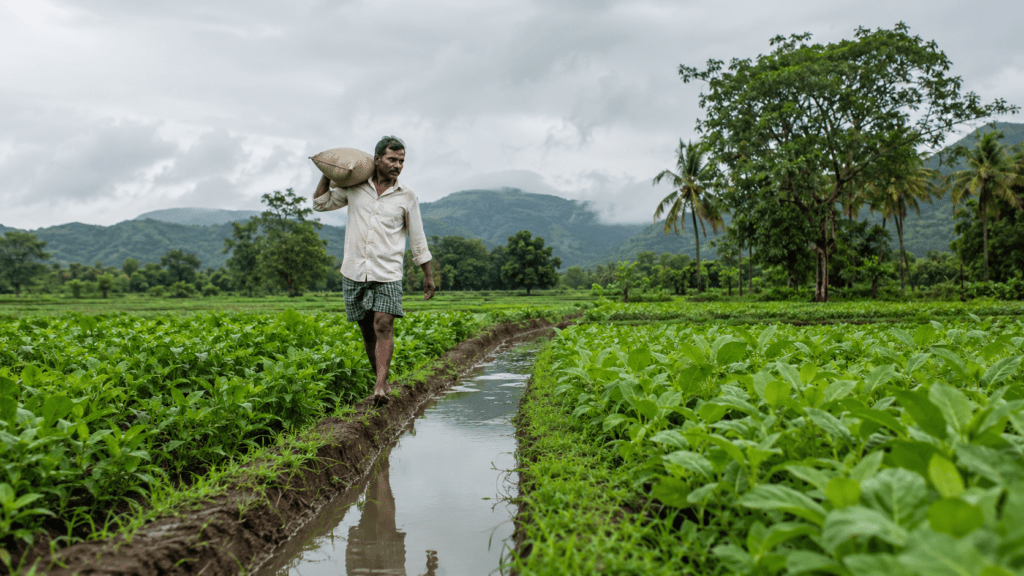
India’s agricultural market is seeing a new connection between farming and climate finance.
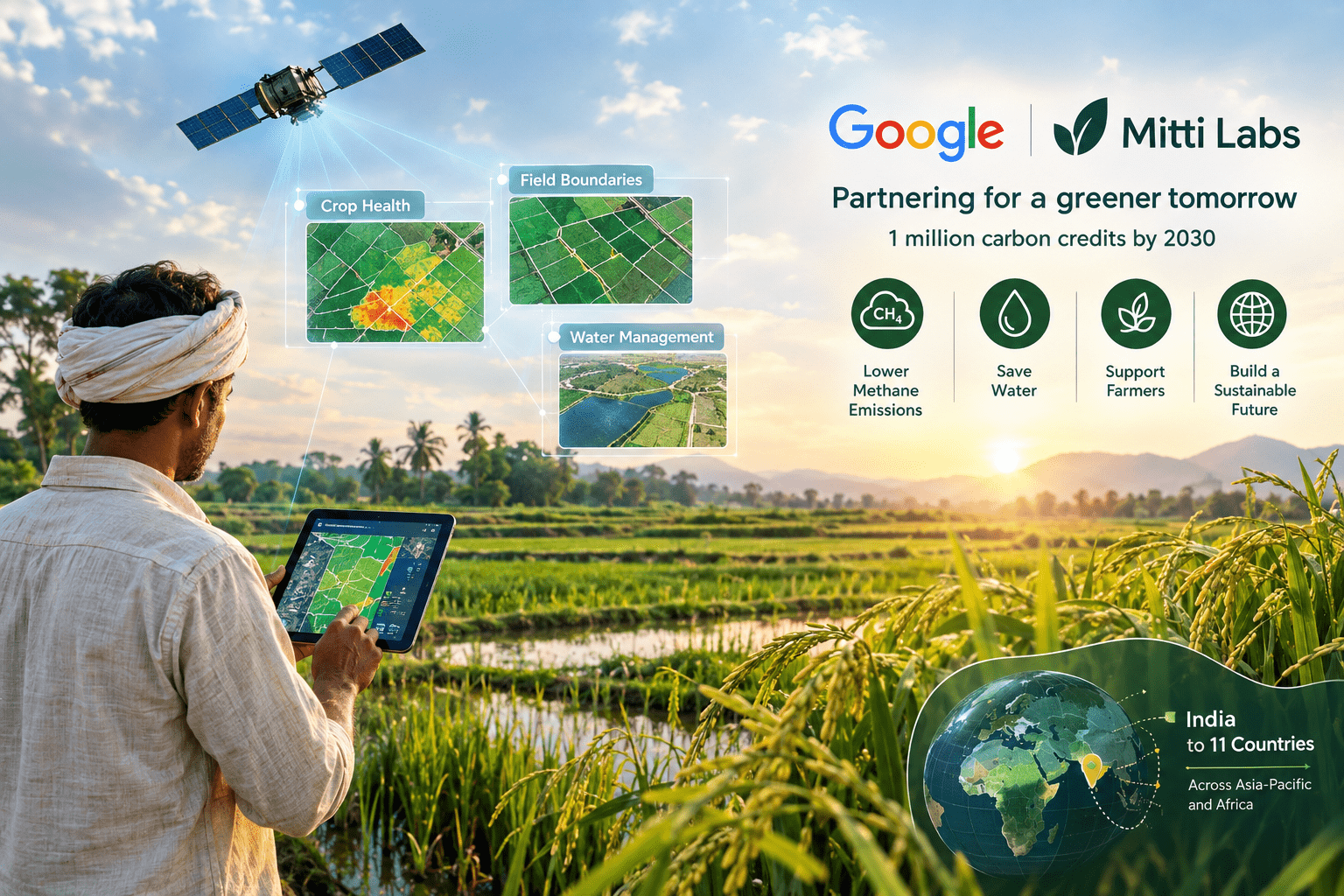
Google has signed a four-year agreement with Indian climate-tech company Mitti Labs to purchase 1 million carbon credits by 2030.
The credits will come from projects that help rice farmers reduce methane emissions while using less irrigation water. The agreement is one of the largest publicly announced carbon-credit purchases linked to rice methane reduction.
The development highlights how environmental practices are becoming part of new financial markets.
For farmers, the opportunity goes beyond carbon reduction. It can also create new income streams while encouraging better water management.
Rice is one of the world’s most important food crops. It is also a major source of agricultural methane emissions.
Traditional rice cultivation often keeps fields flooded for long periods. These waterlogged conditions can create an environment where methane-producing microbes become active.
This makes rice farming an important area for climate action.
Mitti Labs is working with farmers to introduce Alternate Wetting and Drying (AWD). Under this approach, rice fields are periodically drained and reflooded instead of remaining continuously flooded.
The company says the practice can reduce methane emissions by about 50% and lower irrigation water use by close to 40%, without reducing crop yields.
This creates an interesting link between agriculture and the carbon market.
A farming practice designed to save water can also generate measurable climate benefits.
Carbon credits are market instruments linked to verified reductions or removals of greenhouse gas emissions.
In agriculture, credits can come from activities that reduce emissions from farming.
Rice farming is particularly relevant because methane has a strong short-term warming effect.
Under the Mitti Labs project, farmers adopt practices that reduce methane from rice fields. The resulting climate benefits are measured and verified before credits are issued.
Google will purchase the credits generated through the project.
This creates a market connection between farm-level climate action and corporate sustainability goals.
Mitti Labs says its projects use satellite technology and field data to measure crop growth, soil moisture and flooding conditions across farms.
The project is not focused only on carbon.
Water conservation is another major benefit.
Rice requires significant amounts of water, especially when fields remain flooded throughout cultivation.
AWD changes this approach by allowing fields to dry for controlled periods before irrigation resumes.
Google says its initiative with Mitti Labs is expected to help conserve billions of gallons of water across regional basins in India once fully implemented.
Mitti Labs estimates that the partnership could eventually cover more than 100,000 hectares and unlock around 1.5 trillion litres of water savings by 2030.
That makes the project relevant to both the carbon market and India’s growing focus on water-efficient agriculture.
The carbon-credit opportunity is particularly relevant to southern India.
The broader project is expected to cover rice farms in Karnataka, Andhra Pradesh and Telangana, according to Mitti Labs.
The company says its work with farmers is designed to combine climate action with practical agricultural benefits.
This is important because farmers are more likely to adopt new practices when they provide benefits beyond environmental outcomes.
Lower water consumption can reduce irrigation requirements.
Carbon payments can create an additional source of income.
And digital monitoring can help measure results across large farming areas.
The combination could make climate-smart farming more commercially attractive.
One of the biggest challenges in agricultural carbon markets is measurement.
Farmland is spread across thousands of small plots. Farming conditions can also change quickly.
Mitti Labs uses a GeoAI platform that combines satellite radar imagery with field-level information.
The technology can track factors such as crop growth, soil moisture and flooding.
This allows climate projects to measure changes across large numbers of farms rather than relying only on manual field inspections.
Better measurement can make agricultural carbon projects easier to monitor.
It can also help buyers assess whether the environmental claims behind credits are supported by data.
The Google-Mitti Labs agreement shows how corporate climate spending can reach agricultural communities.
Instead of climate finance being limited to renewable energy or large industrial projects, more capital is moving toward farming and nature-based solutions.
Mitti Labs says it already works with more than 100,000 farmers and has helped save more than 500 billion litres of water through its projects and partnerships.
The company also says a majority of project revenue goes to farming communities, although it has not disclosed how much individual farmers involved in the Google project will receive.
This distinction is important.
Carbon markets can create new opportunities for farmers, but the actual financial benefit depends on project design, verification costs, credit prices and how revenue is shared.
The rice carbon-credit agreement comes at a time when India’s wider green finance ecosystem is developing.
Carbon markets, green bonds, climate-focused lending and sustainable investment are creating new ways to finance environmental projects.
Industry groups are also calling for stronger climate-finance systems.
A recent Confederation of Indian Industry taskforce proposed a dedicated green finance institution along with a climate finance taxonomy and stronger sustainability reporting.
These developments suggest that environmental performance is increasingly becoming part of financial decision-making.
For agriculture, that could mean greater interest in projects that combine productivity with resource conservation.
The bigger story is not simply about one carbon-credit agreement.
It is about how the definition of agricultural value is changing.
A farm can produce food.
It can also conserve water, improve soil management and reduce greenhouse gas emissions.
Technology can help measure those environmental benefits.
Markets can then create financial value around verified outcomes.
This model could encourage more farmers to adopt practices that are better suited to a changing climate.
It could also attract private capital into agricultural projects that previously depended mainly on traditional farm financing.
The growth of rice carbon credits in India shows how environmental action is becoming connected with financial markets.
Google’s agreement with Mitti Labs puts methane reduction, water conservation, technology and farming in the same investment conversation.
For Indian agriculture, this could open another path toward sustainable growth.
The future of farming may not be measured only by how much a field produces.
It may also be measured by how efficiently it uses water, how much pollution it avoids and how much value it creates for both farmers and the environment.