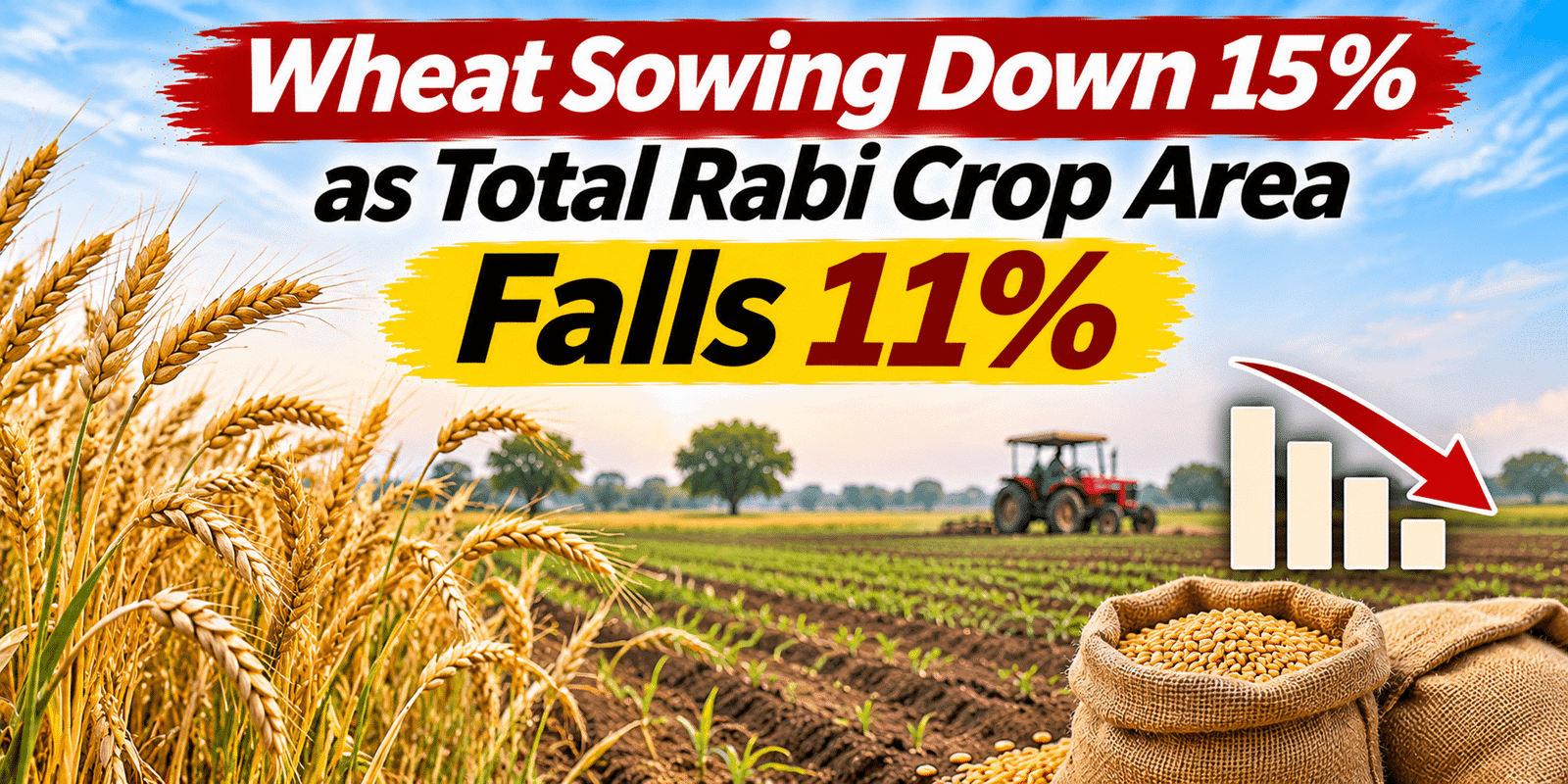
Wheat sowing in India is running 15% behind last year, and total rabi crop coverage has fallen 11%. As of November 13, wheat had been sown on 50.07 lakh hectares, against 59.10 lakh hectares a year earlier, according to data from the Union Agriculture Ministry. A weaker monsoon and low reservoir levels are slowing the season.
Wheat is the main rabi crop. It is normally sown in October and November and harvested in March and April. This year’s sowing is trailing last year’s pace, mainly because the June to September monsoon was 13% deficient. The shortfall reduced the soil moisture farmers rely on before sowing begins.
Experts point to limited irrigation as another constraint. Reservoir and canal levels are below normal in key wheat-growing states, and wheat needs several rounds of irrigation after planting. Data from the Central Water Commission show that as of November 12, live storage in 178 reservoirs was 163.055 billion cubic metres. That is well below the 257.812 billion cubic metres the country had created.
The decline extends across other rabi crops:
Across all rabi crops, the area sown had reached 178.25 lakh hectares as of November 13, down 11.33% from 201.04 lakh hectares a year earlier.
Sowing could pick up if rain improves soil moisture and irrigation supplies recover. Weekly sowing data from the Union Agriculture Ministry will show whether the gap is closing, especially for wheat, gram, and mustard.