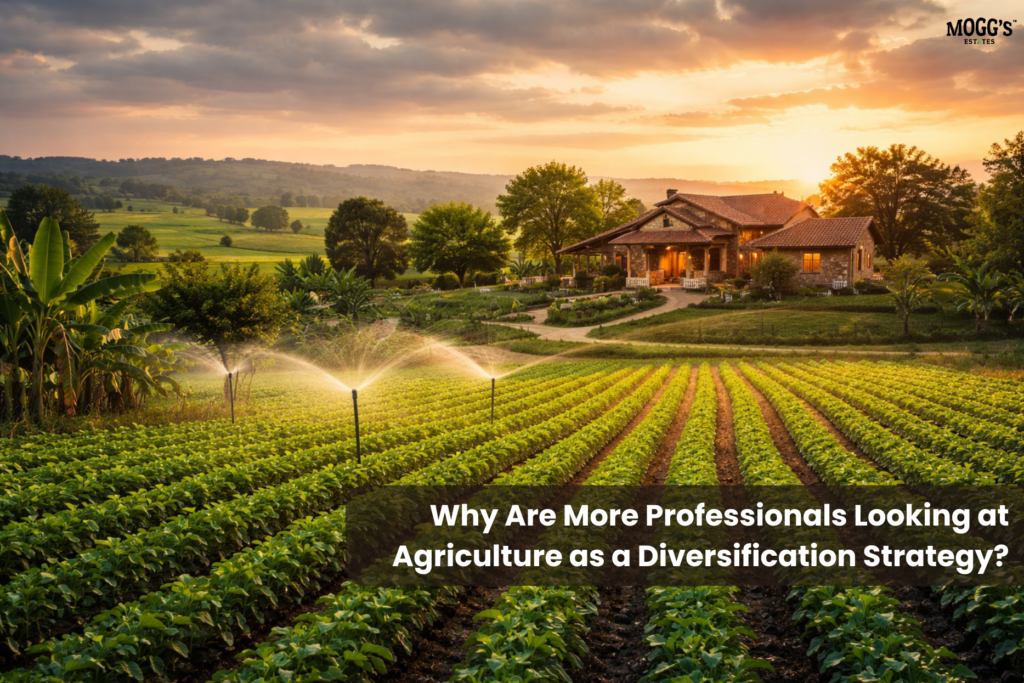
In a world where economic cycles shift quickly and traditional investment avenues are volatile, professionals are becoming more intentional about where they invest their money. Stocks fluctuate, urban real estate prices can plateau, and global uncertainties often reshape financial priorities overnight. Amid this landscape, one asset class is quietly regaining attention: agriculture.
Once viewed primarily as a livelihood, agriculture is increasingly being considered a long-term diversification strategy. From senior executives to entrepreneurs and tech professionals, many are exploring farmland as part of a balanced portfolio. But what exactly is driving this shift?
The Growing Need for Portfolio Diversification
Diversification has always been a cornerstone of smart investing. Relying heavily on a single asset class can expose investors to unnecessary risk. Professionals today are asking a simple question: What assets can provide stability when markets become unpredictable?
This is where farmland enters the conversation.
Agricultural land tends to follow different economic cycles compared to equities or urban property. While it is not immune to risk, its value is often influenced by fundamental drivers such as food demand, population growth, and land scarcity rather than short-term speculation.
For investors seeking balance, farmland offers something many modern assets cannot: intrinsic utility.
Farmland: A Tangible Asset in a Digital Era
We live in an increasingly digital economy where much of our wealth exists on screens. This has led many professionals to reconsider the importance of owning physical, income-generating assets.
Farmland is finite. As cities expand, the availability of productive land continues to shrink. This dynamic naturally supports long-term relevance.
Unlike trend-driven investments, farmland is tied to one of humanity’s most essential needs, food production. Regardless of economic cycles, the agricultural sector remains foundational.
This doesn’t mean farmland guarantees returns, but it does mean the asset is rooted in real-world demand, which is a compelling reason professionals are paying attention.
The Rise of Managed Farmland
Historically, one of the biggest barriers to farmland ownership was the operational complexity of farming. Farming requires knowledge, time, and consistent oversight, resources that many professionals do not have.
The emergence of managed farmland has begun to change that perception.
Under this model, agricultural operations, maintenance, and infrastructure are typically handled by experienced teams. This allows investors to participate in land ownership without being directly involved in day-to-day farming activities.
For many buyers, this structure reduces uncertainty and makes agriculture feel more accessible.
Taking this a step further, premium managed farmland developments focus on thoughtful land planning, irrigation systems, soil preparation, internal roads, and long-term usability. These features aim to support both productivity and asset longevity.
Organizations such as Mogg’s Estates are part of this evolving landscape, reflecting how farmland ownership is adapting to meet the expectations of modern investors who prioritize clarity, planning, and sustainability.
Why Farmland Near Bangalore Is Drawing Attention
Location plays a critical role in any land-based investment, especially in agricultural property.
In recent years, farmland near Bangalore has attracted growing interest. The city’s rapid expansion, infrastructure upgrades, and improved connectivity have encouraged investors to look beyond traditional residential markets.
Nearby regions are increasingly being evaluated not just for agricultural potential, but also for long-term relevance as urban corridors evolve.
When professionals explore managed farmland near Bangalore locations, they often consider factors such as:
- Road accessibility
- Water availability
- Soil health
- Proximity to growth zones
- Legal clarity
- Long-term development outlook
The goal is not merely to purchase land, but to select land that remains viable and valuable over time.
Stability Over Speculation
Another reason professionals are leaning toward agriculture is a shift in mindset, from rapid gains to measured, sustainable growth.
Farmland is rarely seen as a short-term play. Instead, it tends to reward patience.
Many investors appreciate that land values typically do not react as dramatically to daily market sentiment as some financial instruments do. This slower trajectory can feel reassuring for those focused on wealth preservation alongside growth.
Additionally, farmland can serve as a counterbalance within a broader portfolio, helping reduce overexposure to highly correlated assets.
Beyond Returns: The Lifestyle Dimension
Interestingly, financial logic is not the only driver behind this trend.
After years of fast-paced urban living, many professionals are placing greater importance on quality of life. Open spaces, environmental connection, and the idea of owning a piece of land carry emotional value.
For some, farmland represents:
- A future retreat
- A multi-generational asset
- A connection to nature
- A long-term family legacy
While these factors are subjective, they contribute to the growing appeal of farmland.
Important Considerations Before Investing
Despite its advantages, farmland is not a one-size-fits-all investment. Thoughtful evaluation is essential.
Key aspects to examine include:
Legal Due Diligence: Clear titles, zoning regulations, and compliance should always be verified.
Water and Soil Quality: These directly influence the land’s usability and long-term sustainability.
Access and Infrastructure: Well-connected land is often more practical and relevant over time.
Investment Horizon: Farmland typically aligns better with long-term strategies rather than quick exits.
Liquidity Expectations: Selling land may take longer compared to other asset classes.
Approaching farmland with realistic expectations helps investors make more informed decisions.
Sustainability and Future Relevance
Another emerging theme influencing professional investors is sustainability.
Agriculture sits at the intersection of environmental responsibility and economic necessity. As conversations around climate resilience, responsible land use, and food security grow louder, agricultural assets may continue to hold strategic importance.
Planned farmland developments that emphasize soil health, water management, and ecological balance reflect a broader shift toward future-focused investing.
So, Why This Shift Now?
The growing interest in agriculture is not accidental, it reflects changing investor priorities.
Today’s professionals are increasingly drawn to assets that offer:
- Tangibility
- Long-term relevance
- Diversification potential
- Measured growth
- Real-world utility
Farmland checks many of these boxes when chosen carefully.
Rather than replacing traditional investments, agriculture is often being positioned as a complementary asset, one that contributes balance to an evolving portfolio.
Final Thoughts
Agriculture is no longer viewed solely through the lens of tradition. It is being rediscovered as a space where practicality meets long-term thinking.
Whether it is premium managed farmland, strategically located farmland near Bangalore, or professionally planned developments by organizations like Mogg’s Estates, the sector is gradually aligning with the expectations of modern investors.
Is farmland the right diversification strategy for everyone? Not necessarily. But for professionals seeking tangible ownership, patient growth, and future relevance, it is increasingly becoming a conversation worth having.
As with any investment, careful research, due diligence, and alignment with personal financial goals remain essential.