New Delhi, August 20, 2026: India’s agricultural sector is entering a new phase where technology, climate resilience and scientific research are becoming central to the future of farming.
At the 97th Annual General Meeting of the Indian Council of Agricultural Research (ICAR), held in New Delhi on August 18, policymakers and agricultural scientists outlined a stronger focus on turning research into practical solutions for farmers.
The message was clear: the future of agriculture will not depend only on producing more. It will also depend on producing smarter, adapting to climate risks and helping farmers create greater value from their land.
One of the key themes of the meeting was the need to move agricultural innovation faster from laboratories to the field.
Union Agriculture Minister Shivraj Singh Chouhan called for a demand-driven research system that responds to the needs of farmers, markets and consumers. He also highlighted stronger partnerships between ICAR and industry so that new technologies can reach farmers more quickly.
This shift could change how agricultural innovation is viewed.
Instead of research remaining within institutions, technologies are increasingly expected to solve practical problems such as soil health, crop resilience, productivity, livestock health and resource management.
ICAR reported that around 805 intellectual property applications were filed during the past year, while technology commercialisation was strengthened across 36 institutions.
Climate change is making agricultural planning more complex. Unpredictable rainfall, heat, changing pest patterns and water stress can affect both crop productivity and farm incomes.
In response, climate-resilient agriculture has become a major research priority.
According to ICAR, 386 new crop varieties were released during the past year, with 94% classified as climate-resilient and 29% biofortified. These varieties are aimed at strengthening productivity while also addressing climate and nutritional challenges.
The development is significant because the value of agricultural land increasingly depends not only on its size or location, but also on how effectively it can support productive and sustainable farming.
Another important focus was integrated farming.
Rather than depending on a single crop, integrated farming combines different agricultural activities such as crops, livestock, horticulture, fisheries or other allied activities.
The approach can help farmers diversify their income sources while making better use of available land and resources.
ICAR highlighted integrated farming systems as an important pathway for improving the incomes of small and marginal farmers. The approach also supports more efficient resource use and can contribute to greater resilience when one agricultural activity faces a setback.
For modern farmland development, this is an important trend to watch. The farm of the future may increasingly be designed as a complete ecosystem rather than simply a piece of land used for one crop.
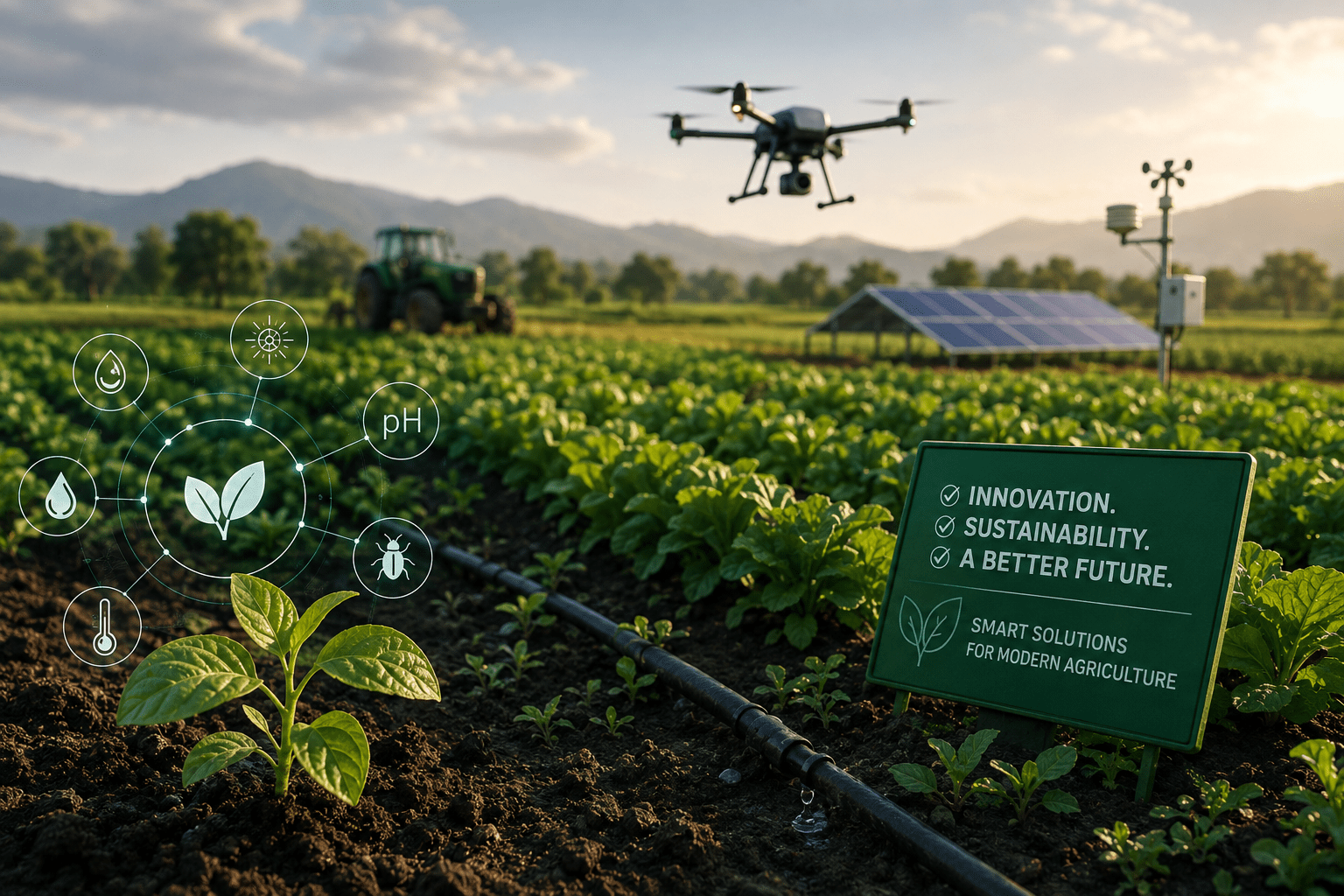
Agriculture is also becoming increasingly connected to digital technologies.
India’s Digital Agriculture Mission and AgriStack are creating digital infrastructure around farmers, land records and crop information. Government data published in August 2026 said that more than 10.31 crore Farmer IDs had been created across the country. The Digital Crop Survey during Rabi 2025–26 covered more than 31.3 crore plots across 648 districts.
Artificial intelligence is also finding practical applications.
The National Pest Surveillance System, for example, was being used by more than 10,000 extension workers as of July 2026, supporting surveillance across 73 crops and 436 pests. Another platform, BharatVistaar, had served more than 3 lakh farmers and addressed more than 72 lakh farmer queries, according to government data.
These developments indicate a broader transformation: agricultural decisions are gradually becoming more data-driven.
Technology alone cannot create sustainable agriculture. Healthy soil remains one of the most important foundations of productive farmland.
At the ICAR meeting, agricultural leaders stressed soil health, balanced fertiliser use and sustainable resource management alongside technological development.
This is important because long-term agricultural productivity depends on maintaining the biological and physical health of the soil.
Practices such as balanced nutrient management, crop diversification, bio-inputs, water conservation and agroforestry can play an important role in protecting agricultural resources.
Recent ICAR programmes have also promoted climate-resilient practices in Karnataka, including rainwater harvesting, agroforestry, bio-fertilisers, soil testing and diversified cropping.
The most interesting development is perhaps not a single technology.
It is the changing definition of modern agriculture.
A productive farm is increasingly being viewed as an interconnected ecosystem involving soil, water, crops, biodiversity, technology, livestock, markets and people.
This approach could influence how agricultural land is planned and managed in the coming years.
For landowners and farmers, it means that long-term value may increasingly come from responsible land management, productive agricultural systems and the ability to adapt to changing environmental conditions.
For consumers, it could also mean greater interest in where food comes from, how it is produced and whether the land supporting it is being managed sustainably.
India’s latest agricultural innovation push suggests that the next chapter of farming will be defined by a combination of science, technology and sustainable land management.
The goal is no longer simply to increase production.
It is to create farming systems that are:
The developments highlighted at ICAR’s 97th Annual General Meeting show that India is building an agricultural ecosystem where research is expected to move beyond laboratories and create measurable impact on farms.
As agriculture evolves, farmland itself could become an increasingly important platform for innovation — where technology, nature and scientific farming practices work together.
The future of Indian agriculture may therefore not be about choosing between tradition and technology.
It could be about combining the best of both.