The Union Budget 2026 has reinforced India’s commitment to building a low-carbon economy through significant investments in carbon management and the continued development of the country’s carbon market ecosystem. While much of the government’s focus is on reducing industrial emissions, the broader push toward carbon accounting and sustainable land management is expected to create new opportunities for India’s managed farmland sector.
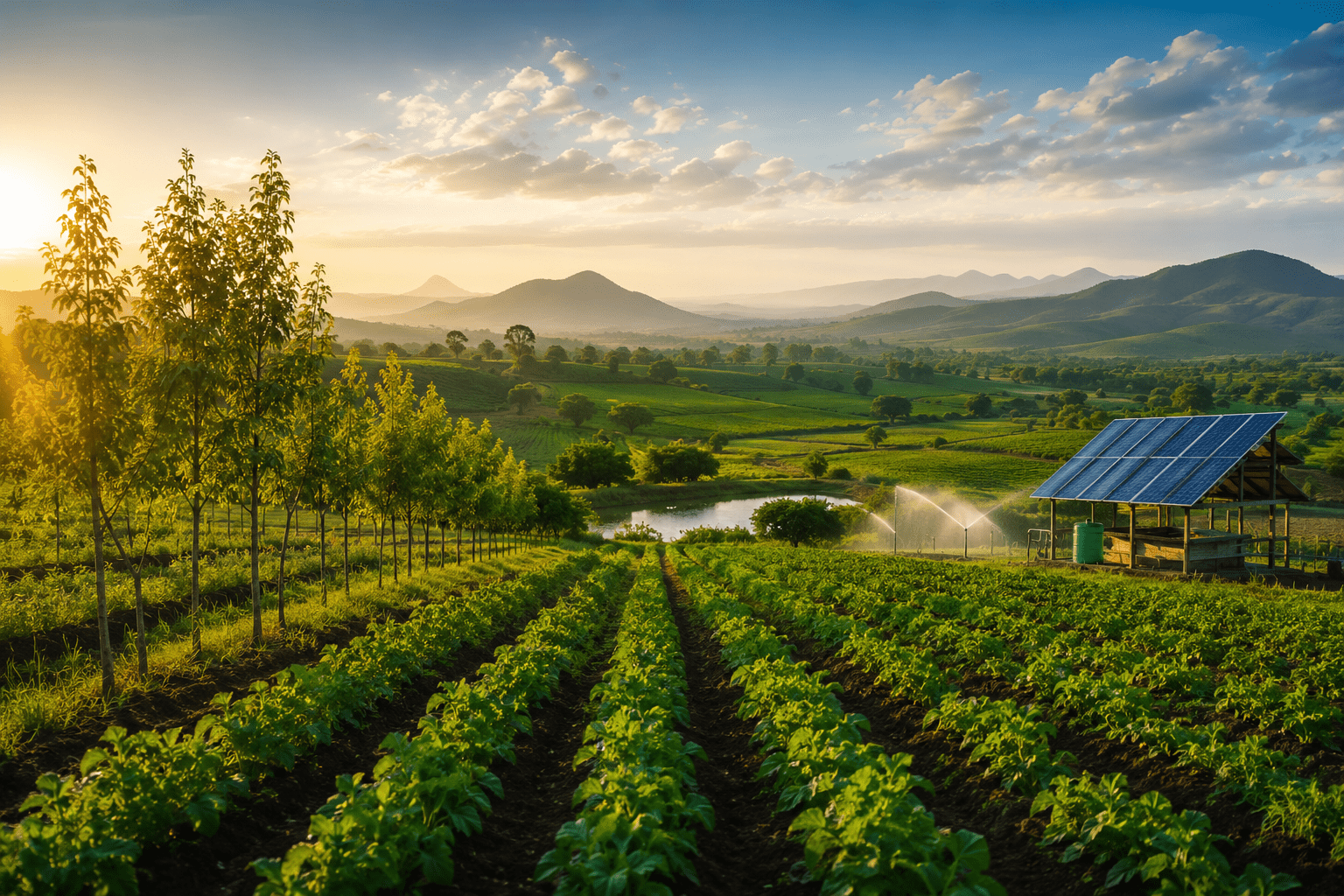
For years, agricultural land has primarily generated value through crop income and long-term land appreciation. Now, investors are beginning to view professionally managed farmland as a broader natural capital asset capable of delivering environmental value alongside financial returns. Sustainable farming practices such as agroforestry, regenerative agriculture, improved soil management, and water-efficient cultivation could eventually allow eligible farmland projects to participate in voluntary carbon markets as the regulatory framework matures.
One of the biggest developments for the agricultural sector is the gradual evolution of India’s carbon market ecosystem. As monitoring, reporting, and verification (MRV) standards become more structured, managed farmland operators may find it easier to measure carbon sequestration and participate in verified carbon credit programmes.
Historically, fragmented landholdings and the high cost of carbon verification made participation difficult for most farmers. Aggregated managed farmland developments, however, have the advantage of consolidating larger land parcels under professional management, making carbon measurement and certification more practical.
Practices such as increasing soil organic carbon, planting timber and fruit trees, restoring degraded land, and adopting regenerative farming methods could create opportunities for additional income through carbon credits, while also improving long-term soil productivity.
Across several agricultural investment corridors, professionally managed farmland continues to attract attention from institutional investors, family offices, NRIs, and high-net-worth individuals seeking long-term diversification.
In Karnataka, regions such as Mysuru, Chikkamagaluru, Kunigal, Hoskote, Kanakapura, and Maddur are witnessing growing interest due to improving infrastructure, better connectivity, and the increasing adoption of scientific farming practices.
Similar momentum is visible across parts of Maharashtra and Telangana, where investors are exploring large agricultural land parcels for commercial farming, agroforestry, and sustainable agricultural projects. Rather than relying solely on annual crop income, many investors now view farmland as a long-term asset supported by food production, environmental sustainability, and capital appreciation.
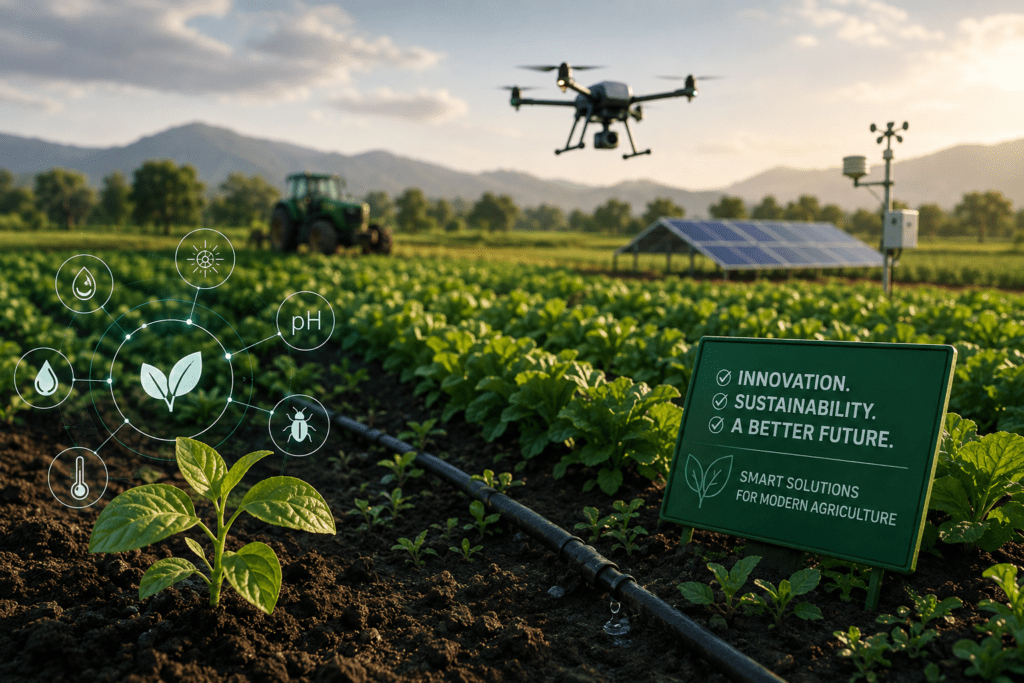
Modern managed farmland projects are increasingly adopting technology to improve productivity while supporting sustainability goals.
IoT-based soil sensors help monitor moisture and nutrient levels in real time. Drone technology provides aerial crop monitoring and vegetation analysis, while AI-powered farm management platforms assist with irrigation scheduling, disease detection, and resource optimisation.
Solar-powered drip irrigation systems are also becoming more common, reducing water consumption and improving irrigation efficiency. Together, these technologies create reliable farm records that may support future carbon verification processes while helping improve operational efficiency and crop performance.
India’s ongoing digitisation of land records is another important factor supporting institutional farmland investment.
Platforms such as Karnataka’s Bhoomi, Maharashtra’s MahaBhulekh, and Telangana’s Dharani have made ownership verification and title due diligence more transparent than in the past.
Clear digital records simplify land transactions, reduce legal uncertainty, and can support future satellite-based verification processes that are often required for international carbon projects and sustainability reporting. As digital infrastructure improves, professionally managed farmland is becoming increasingly attractive to organised investors looking for transparency and long-term security.
Carbon markets are still evolving, and participation will depend on future regulatory guidelines, project eligibility, and internationally accepted verification standards. However, industry experts believe sustainable agricultural projects are likely to benefit as India’s carbon ecosystem matures.
Rather than replacing traditional farmland returns, carbon-related income could eventually complement existing revenue generated through agriculture, agroforestry, and long-term land appreciation. This combination has the potential to strengthen the overall investment profile of professionally managed farmland over the coming decade.
The growing emphasis on ESG investing, climate resilience, and sustainable land management is also encouraging institutional investors to consider agricultural assets as part of diversified portfolios.
Budget 2026 signals India’s long-term commitment to sustainable economic growth and carbon management. While the direct financial impact on agriculture will unfold over time, the policy direction clearly supports greater adoption of environmentally responsible farming practices and improved land management.
For investors, the opportunity lies not only in owning productive agricultural land but also in choosing professionally managed projects that combine strong governance, scientific farming, digital transparency, and sustainable practices.
As India’s carbon market develops, managed farmland could evolve from a traditional real estate investment into a more diversified asset class—one that offers agricultural productivity, long-term capital appreciation, and the potential to participate in the country’s growing green economy.