The landscape of Indian agricultural real estate is undergoing a structural shift. The National Bank for Agriculture and Rural Development (NABARD) has unveiled a ₹25,000 crore refinance facility targeted at institutional managed farmland and smart cold-chain corridors.
This major capital allocation signals the formal institutionalization of an asset class historically dominated by fragmented individual holdings. High-Net-Worth Individuals (HNWIs), family offices, and specialized agri-funds are rapidly deploying capital into high-density horticulture acreage across prime Western and Southern Indian corridors.
By providing low-cost debt liquidity for farmgate infrastructure, cold storage, and automated irrigation networks, NABARD’s initiative reduces the Weighted Average Cost of Capital (WACC) for farmland aggregators, unlocking institutional-grade yield profiles previously unattainable in traditional rural real estate.
NABARD’s ₹25,000 crore refinance window acts as a crucial liquidity catalyst for commercial banks and Non-Banking Financial Companies (NBFCs) underwriting agricultural infrastructure debt. By offering concessional borrowing tied to farmgate asset creation, this fund enables managed farmland developers to establish off-grid solar micro-grids, automated fertigation hubs, and packhouses without diluting equity returns.
For family offices deploying capital into managed farmland, low-interest debt enhances overall project Internal Rates of Return (IRR) by amortizing upfront land development costs over extended tenures.
Capital deployment is heavily concentrated in prime horticultural zones across Karnataka (Chickballapur, Mysuru) and Maharashtra (Nashik, Pune-Satara belt):
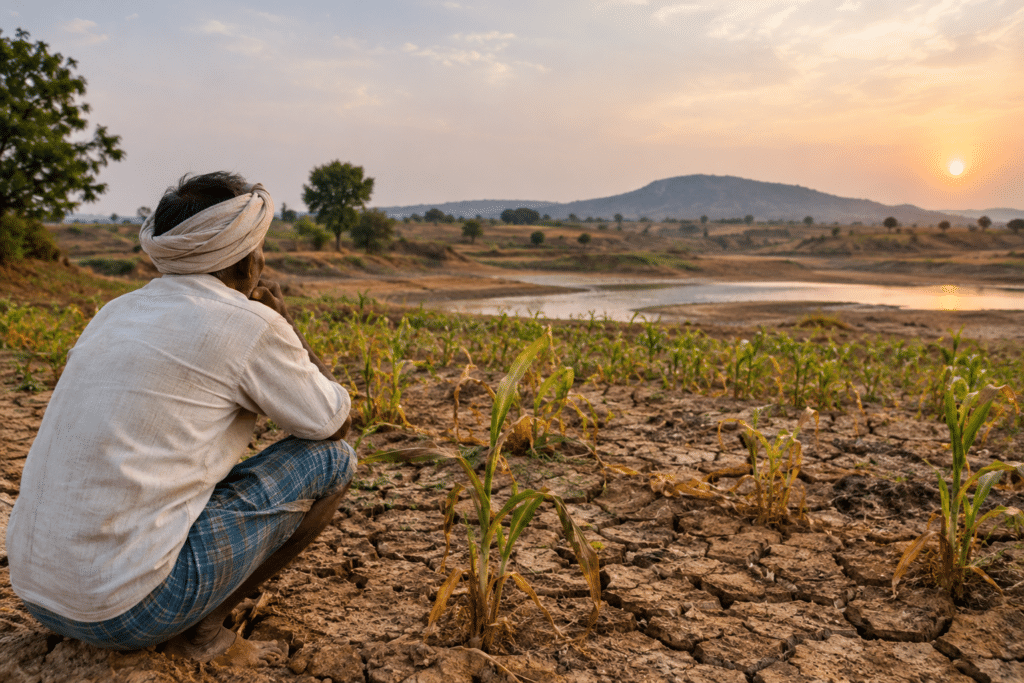
Historical Returns: Rural land in these regions traditionally yielded modest operational returns of 2% to 3% annually, relying almost entirely on long-term capital appreciation.
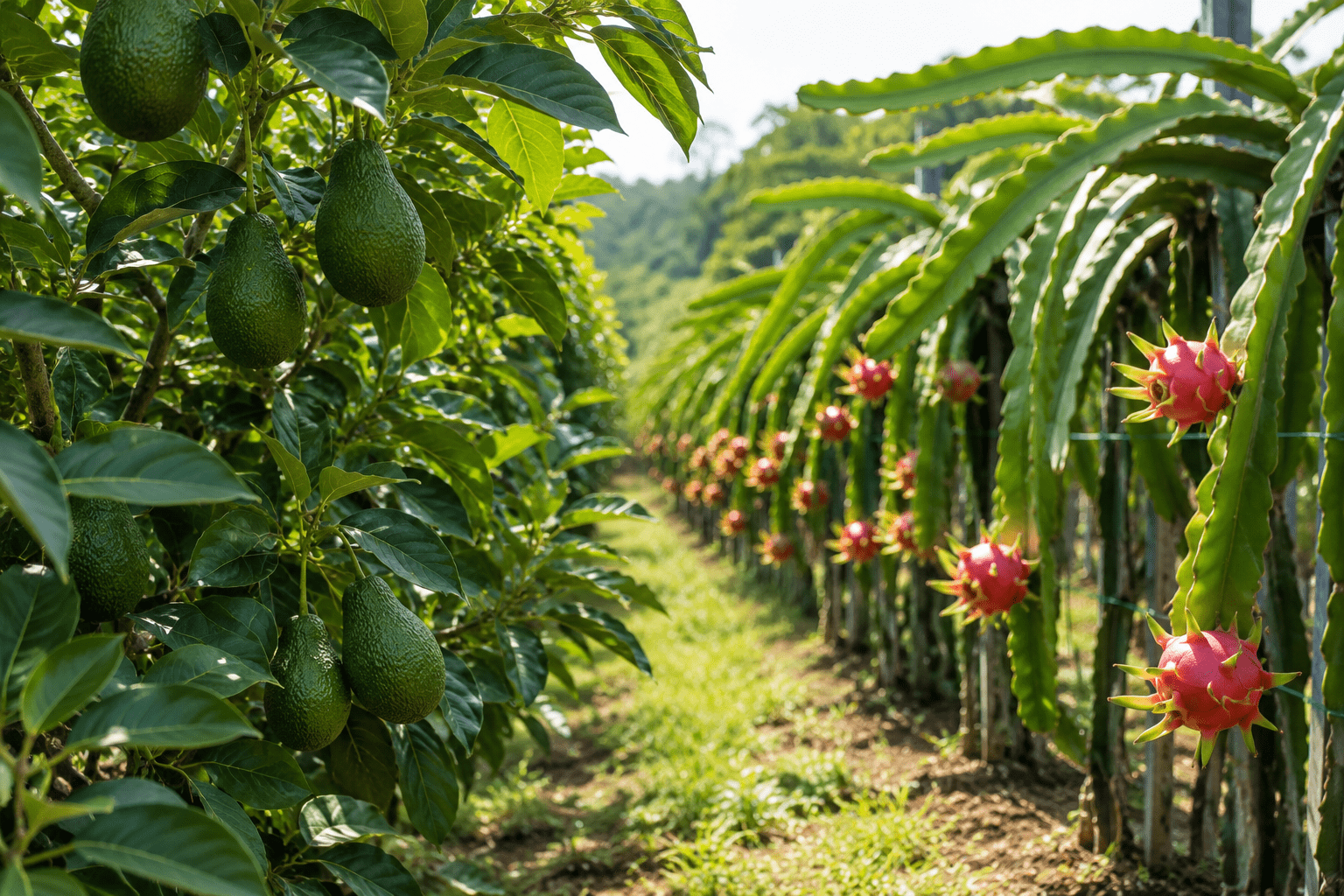
Modern Managed Models: High-density planting of high-value crops—such as Hass avocados, dragon fruit, and export-grade grapes—is dramatically altering income expectations.
Cold-Chain Efficiency: Integrated farmgate cold-chain nodes reduce post-harvest losses from 25% down to under 5%, helping expand net operational land yields into the 8% to 12% range.
Navigating legal frameworks remains vital for institutional buyers entering the market. State digital portals like Karnataka’s Bhoomi and Maharashtra’s MahaBhulekh offer transparent digital title verification, tracking historical mutations and encumbrances.
Investors must also carefully manage state-specific Land Ceiling Acts and acquisition rules:
Karnataka: Relaxed provisions under Section 109 of the Land Reforms Act simplify non-agriculturist land holdings for commercial farming.
Maharashtra: Structured corporate land leases provide a legally sound pathway for long-term agricultural operations.
Corporate SPVs: Utilizing corporate Special Purpose Vehicles (SPVs) ensures clear title holding while maintaining full regulatory compliance.
On the operational front, developers are deploying advanced agritech stacks—including solar-powered drip irrigation, IoT soil moisture sensors, and Kisan drone spraying systems. These technologies decrease water usage by up to 40% and cut operational expenses while shielding crops from erratic weather patterns and local labor shortages.
Finally, asset valuation methodologies are shifting away from basic land price benchmarking toward Discounted Cash Flow (DCF) models anchored in steady agricultural cash flows. By connecting farmgate output directly with subsidized cold storage, developers eliminate distress sales during market gluts, ensuring stable farm revenues and enhancing the risk-adjusted return profile of rural land investments.
The convergence of low-cost priority sector debt, digital land record transparency, and high-efficiency agritech is reshaping Indian farmland into a viable, mainstream asset class. Family offices and wealth managers should view managed farmland as a resilient, cash-generating real asset offering both high operational yields and robust capital preservation.