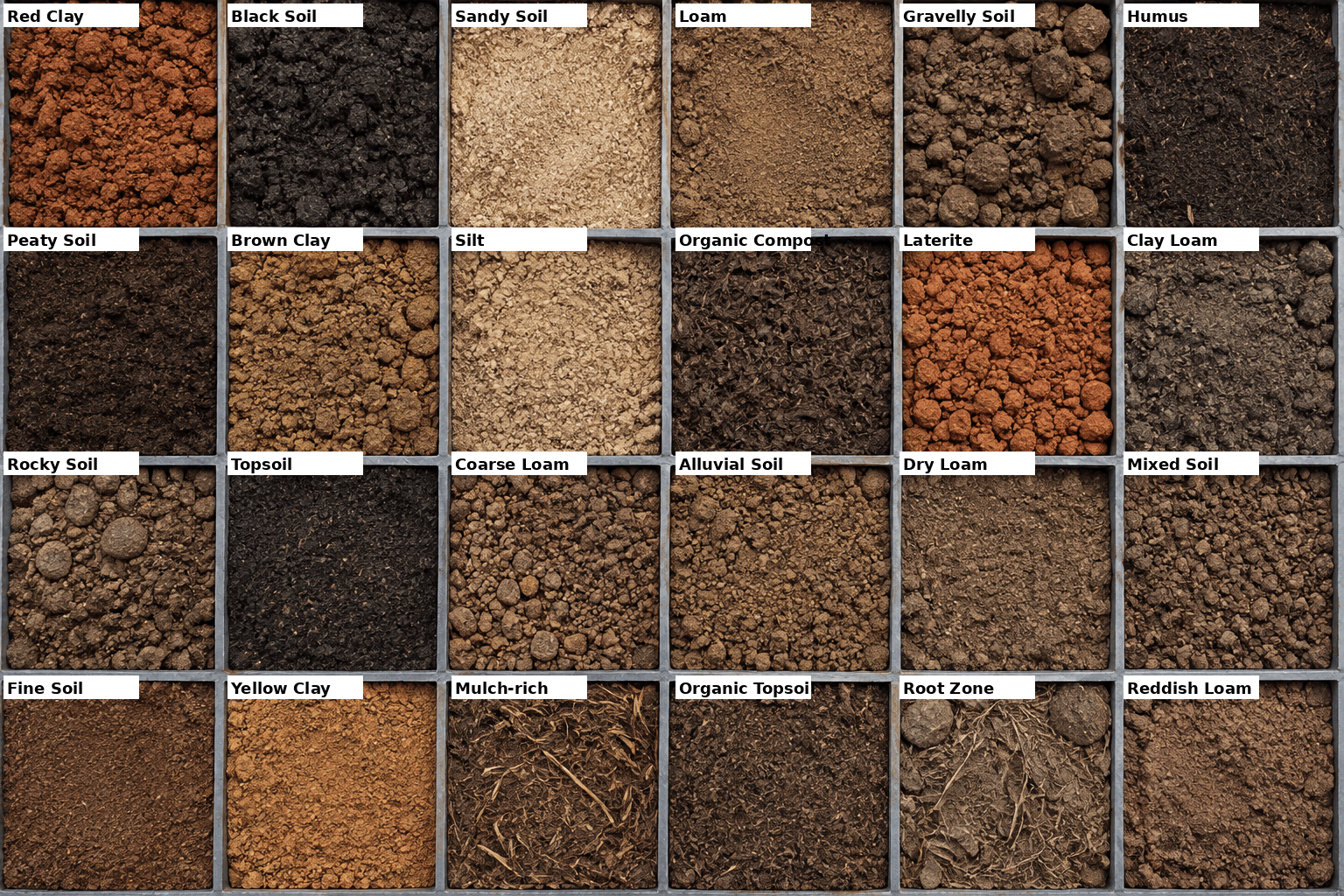
India’s institutional agricultural sector is undergoing a profound structural shift where soil health is no longer viewed merely as an ecological metric, but as a critical lever for underlying real estate asset valuation and long-term risk management.
As institutional investors, family offices, and High-Net-Worth Individuals (HNWIs) expand their capital allocation toward managed farmland and high-value horticultural estates, traditional metrics of arable acreage are being complemented by bio-chemical soil resilience indices.
India’s nationwide push toward scientific soil management—driven by precision soil sensors, regenerative agronomy, integrated nutrient monitoring, and government-backed soil health diagnostics—is directly impacting net operating income (NOI) and cap rates across key agrarian corridors. By transitioning from depleptive monoculture to technologically assisted, carbon-rich soil ecosystems, farmland owners are safeguarding arable asset values against climate risk, optimizing input expenditures, and unlocking lucrative carbon credit monetization mechanisms.
From a rural real estate economics perspective, soil degradation has historically eroded asset values, causing yield stagnation and escalating operational expenditure on synthetic fertilizers. However, institutionalized soil management is converting depleted tracts into premium, yield-accretive managed farmland.
Land Value Premiums: In high-demand agricultural corridors such as Mysuru-Mandya in Karnataka, the Nashik-Pune belt in Maharashtra, and the peri-urban fringes of Hyderabad in Telangana, arable land with documented, high-organic-carbon topsoil commands land value premiums of 20% to 35% over conventional unmanaged plots.
Expanding Cap Rates: Cap rates, which historically hovered around 3% to 5% for traditional crop leases, are rising to 8% to 12% in managed farmland estates where bio-remediated soil supports high-density, high-value perennial crops like dragon fruit, avocados, and organic precision horticulture.
The integration of advanced agritech solutions is operationalizing soil science at an institutional scale. IoT-enabled soil monitoring sensors, micro-fertigation arrays, and real-time Nitrogen-Phosphorus-Potassium (NPK) diagnostic chips allow managed farmland operators to execute precise micro-dosing strategies.
Coupled with automated solar drip irrigation networks, these technologies prevent soil salinization and leaching—two major hazards in intensive farming. Furthermore, drone imagery calibrated with satellite remote sensing allows asset managers to map soil moisture stress and organic matter variations across vast land banks.
The regulatory landscape governing Indian farmland is evolving to support technology-driven soil asset stewardship. Digital land registries—such as Karnataka’s Bhoomi portal, Maharashtra’s MahaBhulekh, and Telangana’s Dharani system—are increasingly integrating crop survey data, soil health card parameters, and eco-certification badges directly into digital land records.
For institutional land buyers navigating complex State Land Ceiling Acts and agricultural land conversion rules:
Verified Soil Logs: Serve as legal and operational proof of sustainable land utilization.
De-risked Due Diligence: Mitigates title clearance risks and accelerates transaction timelines.
Green Financing: Provides collateralized backing for soft loans under National Bank for Agriculture and Rural Development (NABARD) infrastructure frameworks.
Regenerative soil practices are fundamentally redefining crop yield economics for private investors. High-tech soil remediation—utilizing bio-char incorporation, cover cropping, and vermicomposting—builds topsoil depth and carbon sequestration potential over 3 to 5 year operational cycles.
Water Efficiency: Farmland portfolios leveraging these practices report a 30% reduction in irrigation water requirements alongside enhanced resilience against unseasonal heatwaves and monsoon volatility.
CapEx vs. Yield Growth: While initial soil engineering requires upfront capital expenditure of ₹50,000 to ₹1,20,000 per acre, the resulting productivity boosts baseline revenue per acre by up to 45% within 36 months, significantly compressing the investor payback period.