For years, investors have followed a familiar roadmap: buy urban real estate, stay invested in equities, and diversify with gold or fixed-income assets. But a quiet transformation is reshaping modern portfolios. Increasingly, investors are turning their attention to managed farmland, an asset once overlooked that is now gaining recognition for its stability, long-term potential, and tangible value.
Yet, while the concept is gaining popularity, several truths about managed farmland rarely make it into mainstream conversations. These are the insights most investors only fully understand after stepping onto their land for the first time.
Let’s explore what nobody tells you, until you invest.
It’s Not Just Land, It’s a Long-Term Strategy
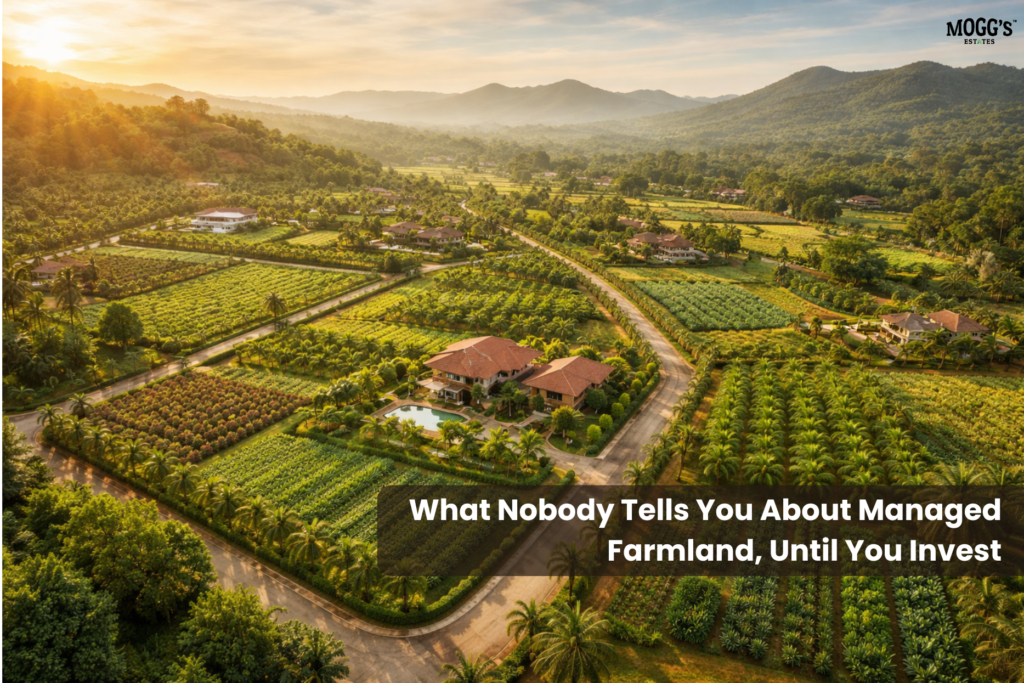
At first glance, farmland may seem like any other land purchase. But managed farmland is fundamentally different. Instead of leaving the owner responsible for cultivation and upkeep, professional teams handle everything from soil preparation and crop planning to irrigation and ongoing maintenance.
This transforms farmland from a passive holding into a structured asset.
For busy professionals, entrepreneurs, and global investors, this model removes the operational burden while preserving the benefits of ownership. The result is an investment that fits seamlessly into modern lifestyles without demanding constant attention.
The Emotional Return Is Bigger Than Expected
Most investors enter farmland with financial goals, diversification, appreciation, and portfolio strength in mind. What often surprises them is the emotional connection that develops over time.
Owning farmland offers something increasingly rare: space, quiet, and a sense of grounding.
A visit to your land can feel less like inspecting an investment and more like stepping into a future retreat. Many owners begin imagining weekend getaways, family gatherings, or simply a place to disconnect from the city’s pace.
Unlike stocks displayed on a screen, farmland is something you can walk on, nurture, and eventually pass down through generations.
Diversification That Actually Feels Secure
Market volatility has encouraged investors to rethink concentration risk. When too much wealth is tied to a single asset class, uncertainty grows.
Managed farmland introduces balance.
Agricultural land is rooted in an essential human need: food production. Regardless of economic cycles, this demand persists. While no investment is entirely risk-free, farmland has historically demonstrated greater resilience than more speculative assets.
This is one reason why searches for the best farmland near Bangalore have steadily increased. Investors are looking for assets that combine growth potential with a sense of permanence.
Location Quietly Determines Everything
One of the biggest lessons seasoned investors share is this: farmland is not a one-size-fits-all asset.
Location influences accessibility, long-term desirability, and future relevance. Regions surrounding expanding cities often attract attention for balancing connectivity with natural surroundings.
Farmland near Bangalore has become particularly appealing due to infrastructure development, improved road networks, and the city’s outward growth. Investors frequently prefer destinations that are close enough for convenient visits yet far enough to preserve the tranquility that makes farmland special.
Choosing wisely at the beginning can shape the investment’s trajectory for decades.
Premium Managed Farmland Is Changing Perceptions
Gone are the days when farmland investments were associated purely with manual agriculture or uncertain oversight. The rise of premium managed farmland has introduced a more organized, transparent approach.
Such developments often emphasize:
- Thoughtful land planning
- Reliable water resources
- Scientific farming practices
- Sustainable cultivation models
- Professional farm management
These factors help ensure that the land is actively cared for rather than remaining idle.
For many investors, this structured environment brings confidence — especially those entering agricultural ownership for the first time.
You Don’t Need Farming Experience
A common misconception is that farmland ownership requires agricultural knowledge. In reality, managed farmland is designed specifically for individuals without farming backgrounds.
Professional teams oversee daily operations, enabling owners to benefit from agricultural productivity without needing to understand crop cycles or soil chemistry.
This accessibility is one of the reasons the asset class is drawing interest from urban buyers who previously assumed farmland was beyond their expertise.
Sustainability Is Becoming a Wealth Indicator
Today’s investors are thinking beyond returns. Environmental awareness is shaping financial decisions, and assets connected to sustainability are gaining importance.
Farmland naturally aligns with this shift.
Green landscapes, responsible land use, and tree-based farming models contribute to ecological balance while supporting long-term land health. For many owners, this creates a sense that their investment is contributing to something larger than personal gain.
Wealth, increasingly, is being measured not only by accumulation but by impact.
It Encourages Patience, and Rewards It
Managed farmland is not typically pursued for short-term speculation. Its true strength often lies in long-term holding.
Over time, factors such as regional development, infrastructure growth, and increasing land scarcity can influence desirability. Investors who approach farmland with patience often appreciate the stability that accompanies a tangible asset.
In a fast-moving financial world, farmland quietly teaches a valuable lesson: meaningful growth rarely happens overnight.
The Right Guidance Makes All the Difference
Entering a relatively unfamiliar asset class can feel complex. This is where experienced developers play a vital role in simplifying the journey.
Organizations like Mogg’s Estates reflect the growing professionalism within the managed farmland space by focusing on planned developments and long-term stewardship. Their approach aligns with what modern investors often seek: clarity, organization, and confidence in the process.
For those exploring the best farmland near Bangalore, working with knowledgeable teams can transform what might seem overwhelming into a well-guided experience.
Farmland Is Becoming a Legacy Asset
The most understated advantage of managed farmland is its generational relevance.
Urban properties may change hands. Financial assets may fluctuate. But land has historically symbolized continuity.
Many investors increasingly view farmland not merely as a purchase but as something to pass forward, an asset that carries both financial and emotional significance.
It becomes part of a family story.
Things Smart Investors Evaluate Before Buying
While managed farmland offers compelling advantages, thoughtful evaluation remains essential. Experienced buyers often focus on:
Connectivity: Is the land easily accessible from the city?
Water Availability: Sustainable agriculture depends heavily on this.
Soil Health: Determines long-term productivity.
Legal Transparency: Clear documentation supports peace of mind.
Management Quality: Professional oversight enhances usability and care.
An informed approach leads to more satisfying ownership experiences.
The Silent Shift in Modern Investing
What nobody tells you about managed farmland is how naturally it fits into the future of wealth creation.
It is tangible in an increasingly digital world.
It is stable amid volatility.
It is purposeful at a time when sustainability matters.
Investors are no longer asking whether farmland belongs in a portfolio; many are beginning to ask how much of it should.
As interest in premium managed farmland grows, particularly around thriving metropolitan regions, the asset is steadily transitioning from “alternative” to “essential.”
Final Thoughts
Managed farmland may not dominate everyday investment conversations yet, but its appeal is becoming harder to ignore. It offers a rare blend of security, usability, and long-term perspective, qualities that resonate strongly with today’s thoughtful investor.
Whether driven by diversification, sustainability, or the desire to own something real, more individuals are exploring opportunities in farmland near Bangalore and beyond.
And as this quiet momentum continues, one realization often emerges only after the investment is made:
The smartest assets aren’t always the loudest ones; sometimes, they grow patiently, season after season, building value in ways that truly stand the test of time.
With evolving developments and investor-focused approaches from groups such as Mogg’s Estates, managed farmland is no longer land.
It is becoming a vision for the future of wealth.