
When Karthik was ten years old, his grandfather gave him some strange advice.
“Never underestimate land,” he said, sitting on the veranda of their ancestral home. “Land waits. And when it grows, it grows quietly.”
At that age, Karthik did not understand.
He grew up in Bangalore, surrounded by flyovers, software parks, and apartment complexes that seemed to rise overnight. His world was fast. Promotions mattered. Appraisals mattered. Deadlines mattered.
Land?
It felt slow. Outdated. Irrelevant to a city built on glass towers.
Years passed. Karthik built a successful corporate career. He invested in mutual funds, equities, and urban real estate. He tracked markets daily. He watched news channels debate interest rates and global uncertainty.
But somewhere between volatility charts and rising apartment prices, his grandfather’s voice returned.
“Land waits.”
And for the first time, it began to make sense.
When Wealth Started Feeling Fragile
On paper, Karthik was doing well.
He owned a premium apartment. His investment portfolio was diversified across sectors. He had financial advisors and spreadsheets.
But markets had become unpredictable. Stock prices moved dramatically in response to global events. Urban property prices were climbing, but so were costs, taxes, and saturation.
The more complex the financial world became, the more he felt something was missing.
He wanted an asset that didn’t fluctuate every hour. Something tangible. Something grounded.
That was when he started researching managed farmland.
Discovering Managed Farmland
Initially, Karthik assumed farmland meant farming, long days, unpredictable rainfall, labor management, and agricultural risk.
But he soon learned about a modern model: managed farmland.
The concept was simple yet powerful.
You own agricultural land.
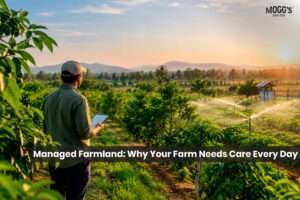
Professional teams manage cultivation, irrigation, and maintenance.
The land is cared for systematically.
This structure removed the biggest barrier for urban investors — the lack of farming knowledge.
It allowed individuals to own productive land without leaving their careers.
As he explored further, he noticed growing interest in farmland near Bangalore. Investors were seeking land within a reasonable distance of the city, combining convenience with long-term potential.
The idea was no longer rural nostalgia. It was strategic diversification.
The First Visit That Changed Everything
One Saturday morning, Karthik drove out of Bangalore to visit a managed farmland development.
The city skyline slowly disappeared in his rearview mirror. Traffic gave way to open roads. Concrete turned into green fields.
When he stepped onto the land, something shifted.
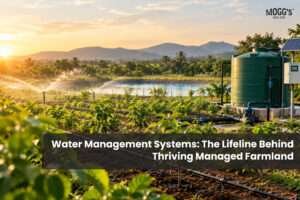
There were neatly aligned mango and coconut trees. Drip irrigation systems nourished the soil. Internal roads were planned. The environment felt organized, not chaotic.
This was not random agricultural land. It was structured, intentional, what many call premium managed farmland.
He remembered his grandfather walking through fields decades ago, explaining soil and seasons.
Suddenly, those childhood memories felt less sentimental and more practical.
Land waits.
Why Location Made the Difference
During his research, one factor became clear: location determines long-term value.
Farmland near Bangalore offered a unique advantage. The city continues expanding outward. Infrastructure projects improve connectivity. Demand for green spaces increases as urban density rises.
Owning farmland within reach meant it would not be forgotten. It could be visited regularly. It could become part of family life.
This is why many investors search for the best farmland near Bangalore, not just for appreciation, but for usability.
Karthik understood that proximity transforms farmland from a distant asset into a living one.
Choosing Structure Over Speculation
Not all farmland investments are equal.
Karthik carefully evaluated water availability, soil health, legal clarity, and management quality. He learned that structured developments reduce uncertainty significantly.
Organizations like Mogg’s Estates focus on organized farmland communities rather than scattered agricultural plots. Planned layouts, professional oversight, and sustainable cultivation practices provide confidence to first-time investors.
For someone entering a new asset class, this structure mattered.
It made farmland ownership feel professional, not risky.
The Emotional Return
When Karthik finalized his one-acre purchase, he expected satisfaction.
He did not expect peace.
A few months later, he brought his father to see the land. His father walked slowly between rows of young trees.
“This reminds me of your grandfather,” he said softly.
In that moment, the investment stopped being about diversification. It became about continuity.
Land connects generations in ways stocks cannot.
Markets are temporary.
Towers are replaceable.
But land remains.
What Grandfather Really Meant
Over time, Karthik began to understand his grandfather’s wisdom.
Land waits because it is not reactive.
It grows because it is nurtured.
It strengthens quietly because it is essential.
In a world of rapid fluctuations, farmland operates on seasons, not headlines.
This rhythm creates stability.
That does not mean farmland is free of risk. It requires evaluation and responsible management. But when approached thoughtfully, managed farmland becomes a balanced addition to modern portfolios.
It does not replace equities or real estate.
It complements them.
Sustainability Became Personal
Another realization came slowly.
Watching trees grow on land he owned deepened his awareness of environmental responsibility. Sustainable irrigation systems, soil care practices, and green cover development were no longer abstract ideas.
They were visible.
Owning farmland encouraged long-term thinking. Trees planted today would mature years later. Soil health improved gradually. Returns followed patience.
This mindset shifted Karthik’s view of wealth.
Wealth was no longer only about immediate growth.
It was about endurance.
Family Weekends Looked Different
Soon, visits to the farmland became family rituals.
Instead of spending weekends inside malls, they drove to the farm. They walked under coconut trees. They observed crops. They met farm managers who updated them on cultivation progress.
For Karthik’s young son, the land became a classroom.
He learned where food comes from.
He planted small saplings.
He experienced open skies instead of closed balconies.
The farmland quietly shaped the third generation — just as it once shaped the first.
Financial Logic Meets Emotional Legacy
From a financial standpoint, the decision was sensible.
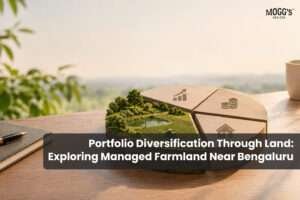
- Agricultural land offers diversification.
- Proximity to Bangalore supports long-term relevance.
- Professional management ensures usability.
- Sustainable practices enhance land value over time.
But the emotional dimension proved equally important.
When markets dipped, Karthik felt less anxious knowing part of his wealth was rooted in tangible soil.
When apartment prices fluctuated, the farmland remained steady.
The asset did not promise overnight returns. It promised continuity.
Why More Professionals Are Listening
Karthik began noticing colleagues asking about farmland investments.
The idea of premium managed farmland was gaining attention among urban professionals seeking balance.
As cities grow denser, green spaces become more valuable, emotionally and economically.
Structured projects, such as those envisioned by Mogg’s Estates, are shaping a new perception of farmland ownership — one that is organized, transparent, and aligned with modern investor expectations.
The shift is subtle but significant.
Land is no longer viewed as outdated wealth.
It is becoming future-ready wealth.
The Advice That Finally Made Sense
Years after his grandfather’s passing, Karthik stood on his farmland at sunset.
The trees were taller now. The soil was richer. The air was calm.
He realized something simple.
His grandfather never meant that land makes you rich quickly.
He meant that land makes you steady.
In an unpredictable world, steadiness is power.
Stocks may rise and fall.
Urban towers may be built and rebuilt.
But land, when nurtured responsibly, grows quietly across generations.
And sometimes, the greatest returns are not the loudest ones.
They are the ones that take root.
For those exploring farmland near Bangalore, searching for the best farmland near Bangalore, or considering managed farmland as part of a balanced portfolio, the lesson remains timeless.
Land waits.
And when you are ready to understand it, it finally makes sense.