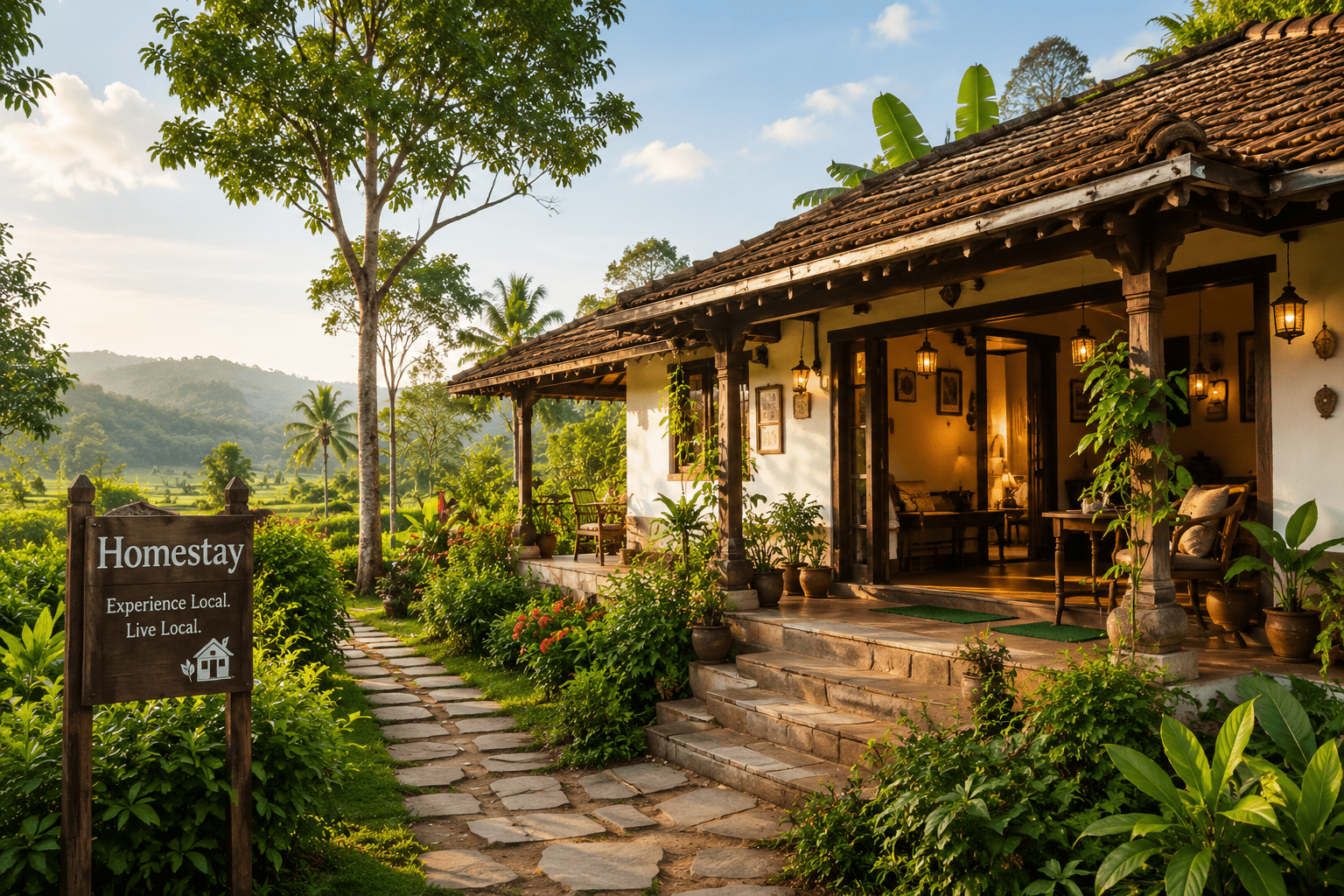
Karnataka is putting renewed focus on its growing homestay sector as travellers increasingly look beyond conventional hotels for local and nature-based experiences.
The Karnataka Tourism Department lists updated homestay guidelines and a circular dated September 1, 2026 among its latest tourism updates. The department’s tourism platform also promotes government-recognised homestays as a way for visitors to experience local culture across the state.
The development comes as Karnataka continues to promote destinations ranging from coffee country and heritage towns to wildlife and coastal regions.
The Karnataka Tourism Department has highlighted its Homestay Guidelines and Circular as a September 2026 tourism update.
The department’s tourism trade platform provides access to the notified homestay guidelines dated April 29, 2026, along with a homestay circular dated April 27, 2026.
The latest listing shows that homestay regulation remains an active part of Karnataka’s tourism administration.
For travellers, this matters because recognised accommodation can provide greater clarity when planning a stay.
Travel is changing.
Many visitors now want more than a room and basic hotel services. They want to understand the place they are visiting.
Homestays can offer a closer connection with local communities, food, culture and surroundings.
Karnataka Tourism itself describes government-recognised homestays as accommodation options that provide authentic local experiences across the state.
This makes homestays particularly relevant to travellers looking for quieter and more personal experiences.
Karnataka has a wide range of travel experiences.
Bengaluru offers a busy urban lifestyle. Mysuru brings heritage and culture. Coorg is known for coffee landscapes and misty hills.
The state also has beaches, forests, wildlife destinations and historic locations such as Hampi.
Karnataka Tourism currently highlights destinations including Mysuru, Coorg, Hampi, Udupi and Bengaluru on its official tourism platform.
This diversity gives the homestay sector a broad tourism base.
Nature continues to play an important role in Karnataka’s tourism appeal.
Travellers are increasingly interested in experiences that combine accommodation with the surrounding landscape.
A stay in a coffee-growing region can offer a very different experience from a city hotel.
Likewise, rural destinations can provide opportunities to experience farming communities, regional food and local traditions.
This shift supports a broader trend towards experiential travel.
Modern travellers are increasingly choosing experiences over conventional sightseeing.
Instead of simply visiting a destination, they may want to understand how people live there.
They may explore local food, visit farms, walk through nature or participate in cultural activities.
Homestays fit naturally into this model.
They can turn accommodation into part of the travel experience rather than simply a place to sleep.
The state’s tourism plans extend beyond accommodation.
Karnataka Tourism’s current platform highlights tourism businesses, travel agents, guides, accommodations and homestays as parts of its wider tourism ecosystem.
The department also continues to promote different travel themes.
These include heritage, adventure, wildlife, food, tranquillity and luxury experiences.
This approach reflects the changing expectations of travellers.
People now have more choices when deciding how they want to spend their holidays.
Travellers should do some basic checks before choosing a homestay.
First, check whether the property is officially recognised where applicable.
Next, understand what facilities are included.
It is also useful to check the property’s location and accessibility before travelling.
For nature-based destinations, weather conditions can also affect travel plans.
Choosing a properly listed accommodation can make the travel experience more predictable.
The growth of experiential tourism could also create opportunities beyond major cities.
Smaller towns and rural destinations can attract visitors who want a slower pace.
Homestays can help connect these travellers with local communities.
They can also create opportunities for local entrepreneurs and property owners to participate in tourism.
However, responsible development remains important.
Tourism should grow without damaging the natural and cultural character that attracts visitors in the first place.
Karnataka’s tourism appeal depends heavily on its natural and cultural assets.
Forests, beaches, coffee plantations, heritage sites and rural landscapes all contribute to the state’s tourism identity.
As visitor numbers grow, responsible tourism becomes increasingly important.
Accommodation providers and travellers both have a role to play.
Reducing waste, respecting local communities and protecting natural surroundings can help destinations remain attractive for the long term.
The changing tourism landscape is particularly relevant to Bengaluru.
The city has a large population of professionals who often look for short breaks outside the urban environment.
Karnataka’s nearby hills, farms, forests and heritage destinations offer several options for weekend travel.
This creates demand for experiences that feel different from everyday city life.
For many travellers, the journey is no longer only about reaching a famous destination. It is also about finding space to slow down.
September is also seeing a strong calendar of cultural and travel activities across India.
Condé Nast Traveller India’s September calendar highlights art, independent cinema, mountain activities and events across several Indian cities.
Bengaluru itself has a busy cultural calendar this month, with classical music, artisan markets, literary events and food-focused experiences taking place across the city.
This wider activity supports the idea that travel and leisure are becoming increasingly experience-driven.
The renewed focus on homestay guidelines comes at an important time.
Karnataka is trying to strengthen its position as a destination for different types of travellers.
From urban weekends to rural escapes, the state has several experiences to offer.
Clear guidelines can help create a more organised tourism ecosystem.
At the same time, travellers can benefit from greater awareness when choosing accommodation.
Tourism is no longer simply about checking destinations off a list.
People increasingly want to remember how a place felt.
They want local food, open spaces, meaningful conversations and experiences connected to the destination.
Karnataka has the landscape and cultural diversity to support this shift.
With continued attention to responsible tourism and organised homestay experiences, the state could make its rural and nature-based destinations even more attractive to modern travellers.
For Bengaluru residents especially, that could mean more opportunities to step away from the city’s pace and experience a different side of Karnataka.