Bengaluru’s iconic Lalbagh Botanical Garden is at the centre of a fresh debate over urban development and heritage conservation.
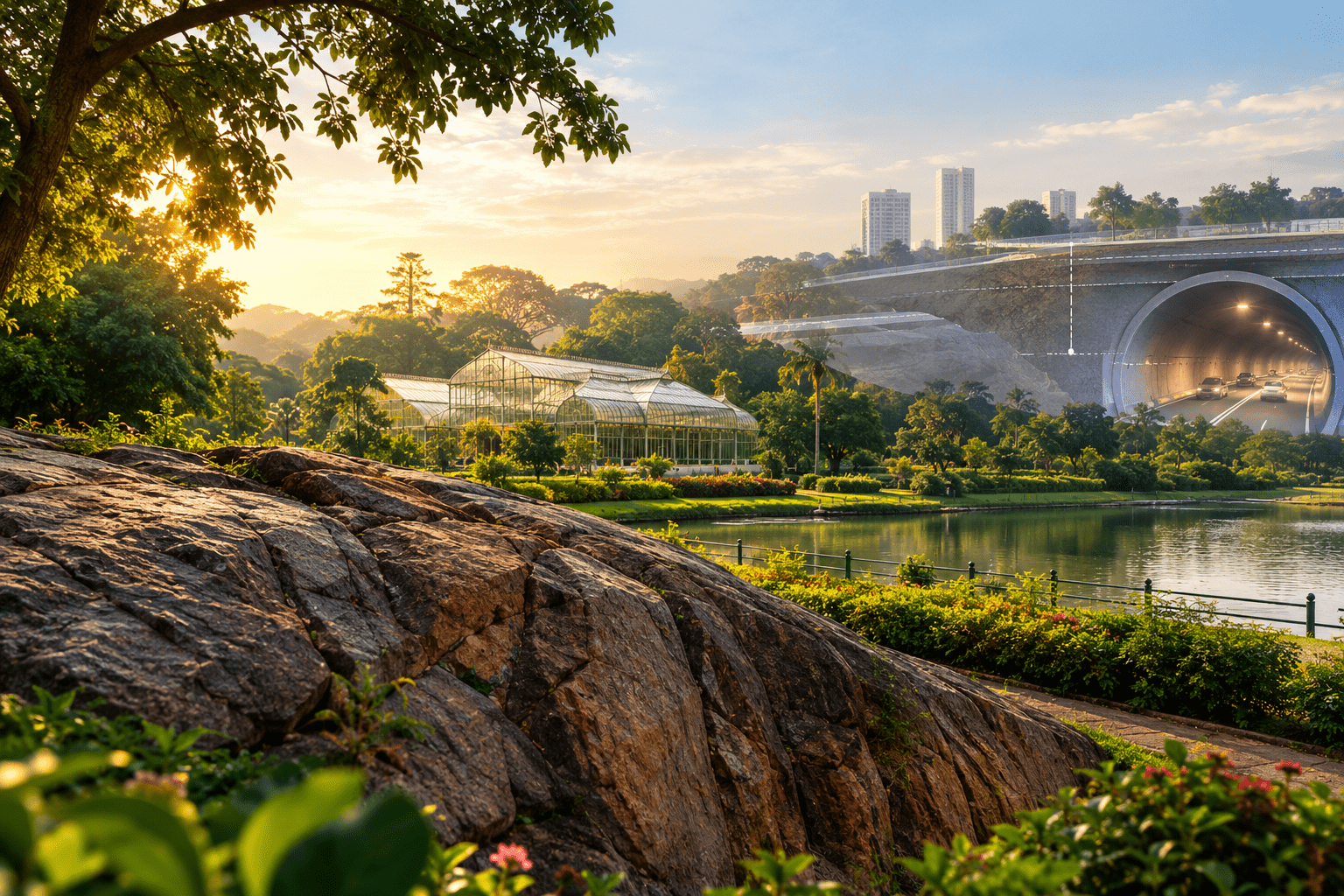
The Geological Survey of India (GSI) has warned that the proposed 16.7-km Hebbal underground tunnel could pose risks to the ancient Peninsular Gneiss rock formation inside Lalbagh. The rock is estimated to be more than 3 billion years old and is classified as a Geological Monument.
The issue has brought a familiar question back into focus: How can Bengaluru expand its infrastructure without putting its natural and geological heritage at risk?
The rock formation inside Lalbagh is far older than the Himalayas.
It forms part of the Peninsular Gneiss complex. Over time, the formation has become an important part of Bengaluru’s natural heritage.
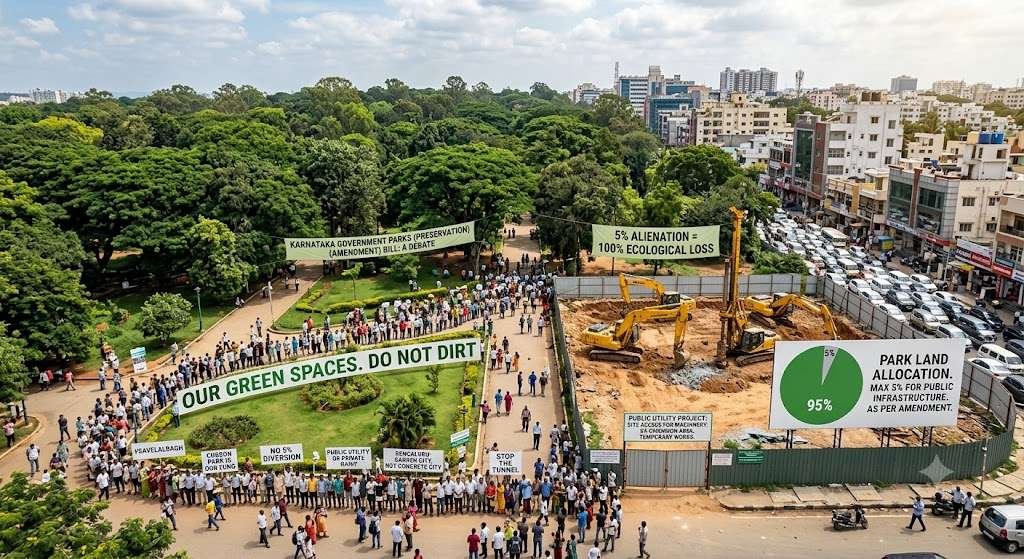
Lalbagh itself is also one of the city’s most important green spaces. The garden covers about 240 acres, while Bengaluru has around 1,353 parks, according to the latest report.
For residents, these spaces are more than recreational areas. They provide places to walk, exercise, relax and connect with nature.
The GSI examined the Detailed Project Report for the proposed tunnel.
According to its assessment, shafts required for Tunnel Boring Machines would be located near the ancient rock formation.
The agency warned that construction-related vibrations and changes in underground stress could create new fractures or widen existing cracks in the rock.
This does not mean that damage will definitely occur. Instead, the report highlights potential risks that need to be examined before construction moves forward.
That distinction is important because the tunnel project remains under legal scrutiny.
The GSI has also raised concerns about groundwater.
According to the report, construction could potentially lower the groundwater table or alter underground water-flow paths.
This could affect Lalbagh Lake and nearby fracture-controlled aquifers. The report also points to possible implications for ground stability near the tunnel ramp areas.
Groundwater is particularly important in a rapidly growing city like Bengaluru.
Changes below the surface can sometimes affect ecosystems, lakes and vegetation above ground. Therefore, underground infrastructure requires careful environmental assessment.
The matter is now before the Karnataka High Court.
The court directed the state government to place the GSI report before it while hearing petitions challenging the proposed tunnel project. The court had also sought further technical information related to the project’s potential environmental impact.
The next stage of the legal process will therefore be important for the future of the project.
The court’s examination also gives greater attention to the balance between infrastructure development and environmental protection.
Bengaluru has long been associated with gardens and tree-lined neighbourhoods.
Today, green spaces play an even bigger role in urban life. They offer residents places for walking, recreation and community activities.
Karnataka Tourism describes Bengaluru as a city known for its gardens, historic institutions and thriving arts scene.
Lalbagh represents all three aspects.
It is a recreational space. It is a botanical garden. It is also home to geological and historical features that connect today’s city with a much older landscape.
Bengaluru needs better transportation infrastructure as its population and traffic continue to grow.
However, large infrastructure projects can also affect natural resources and heritage sites.
The Lalbagh tunnel debate highlights why environmental studies and technical assessments matter before major construction begins.
Development does not have to mean losing valuable green spaces. With careful planning, cities can improve mobility while protecting important natural assets.
The proposed tunnel remains under examination.
The GSI’s findings have added another layer to the debate. The concerns now include not only traffic and construction but also geological stability, groundwater and the protection of Lalbagh’s heritage.
For Bengaluru residents, the discussion is about more than one rock or one tunnel.
It reflects a larger question about the kind of city Bengaluru wants to build.
As the city grows, preserving its parks, lakes, trees and geological heritage will remain an important part of creating a better urban lifestyle.