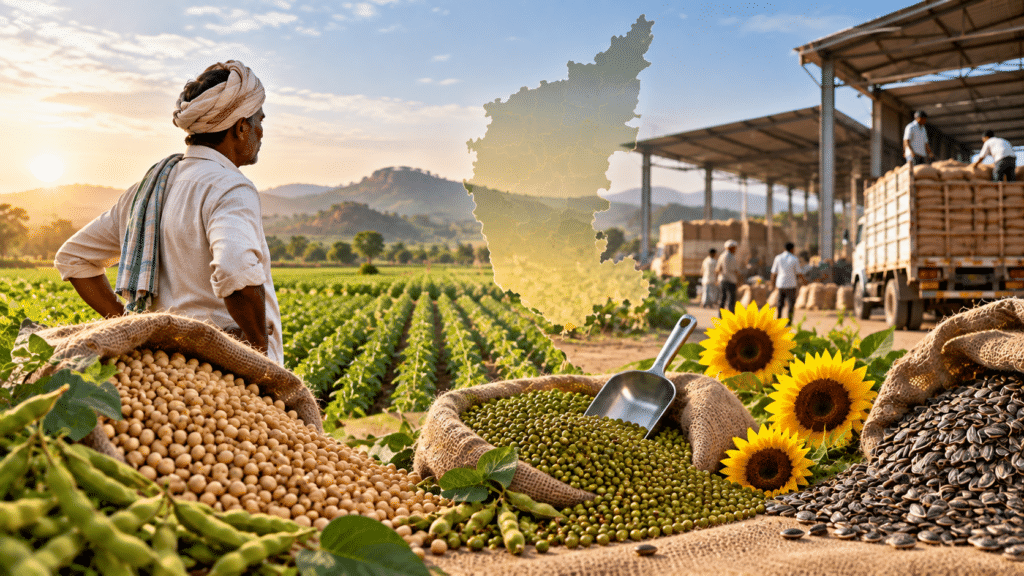
India’s kharif sowing season has shown signs of recovery after improved rainfall in July helped farmers make up for a weak start to the monsoon. The development offers fresh optimism for agricultural production and food-price stability as the country moves deeper into the 2026 cropping season.
The improvement comes after June recorded one of India’s driest monsoon starts in 12 years. The delayed rainfall initially raised concerns about planting activity and soil moisture across several agricultural regions. However, stronger rains in July helped farmers resume sowing and narrow the gap with the previous season.
For millions of Indian farmers, the timing of the monsoon is closely linked to kharif cultivation. Crops such as rice, pulses, cotton, maize and oilseeds depend heavily on adequate rainfall during the sowing and early growth stages.
The improved rainfall in July provided much-needed moisture for agricultural fields and allowed sowing operations to accelerate. The recovery has reduced some of the immediate concerns surrounding the country’s kharif crop outlook.
Agriculture Minister Shivraj Singh Chouhan has also indicated that the impact of El Niño on kharif production is unlikely to be significant this year. According to his assessment, rainfall has been adequate across most regions and the sowing gap has narrowed.
The recovery in sowing is important not only for farmers but also for consumers. A stronger kharif harvest could help improve the availability of essential food commodities and reduce pressure on food prices.
However, the agricultural outlook remains uneven. While several regions have benefited from rainfall, some states continue to experience serious weather-related challenges. Andhra Pradesh, for example, has been facing a significant rainfall deficit, creating concerns over crop cultivation and water availability.
This uneven rainfall pattern highlights the increasing importance of irrigation, water conservation and climate-resilient farming practices.
The government continues to expand financial and institutional support for farmers. A recent government update noted that 7.28 crore Kisan Credit Card accounts were operational during 2025–26, with outstanding credit under the scheme reaching ₹10.08 lakh crore as of August 3, 2026.
Sustainable agriculture is also becoming an important part of India’s agricultural policy. Government programmes increasingly focus on soil health, efficient irrigation, crop insurance, mechanisation and other measures intended to improve farm resilience.
The recovery in kharif sowing is encouraging, but the coming weeks remain important. Crop development will depend on how the monsoon performs through the remaining growing season.
For farmers, timely rainfall can mean the difference between a successful harvest and significant losses. For the wider economy, agricultural performance affects food prices, rural incomes and demand across the country.
The 2026 kharif season therefore reflects a broader reality facing Indian agriculture: rainfall remains a critical factor, but better water management, technology, financial support and climate-resilient farming will increasingly determine how effectively farmers can respond to changing weather patterns.
For now, the improvement in sowing activity offers a positive signal. But with the monsoon still shaping the agricultural outlook, farmers and policymakers will continue to watch rainfall patterns closely in the weeks ahead.