India’s agriculture sector is going through a major change. Farmers are getting better access to markets, technology and digital services. At the same time, agricultural production and exports continue to support the country’s economy.
The changes are creating new opportunities across the farming sector. They are also changing how people look at farmland, farm management and agricultural assets.
Agriculture continues to play an important role in India’s economy. It supports millions of farmers and provides food, raw materials and employment across the country.
Government data shows that agricultural production has increased over the past decade. Better irrigation, improved farming methods and greater use of technology have supported this growth.
The sector is also becoming more organised. Farmers now have access to more digital tools and organised markets than they did in the past.
This shift is important because farming is no longer only about producing crops. Farmers also need better access to buyers, storage, transportation and market information.
Technology is changing the way agricultural markets work in India.
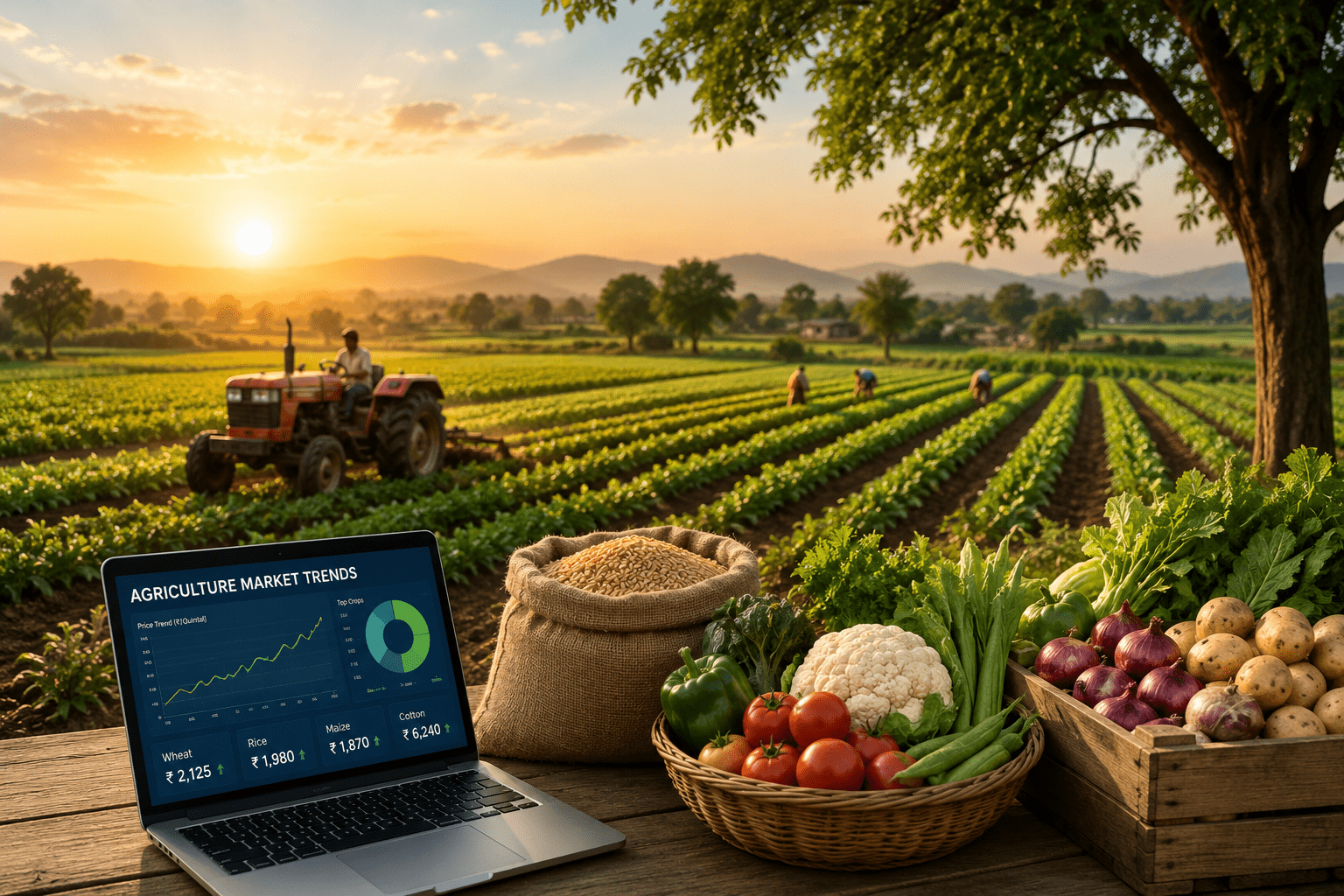
One of the major developments is the e-NAM platform, or National Agriculture Market. The platform aims to connect agricultural markets across different parts of the country.
According to PRS Legislative Research, 1,522 mandis across 23 states and four Union Territories had been integrated with e-NAM as of January 2026.
Digital markets can improve price discovery. They can also help farmers reach a wider group of buyers.
This is especially important for small and medium farmers. Better market access can help them make more informed decisions about where and when to sell their produce.
Farmer Producer Organisations, commonly called FPOs, are also becoming more important.
An FPO brings farmers together to improve their bargaining power. Farmers can work together when buying inputs or selling agricultural produce.
This model can also help farmers access larger markets.
Government initiatives have supported the creation and development of thousands of FPOs across India. Digital commerce platforms are also creating new opportunities for these organisations.
The growth of FPOs shows how Indian farming is becoming more organised. Individual farmers can gain strength by working together.
India is also an important player in the global agricultural market.
Indian agricultural products are sold in many international markets. Rice, spices, marine products, sugar and other farm products contribute to agricultural exports.
According to IBEF, India’s agricultural and processed food product exports reached about ₹4.51 lakh crore in FY2025.
Growing exports can create opportunities for farmers and agricultural businesses. However, international markets also have strict requirements.
Farm products may need to meet quality, safety and traceability standards before they can enter certain markets.
This means farmers and businesses must focus on both production and quality.
Technology is becoming a bigger part of farming in India.
Farmers are increasingly using tools such as drones, satellite imagery and sensors. These technologies can help monitor crops and identify problems earlier.
Precision farming is another growing area.
It uses data to help farmers manage water, fertilisers and other farm inputs. The goal is simple: use resources more efficiently while maintaining crop productivity.
Artificial intelligence is also entering the agricultural sector.
AI-based systems can analyse farm data and help identify crop stress, pest problems and other issues.
These technologies are still developing. But they could become an important part of modern farming in the coming years.
The changing agriculture market is also influencing how people think about farmland.
In the past, farmland was often viewed mainly as land used for cultivation. Today, the conversation is becoming broader.
The productivity of agricultural land can depend on several factors.
These include:
Good land management can therefore make an important difference to agricultural productivity.
This has also increased interest in professionally managed farmland. Such models can provide landowners with organised farm management while allowing agricultural activities to continue on the land.
However, farmland remains an agricultural asset. Its value and productivity can change because of weather, market prices, water availability and other factors.
Producing crops is only one part of agriculture.
Farmers also need suitable storage facilities. This is particularly important for fruits, vegetables and other products that can spoil quickly.
India has expanded its cold-storage infrastructure. However, more capacity is still needed in several parts of the country.
Better storage can give farmers more flexibility.
Instead of selling produce immediately after harvest, farmers may be able to store it and choose a better time to sell, depending on the product and market conditions.
Better transportation and processing facilities can also help reduce losses after harvest.
India’s agriculture market is becoming more connected.
Farmers are gaining access to digital platforms. FPOs are improving collective bargaining. Technology is helping with farm management. Export markets are creating new demand.
These changes could make agricultural markets more efficient over time.
But challenges remain.
Farmers continue to face risks from unpredictable weather, changing crop prices, rising input costs and water availability.
Technology can help manage some of these challenges, but it cannot remove agricultural risk completely.
The future of Indian farming will depend on more than crop production.
Market access will remain important. So will technology, water management, storage and transportation.
Farmland will also remain a key part of this system.
As agriculture becomes more organised, the focus is likely to move towards productive land use and better farm management.
The growth of digital markets and agricultural technology shows that India’s farming sector is changing quickly.
For farmers, landowners and agricultural businesses, this transformation could create new opportunities. The biggest opportunity may come from connecting farmland, farmers, technology and markets in a more efficient way.
India’s agriculture sector is still facing major challenges. But the direction is clear. Farming is becoming more connected, more technology-driven and increasingly linked to organised markets.
That shift could shape the next chapter of India’s agricultural economy.