When Raghav bought one acre of land, his friends thought it was a sentimental decision.
He was a first-generation corporate professional in Bangalore. He had done everything right: an engineering degree, a multinational job, a city apartment, stock investments, and a well-planned future. On paper, his financial life looked solid.
But Raghav often remembered his grandfather’s stories.
Stories of soil under fingernails.
Of mango trees that outlived their planters.
Of land that fed families and built legacies.
Growing up in the city, he had dismissed those stories as nostalgia. Until one day, they began to feel like wisdom.
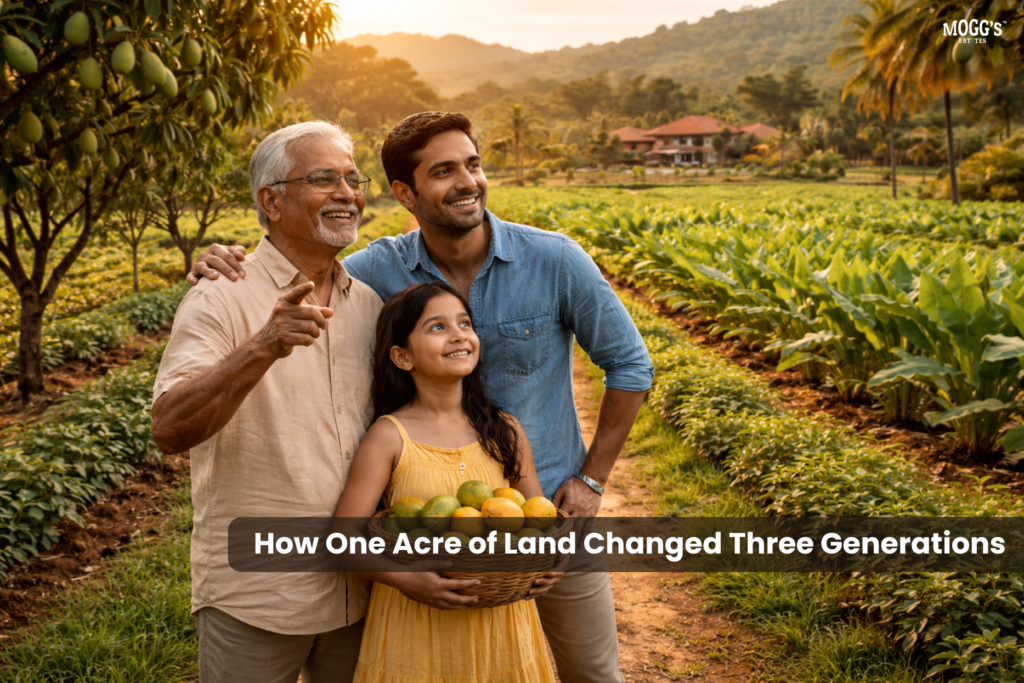
And that’s how one acre quietly entered his life, and eventually transformed three generations.
The Beginning: A Practical Decision
It started not with emotion, but with research.
Raghav had already invested in equities and urban real estate. But market volatility made him uneasy. Apartment prices were climbing higher, but so were maintenance costs and saturation levels.
He wanted something tangible. Something rooted.
While exploring alternative assets, he discovered managed farmland, a structured way to own agricultural land without becoming a full-time farmer.
The idea was simple but powerful:
You own the land.
Professionals manage the farming.
The asset grows over time.
For someone living in the city, this model removed the biggest barrier, operational complexity.
He began looking at farmland near Bangalore, understanding that proximity to a major city mattered. Connectivity, infrastructure growth, and regional expansion could influence long-term value.
What he found surprised him. The concept of premium managed farmland was evolving rapidly. Planned layouts, irrigation systems, soil assessment, and professional farm management were becoming standard in organized developments.
This wasn’t random rural land. It was structured agricultural ownership.
And that made sense to him.
The First Visit: When It Became Real
The day he visited his one-acre plot, something shifted.
The city noise faded behind him. In its place was open sky. Coconut trees lined the pathway. Mango saplings stood in neat rows. The soil was dark, healthy, alive.
He bent down and touched it.
For the first time in years, his investment didn’t feel like a number. It felt like something real.
He finalized the purchase.
Friends asked why.
“Diversification,” he said confidently.
But deep down, it was something more.
The Second Generation: A New Perspective
A year later, Raghav brought his parents to see the land.
His father, who had grown up in a small village before moving to the city for work, walked slowly through the rows of trees. He didn’t say much at first.
Then he smiled.
“You brought us back to where we started,” he said.
For his father, the acre was not just an asset. It was a reconnection—a bridge between rural roots and urban success.
Raghav realized something important that day: wealth is not only about accumulation. It is also about continuity.
The land became a place where his parents felt grounded. They began visiting often. They discussed crops with the farm managers. They spoke about soil quality and rainfall patterns.
The past and present quietly merged on that acre.
Managed Farmland: Why It Works for Urban Families
Raghav’s decision was not based solely on nostalgia. It was strategic.
Managed farmland offers several advantages that urban investors often overlook:
- Professional farming management
- Scientific irrigation systems
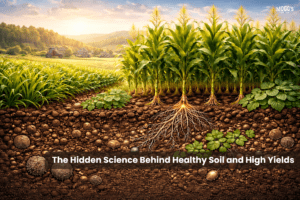
- Soil health monitoring
- Organized development
- Long-term agricultural planning
For families without farming backgrounds, this structure makes ownership practical.
You do not need to understand crop cycles.
You do not need to manage labor.
You do not need to supervise daily operations.
Everything is handled professionally.
This model is one reason why interest in the best farmland near Bangalore has grown steadily. Investors are realizing that farmland is no longer an unstructured gamble; it is becoming an organized asset class.
The Third Generation: A Different Childhood
Five years later, Raghav’s daughter, Anika, ran barefoot across the same acre.
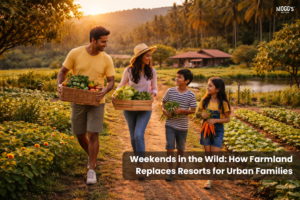
Her childhood was filled with digital screens and high-rise balconies. But weekends at the farm gave her something different: mud between her toes, butterflies in the air, and stories under open skies.
She learned where fruits came from.
She planted saplings.
She understood seasons.
For her, the land was not an investment. It was an adventure.
One afternoon, she asked her father, “Will these trees still be here when I grow up?”
He nodded.
And in that moment, Raghav understood the true power of his decision.
One acre had quietly shaped three generations:
- For his grandfather, land meant survival.
- For his father, land meant memory.
- For his daughter, land meant discovery.
And for him, it meant legacy.
Why Location Matters More Than Ever
When Raghav first evaluated farmland, he focused heavily on location.
Farmland near Bangalore offered a unique advantage: accessibility combined with long-term regional growth potential. Infrastructure expansion, improved highways, and rising demand for green spaces were gradually shaping the city’s outskirts.
Being within reasonable driving distance meant the land was not forgotten. It became part of their lifestyle.
This is why many investors today prioritize organized developments in growth corridors when searching for the best farmland near Bangalore.
Proximity ensures usability.
Usability ensures emotional attachment.
Emotional attachment often ensures long-term holding.
The Role of Organized Development
During his research phase, Raghav realized that not all farmland investments are equal.
Legal clarity, water availability, soil health, and management quality make a significant difference.
Structured developments like those conceptualized by Mogg’s Estates focus on creating organized agricultural communities rather than isolated plots. This approach reduces uncertainty and enhances long-term viability.
Professional oversight ensures:
- Clear documentation
- Sustainable farming practices
- Infrastructure readiness
- Continuous land maintenance
For first-time farmland investors, such a structure builds confidence.
Financial Growth Meets Emotional Wealth
Over time, the land appreciated gradually. Regional development improved connectivity. Demand for green spaces increased.
But the most valuable return wasn’t purely financial.
It was emotional security.
In a world where markets fluctuate and urban spaces become denser, owning land that grows trees provides a sense of stability.
Stocks move hourly.
Real estate moves cyclically.
But farmland moves seasonally.
That rhythm feels different.
Sustainability Became a Shared Value
Another transformation happened quietly.
Raghav began thinking more consciously about environmental impact. Watching soil health improve and trees mature created awareness about sustainability.
Managed farmland is not only about profit. It is about stewardship.
Planting trees contributes to green cover.
Responsible irrigation conserves water.
Scientific farming improves soil longevity.
This alignment between financial growth and ecological responsibility gave the investment deeper meaning.
The Power of One Acre
People often underestimate small beginnings.
One acre does not sound dramatic. It is not a massive estate. It does not dominate headlines.
But one acre can:
- Anchor a family legacy
- Diversify a portfolio
- Provide weekend retreats
- Connect generations
- Encourage sustainable living
Sometimes, meaningful change starts small.
The Quiet Lesson
Years from now, when Anika tells her own children about the land, the story will not begin with financial metrics.
It will begin with a decision.
A decision to choose trees over towers.
To choose soil over screens.
To choose legacy over short-term excitement.
That is what nobody fully understands until they own land.
In the evolving investment landscape, premium managed farmland is no longer an unconventional idea. It is becoming a thoughtful addition to modern portfolios, especially for families exploring farmland near Bangalore.
And as organizations like Mogg’s Estates continue to shape structured agricultural ownership, the path becomes clearer for those who seek both growth and grounding.
Because sometimes, the most powerful investment is not the tallest one.
It is the one that grows roots.
And on one quiet acre outside the city, three generations found exactly that.