On most weekday mornings in Bangalore, the day begins before the sun fully rises. Phones buzz with notifications, traffic slowly gathers on the Outer Ring Road, and office towers begin to fill with people preparing for another long day. For professionals like Aarav Mehta, this routine has been the rhythm of life for years. Work, meetings, deadlines, and weekends that disappeared almost as quickly as they arrived.
Yet, somewhere within the city’s constant motion, a quiet realisation had begun to take hold. Life in the city moved fast, but it rarely paused long enough to feel grounded. Even weekends meant crowded cafes, busy malls, or short getaways that ended just as quickly as they began.
One Saturday morning, while speaking with a colleague about escaping the city for a few hours, Aarav heard about something unfamiliar: managed farmland near Bangalore. At first, the idea sounded unusual. Agriculture had always seemed distant from urban life, something tied to villages and family farms rather than corporate professionals.
Still, curiosity has a way of reshaping assumptions.
A few weeks later, Aarav decided to visit a managed farmland project located outside the city. The drive itself felt like a transition between two worlds. Gradually, the dense traffic and concrete skyline began to disappear. The roads widened, the air felt lighter, and the landscape slowly shifted from apartment blocks to stretches of open land.
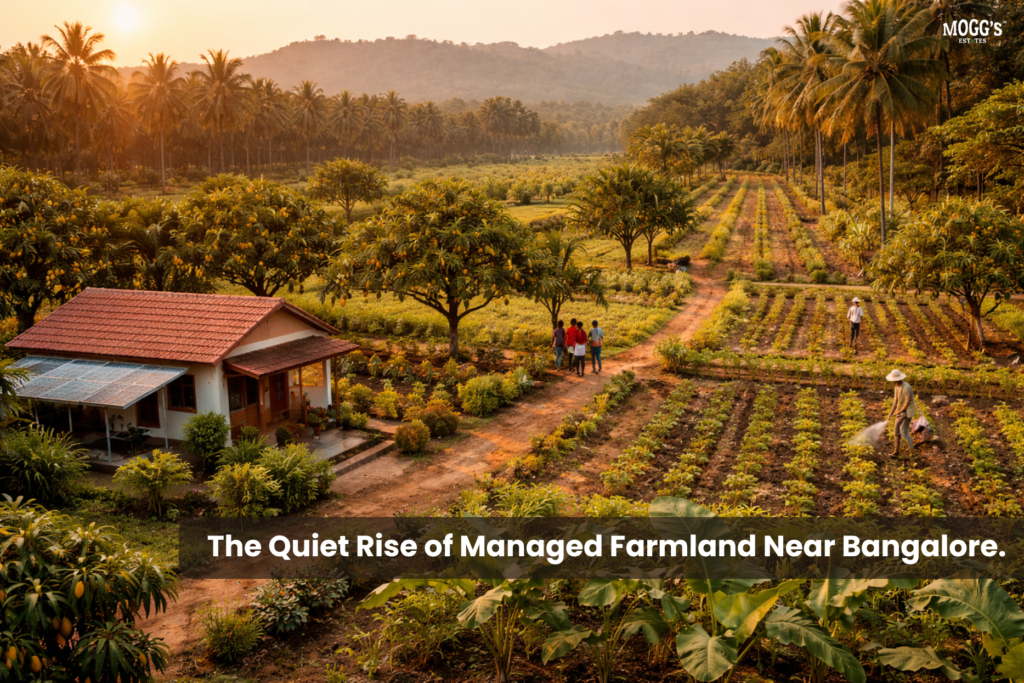
When he arrived, the quiet was the first thing he noticed. There were no horns or construction noise, only the gentle movement of wind across rows of young trees planted across the farmland. Workers moved through the fields, checking irrigation lines while a farm manager explained the layout of the plantations.
What stood before him was not the chaotic image of farming he had imagined. Instead, the farmland appeared to be carefully planned and professionally maintained. The manager explained that this was the essence of managed farmland. Individuals could own a piece of agricultural land while trained agricultural teams handled cultivation, irrigation, crop planning, and maintenance.
For many urban investors, this model solved the biggest challenge associated with farmland ownership: time and expertise.
Agriculture requires knowledge and constant attention. Soil health, water management, seasonal crops, and plantation cycles all demand careful planning. Most city professionals do not have the time to manage their own farmland. Managed farmland by bridging the gap through a combination of land ownership and professional farm management.
The concept is gaining popularity not only in Karnataka but across farmlands in India. As cities expand and technology-driven careers dominate urban life, many people are beginning to search for investments that feel more tangible and connected to the natural world.
Farmland offers something rare in the modern investment landscape. Unlike stocks or digital assets, farmland grows physically over time. Trees mature, soil becomes richer, and the land itself evolves with each season.
This connection between growth and land is one reason managed farmland near Bangalore is attracting attention from urban professionals. The proximity to the city allows landowners to visit their farms easily while continuing their regular careers.
For Aarav, walking through the farmland felt unexpectedly calming. Rows of saplings stretched across the property, each carefully planted with adequate spacing to ensure healthy growth. Drip irrigation pipes ran quietly along the soil, delivering water directly to the roots without waste.
The farm manager explained that these practices were part of a larger commitment to sustainable farmlands. Modern farmland projects increasingly focus on environmentally responsible farming techniques designed to protect the land for future generations.
Drip irrigation reduces unnecessary water consumption, an essential factor in regions where water conservation is becoming critical. Organic compost and natural soil enrichment techniques improve soil fertility without relying heavily on chemical fertilizers. Agroforestry practices introduce a mix of trees and crops, creating a more balanced ecosystem within the farm.
These practices reflect a growing shift in how agriculture is viewed in India. Farming is no longer only about crop yields. It is also about ecological balance, soil health, and long-term sustainability.
In many ways, sustainable farmlands represent the future of agriculture. They allow agricultural land to remain productive while preserving the environmental systems that support it.
During the visit, Aarav also raised one of the most common questions people have about farmland investment: the legal aspect of ownership. For years, agricultural land ownership in some states was restricted to individuals with farming backgrounds. This made farmland inaccessible to many urban residents.
However, legal changes in Karnataka have opened the door for wider participation in farmland ownership. Indian citizens can now purchase agricultural land without being registered farmers, making legal farmland ownership far more accessible than before.
Despite these changes, responsible farmland projects place strong emphasis on transparent documentation and legal clarity. Proper land titles, registration processes, and regulatory compliance ensure that buyers receive secure ownership of their land.
Understanding these legal structures has helped increase confidence among investors exploring farmland opportunities. For professionals like Aarav, the idea of owning land that is legally secure and professionally managed made the concept far more appealing.
Over the months that followed, Aarav visited the farmland several times. With each visit, the landscape seemed slightly different. The saplings planted earlier had grown taller, their leaves spreading wider with every passing season. The soil looked darker and richer after seasonal rains, and the irrigation systems quietly sustained the young plantations.
Watching the land change over time fostered a patience rarely found in city life. Unlike quarterly reports or fast-moving financial markets, farmland follows its own rhythm. Growth happens slowly, shaped by seasons, soil conditions, and careful management.
For many investors, this slower rhythm is precisely what makes farmland meaningful.
Across India, interest in managed farmland continues to grow as more people seek investments that combine financial potential with environmental responsibility. Urban professionals are increasingly recognising that farmland represents more than just an asset class. It represents a connection to the systems that sustain everyday life – soil, water, and food.
This is why many investors today are exploring what they consider the best-managed farmland opportunities near major cities like Bangalore. These projects offer not only professionally maintained agricultural land but also a chance to participate in sustainable farming practices that benefit both people and the environment.
As cities continue to expand and lifestyles grow increasingly fast-paced, farmland offers something that urban life often lacks- space, patience, and a tangible connection to the natural world.
For Aarav, curiosity turned into a lasting appreciation for land beyond the city, reminding him that growth need not be immediate.
Meaningful growth often happens quietly, one season at a time.