Early one quiet morning, as the sun slowly rose beyond the green fields outside Bangalore, Arjun stood at the edge of a young mango orchard and watched the mist lift gently from the soil. The air smelled fresh, birds moved between branches, and the land felt alive in a way the city never did. Just a few years earlier, Arjun’s mornings looked very different: traffic, coffee on the go, and meetings scheduled back-to-back. But standing on this farmland, he realized something important: real growth is not always measured by speed. Sometimes, it is measured by sustainability.
Arjun had discovered this truth when he first began exploring farmland near Bangalore. Like many professionals in the city, he had spent years investing in traditional options, stocks, mutual funds, and urban real estate. While these investments offered returns, they often felt distant and impersonal. He wanted something tangible, something that created value not only for him but also for the environment.
That curiosity led him to the concept of managed farmland.
At first, the idea sounded unusual. Could farmland really be a modern investment for urban professionals? But as he researched further, he realized that a new model of agriculture was emerging, one that blended sustainability, professional management, and long-term financial planning. This approach, often called premium managed farmland, was designed for people who wanted to own agricultural land without managing day-to-day operations.
Companies such as Mogg’s Estates were among the pioneers creating this ecosystem around Bangalore. Instead of selling raw agricultural land, they developed well-planned farmland projects with expert farm management, sustainable cultivation practices, and long-term agricultural planning. This structure transformed farmland from a traditional rural asset into a thoughtful investment opportunity.
But what truly fascinated Arjun was not just the investment potential; it was the philosophy behind sustainable farming.
The idea of “growing green” goes far beyond planting crops. It involves nurturing the soil, conserving water, protecting biodiversity, and creating an agricultural system that can thrive for generations. Sustainable farmland practices recognize that soil is not simply dirt beneath our feet; it is a living ecosystem that supports food production, environmental health, and economic stability.
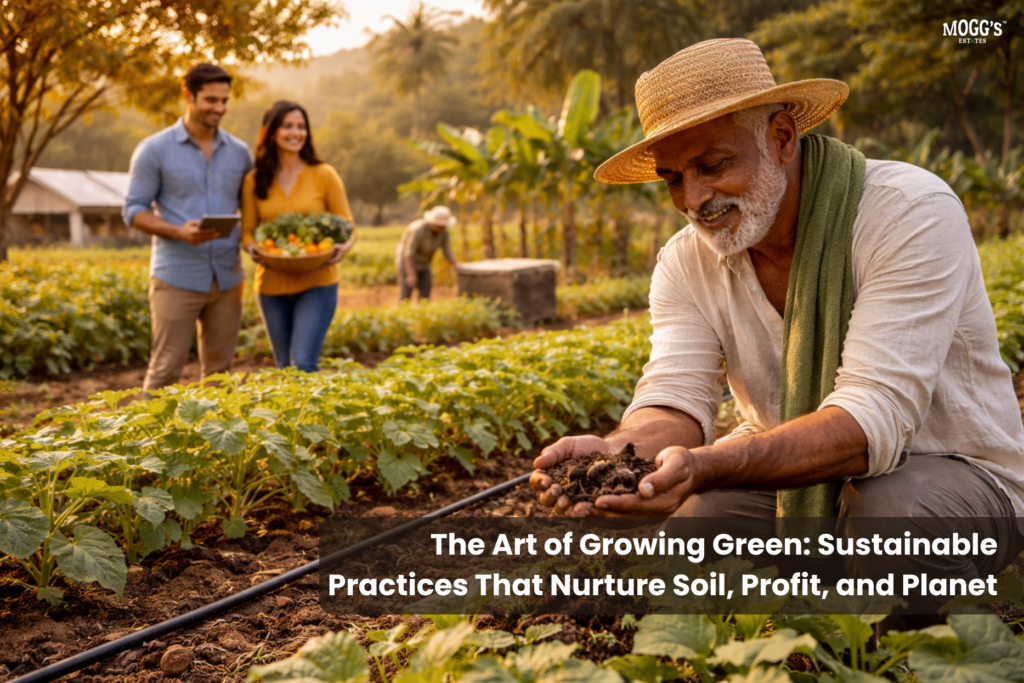
During his first visit to the farm, Arjun noticed the attention paid to soil quality. Instead of relying heavily on chemical inputs, the farm focused on natural soil enrichment and balanced crop planning. Healthy soil retains nutrients better, supports stronger plant growth, and reduces long-term environmental damage. These practices not only protect the land but also increase agricultural productivity over time.
Water conservation was another critical element.
In many agricultural regions, inefficient irrigation results in water waste and soil degradation. However, modern managed farmland near Bangalore often uses advanced drip irrigation systems that deliver water directly to plant roots. This technique reduces evaporation, minimizes water use, and ensures crops receive consistent hydration. By managing water carefully, farms can remain productive even during changing climate conditions.
For investors like Arjun, these sustainable practices offer more than environmental benefits; they also strengthen the long-term value of farmland.
Unlike short-term investments that depend on market volatility, farmland grows gradually and steadily. Trees mature, soil fertility improves, and the ecosystem becomes more resilient each year. In regions around Bangalore, where urban expansion continues to increase land demand, well-managed agricultural land is becoming increasingly valuable.
This is one reason why many investors are searching for the best farmland near Bangalore today.
But sustainable farmland offers something deeper than appreciation potential. It aligns financial growth with environmental responsibility. In a world where climate change and resource depletion are becoming serious concerns, investments that support sustainability are gaining importance. By nurturing green landscapes rather than replacing them with concrete, farmland benefits both nature and society.
Arjun found this idea inspiring.
Instead of merely earning returns, he felt he was participating in something meaningful, helping preserve green spaces and supporting responsible agricultural practices. Every tree planted on the farm contributed to improved air quality, better soil health, and increased biodiversity. Birds returned to the orchards, insects helped with pollination, and the land gradually developed into a thriving ecosystem.
The more he visited the farm, the more he understood why sustainable agriculture is often described as an art.
Just like an artist carefully balances colors on a canvas, farmers balance soil nutrients, crop cycles, water management, and environmental conditions. Each decision affects the long-term health of the land. Sustainable farming is not about extracting maximum profit from the soil in a single season; it is about nurturing the land so it can continue producing for decades.
This philosophy resonates strongly with the concept of premium managed farmland developed by organizations such as Mogg’s Estates. Their projects emphasize structured planning, sustainable plantation practices, and professional farm management to ensure the land remains productive and environmentally responsible.
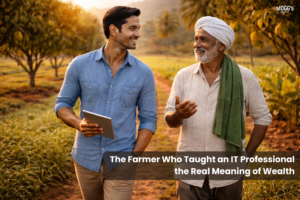
For urban investors, this model offers peace of mind. They can own farmland while experts handle cultivation and maintenance. This removes the operational complexity traditionally associated with agriculture while preserving the long-term benefits of land ownership.
Over time, Arjun realized that farmland also provided something he had not expected: balance.
City life often moves at a relentless pace. Deadlines, targets, and digital screens dominate daily routines. But farmland moves according to nature’s rhythm. Seeds are planted, seasons change, trees grow slowly, and harvests arrive in their own time. This slower pace teaches patience and perspective.
Each time Arjun visited his farmland, he felt a sense of calm that no urban investment had ever provided. He walked through the orchard, watched irrigation systems quietly nourishing the soil, and observed how sustainable practices allowed the land to flourish without harming the environment.
For many investors, this emotional connection becomes just as valuable as financial returns.
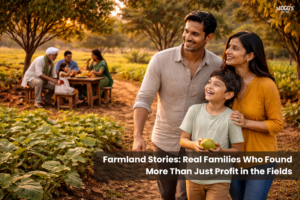
Families who invest in farmland often bring their children along during visits. Kids who are used to apartment complexes suddenly discover open spaces, trees, and the simple joy of running through fields. They learn where fruits grow, how soil supports life, and why protecting nature matters. In this way, farmland becomes not just an asset but a place where future generations develop a deeper relationship with the environment.
This is why sustainable farmland is increasingly seen as a legacy investment.
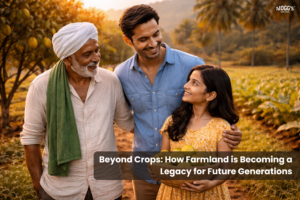
Owning land means preserving something real for the future. Unlike digital assets or short-term market opportunities, farmland can be passed down across generations. Trees planted today may still bear fruit decades later, creating a living connection between past, present, and future.
Around Bangalore, this idea is becoming more relevant each year. As urbanization expands and green spaces shrink, agricultural land near cities becomes increasingly valuable. Investing in farmland near Bangalore today is not only a financial decision but also a commitment to preserving nature in an ever-changing landscape.
Developers like Mogg’s Estates are playing a key role in making this vision possible. By combining agricultural expertise with modern planning, they are creating farmland communities that support sustainability, environmental balance, and long-term value creation.
For investors like Arjun, this journey has been transformative.
What began as a search for diversification eventually became a deeper understanding of how wealth, nature, and responsibility can coexist. The farmland is not just a piece of land; it is a living system that grows stronger with time.
As the morning sun rises over the orchard and the soil absorbs another day of light and nourishment, the message becomes clear.
The art of growing green is not only about cultivating crops.
It is about nurturing soil, supporting sustainable practices, building financial resilience, and protecting the planet for generations to come.
And in places where thoughtfully managed agricultural projects are taking shape, such as those developed by Mogg’s Estates, this art is quietly transforming farmland near Bangalore into something far more valuable than just land.
It is becoming a foundation for sustainable wealth, environmental harmony, and a greener future. 🌱