On most weekday mornings in Bangalore, the routine looks almost the same for thousands of professionals. Alarm clocks ring early, emails begin piling up before breakfast, and the city roads slowly fill with vehicles heading toward offices. For many, financial security is measured by a steady salary, savings in the bank, and perhaps an investment in apartments or stocks. But in recent years, a quiet shift has begun to take shape. Some investors are beginning to ask a different question: What if true wealth grows slowly, silently, and naturally, from the soil itself?
This is the story of how the economics of land, trees, and crop cycles are reshaping the way modern investors think about money, stability, and the future.
A few years ago, Rohan, a software architect working in Bangalore’s busy tech corridor, started thinking differently about his investments. Like many professionals, he had already invested in mutual funds and a small apartment. On paper, everything looked secure. Yet something felt missing. The returns were numbers on a screen, disconnected from the real world. There was no sense of ownership beyond documents and digital statements.
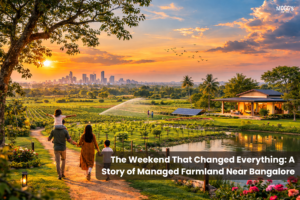
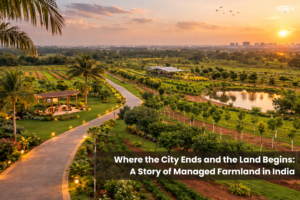
One weekend, during a short drive outside the city, Rohan visited a managed farmland near Bangalore. At first, it was simply curiosity. But what he saw that day slowly changed his understanding of wealth.
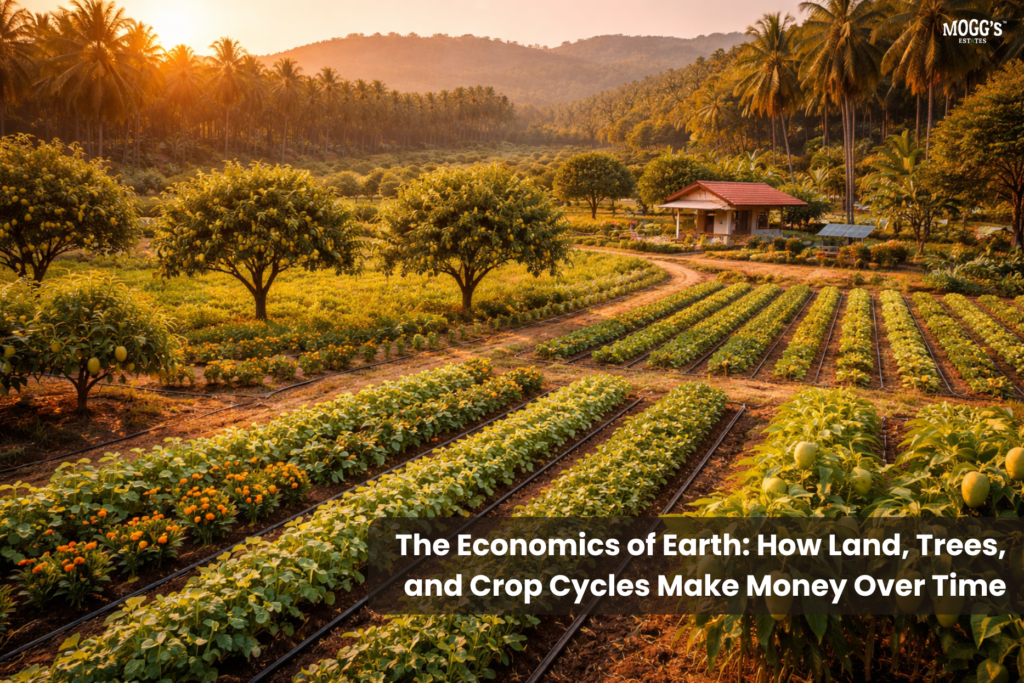
Instead of concrete towers and traffic noise, there were rows of mango trees, young saplings growing in carefully planned lines, and fertile soil being nurtured through sustainable farming practices. Farmers tended crops while irrigation systems quietly watered the land. The air was fresh, and the landscape felt alive. That visit introduced him to the idea of Managed Farmland, an investment model that combines agriculture, land ownership, and professional farm management.
What fascinated him most was not just the beauty of the land but the simple economics behind it.
Unlike many financial assets, farmland generates value in multiple ways. The first layer of value comes from the land itself. Historically, land has always been a finite resource. Cities expand, infrastructure grows, and agricultural land near urban regions becomes increasingly valuable over time. This natural appreciation makes farmland a strong long-term asset.
The second layer comes from trees and plantations. Trees are unique economic assets. Unlike buildings or machines that depreciate, trees grow stronger and more valuable with time. A mango tree, for example, can produce fruit for decades. As it matures, its yield increases, creating a recurring source of agricultural income. When investors choose premium managed farmland, they are not just buying land; they are investing in living assets that mature every year.
The third layer of value lies in crop cycles. Agriculture operates on seasonal rhythms, and each cycle offers an income opportunity. Depending on the crops grown, fruits, vegetables, or plantation crops, there can be regular harvests that generate revenue. These harvests reflect the soil’s productive power, something financial markets cannot replicate.
When all three elements work together, land appreciation, tree growth, and crop production, the economics of farmland become surprisingly powerful.
This is where companies like Mogg’s Estates play a significant role. Many urban investors are interested in farmland but hesitate because they lack agricultural knowledge or time to manage farms themselves. Managed farmland bridges that gap. Professional teams handle plantation planning, soil health management, irrigation systems, and ongoing farm maintenance.
For someone like Rohan, this meant he could own farmland without worrying about the daily operations. The farm would be maintained by experts, ensuring that both the ecological and financial value of the land continues to grow.
Another reason farmland near Bangalore is attracting attention is the changing priorities of modern investors. Today, financial security is no longer just about short-term profits. People are increasingly seeking assets that offer stability, sustainability, and long-term value.
Farmland offers all three.
It is a tangible asset, meaning investors can physically visit and experience what they own. Unlike digital investments, farmland is real: soil, trees, crops, and open landscapes. This emotional connection often becomes as valuable as the financial returns.
It is also resilient. While stock markets can fluctuate dramatically, the demand for food remains constant. Agriculture continues regardless of market trends because it serves a fundamental human need.
But perhaps the most powerful aspect of farmland is its connection to time.
In modern finance, investors often focus on quick returns. Markets move fast, decisions are made in seconds, and success is measured quarterly. Agriculture follows a different philosophy. Trees take years to mature. Soil fertility improves gradually. Crop cycles repeat season after season.
This slow, natural rhythm teaches patience and rewards it.
That is why many investors searching for the best farmland near Bangalore are not just thinking about immediate profits. They are thinking about the next ten or twenty years. They are considering creating assets that grow stronger over time.
For families, farmland often becomes something even more meaningful: a legacy.
Imagine a piece of land planted with hundreds of trees today. In ten years, those trees will be fully grown and producing fruit. In twenty years, they will become a mature orchard providing steady harvests. By the time the next generation inherits that land, it is not just property; it is a thriving ecosystem.
This concept of generational wealth is one reason premium managed farmland is attracting professionals, entrepreneurs, and families alike.
At Mogg’s Estates, the focus is not only on selling farmland but also on creating long-term agricultural ecosystems. Well-planned plantations, soil conservation practices, and responsible farming techniques ensure that the land remains productive for decades. The goal is to create farms that balance financial growth with environmental sustainability.
Because ultimately, the economics of the Earth go beyond numbers.
It includes healthier soil that produces better crops. It includes trees that store carbon while providing shade and fruit. It includes farmers whose livelihoods improve through modern agricultural practices. And it includes investors who gain not just financial returns but also a deeper connection to the land.
Rohan realized this during one of his later visits to the farm. Months after his initial investment, he returned to see how the land had changed. The young trees had grown taller, irrigation systems were running efficiently, and the soil looked richer than before.
Standing there, he understood something simple but powerful.
True wealth is not always built quickly. Sometimes it grows quietly, season after season, rooted deep in the soil.
And that is the essence of the economics of Earth. Land appreciates. Trees grow stronger. Crops return again and again. Over time, these cycles create value that is both financial and meaningful.
For modern investors exploring alternatives to traditional assets, Managed Farmland is emerging as more than just an investment trend. It represents a shift in thinking, from short-term gains to long-term growth, from abstract wealth to tangible assets.
As cities continue to expand and demand for sustainable investments rises, the search for the best farmland near Bangalore will likely grow.
Because sometimes the most powerful investments are those that follow nature’s timeline.
And when land, trees, and crop cycles work together, the Earth itself becomes an engine of wealth, quietly growing value for generations to come. 🌱