Rohit believed he understood wealth.
At thirty-five, he had everything that defined success in the city: a stable IT job at a reputable firm in Bangalore, with a steady monthly salary. SIPs are running quietly in the background. A home loan that felt like a badge of adulthood. His calendar was full, his weekends were booked, and his life, on paper, looked secure.
Yet, there was a restlessness he couldn’t explain.
Every month, the salary was split between EMIs, investments, and expenses. The numbers grew on spreadsheets, but something about them felt abstract. Temporary. Almost borrowed.
It was during one such restless phase that a colleague casually mentioned visiting a managed farmland project by Mogg’s Estates.
“Not for farming,” he clarified quickly. “For investing.”
Rohit laughed at the idea. Farmland sounded like something his grandfather would talk about, not something a modern IT professional would consider.
But curiosity has a quiet way of working.
One Saturday, Rohit joined a small group heading toward farmland near Bangalore. He didn’t expect much. Maybe a scenic drive. Maybe a new perspective. At worst, it would just be a wasted day.
The drive began with flyovers and traffic signals but slowly shifted into open skies and tree-lined roads. The air felt different, cleaner, calmer. When they reached the premium managed farmland site, Rohit noticed something unusual.
There was no rush.
No aggressive sales pitch.
Just acres of thoughtfully planned greenery stretching across the landscape.
He met Raghavanna there.
Raghavanna wasn’t dressed in suits or carrying presentations. He wore a simple cotton shirt, a weathered hat, and a smile that came from years of working with the land. He wasn’t introduced as a salesperson. He was introduced as the farm mentor, someone who had worked closely with the agricultural teams managing the land.
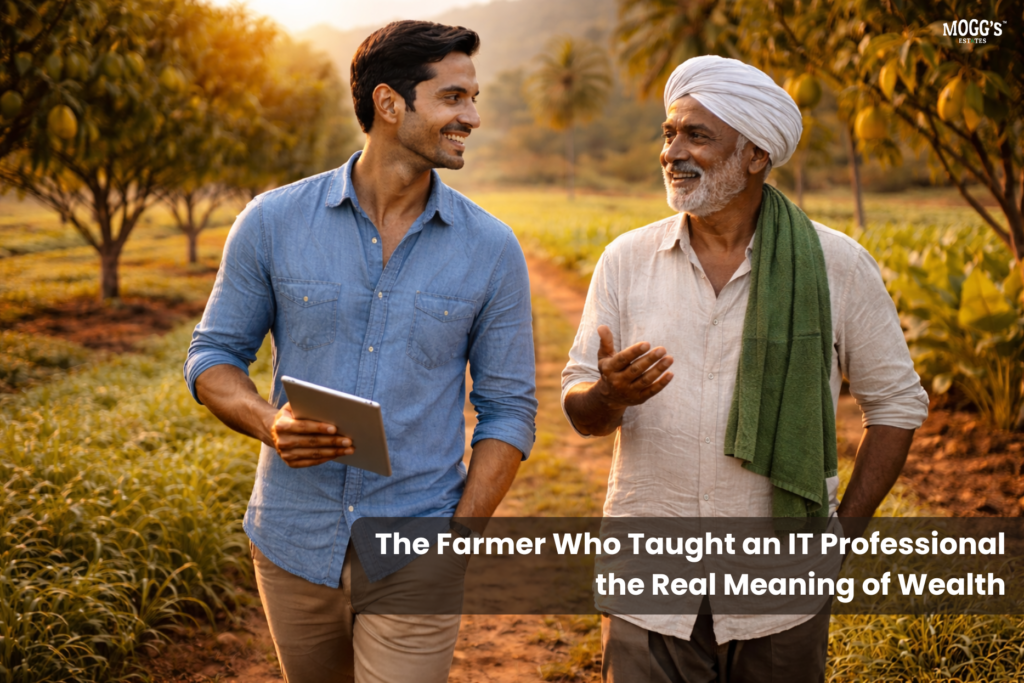
As Rohit walked through the orchard, Raghavanna joined him.
“You work in IT?” he asked gently.
Rohit nodded.
“You must be earning well,” Raghavanna said.
It wasn’t a compliment. It was an observation.
They stopped beside a row of young mango trees. The soil beneath was moist and carefully irrigated. The trees were evenly spaced, supported, and nurtured with precision.
Rohit asked the question that had been forming in his mind all morning.
“Do people really invest in this?”
Raghavanna smiled.
“People invest in what they understand. Earlier, everyone understood land. Today, everyone understands screens.”
That sentence stayed with Rohit.
As they walked further, Raghavanna explained how managed farmland works. This wasn’t traditional farming, where landowners struggled with daily labor or uncertain yields. Premium managed farmland near Bangalore was structured professionally.
From soil testing to crop planning, from drip irrigation to regular maintenance, everything was handled by experts.
Owners didn’t need farming knowledge.
They needed patience.
Rohit listened carefully as Raghavanna spoke about soil health.
“In the city,” he said, picking up a handful of earth, “wealth looks like numbers. Here, wealth looks like this.”
He let the soil fall slowly through his fingers.
“Soil improves over time if cared for. Trees grow stronger. Water gets conserved. Land becomes more fertile. This is living wealth.”
Living wealth.
The phrase felt powerful.
Raghavanna spoke about how farmland near Bangalore had quietly become a preferred choice among thoughtful investors. With urban expansion increasing land value and the demand for sustainable agriculture rising, managed farmland was no longer just an emotional purchase. It was a strategic one.
“Why do people choose Mogg’s Estates?” Rohit asked.
Raghavanna pointed toward the structured layout, organized plantations, efficient irrigation systems, accessible roads, and expert supervision.
“Because here, land is not left to chance.”
Rohit began to see what made this the best farmland near Bangalore for modern investors. It combined professional management with agricultural authenticity. It allowed people like him to own land without abandoning their careers.
They paused under a young coconut tree.
“You work hard every month for your salary,” Raghavanna said.
Rohit nodded again.
“And what happens if one day the salary stops?”
The question was uncomfortable.
Rohit had insurance. He had savings. But the question went deeper than finances.
It touched security.
Raghavanna continued.
“Salary is temporary wealth. Land is permanent wealth.”
That afternoon, Rohit stayed back even after the others left.
He wanted to understand more, not just about returns, but about resilience.
Raghavanna explained how tree crops like mango, coconut, and chikoo are long-term assets. How soil fertility improves through sustainable practices. How land historically appreciates, especially near growing urban centers like Bangalore.
Unlike apartments that age or depreciate, farmland matures.
Unlike volatile markets, trees grow steadily.
Unlike digital investments, land is tangible.
Over the following weeks, Rohit often found himself thinking about those conversations.
He began comparing his existing investments with managed farmland. Apartments demanded maintenance and faced market saturation. Stocks fluctuated with global uncertainty. But farmland offered diversification.
More importantly, it offered independence from urban dependency.
He returned to the site with his family.
This time, he noticed different things: the wind moving through rows of mango trees, the quiet strength of the land, the sense of permanence.
He met Raghavanna again.
“Have you decided?” the farmer asked.
Rohit hesitated.
“I’m still thinking.”
Raghavanna nodded.
“Good decisions grow slowly. Like trees.”
A month later, Rohit invested in one acre of premium managed farmland through Mogg’s Estates.
The decision wasn’t impulsive.
It was informed.
Friends questioned him.
“Why farmland?”
“Who will manage it?“
“Isn’t it risky?”
But Rohit now understood what they didn’t.
Managed farmland meant professional oversight. It meant agricultural planning backed by expertise. It meant owning land without needing to become a farmer.
Over time, Rohit’s visits to the farm became more frequent.
He watched the land evolve.
Saplings grew taller.
The soil looked richer.
Irrigation systems functioned seamlessly.
The farm team shared updates regularly.
His one acre began to feel less like an investment and more like a foundation.
Meanwhile, demand for farmland near Bangalore continued to rise. As urban life grew more uncertain, people began valuing tangible assets.
But Rohit’s biggest return wasn’t financial.
It was philosophical.
He realized wealth wasn’t just about accumulation.
It was about continuity.
The IT professional who once measured success in appraisals now measured it in seasons.
The man who once trusted only digital growth now believed in organic growth.
Years later, Rohit visited the farm with his young daughter.
She ran through the orchard, laughing freely.
Raghavanna stood nearby, watching quietly.
“Now you understand,“ he said softly.
Rohit nodded.
Wealth wasn’t the monthly salary credited.
It was the land that remained when everything else changed.
Thanks to managed farmland and the thoughtful planning of Mogg’s Estates, Rohit had discovered something many urban professionals overlook: that true security lies not just in what you earn, but in what you own and nurture.
Sometimes, it takes a farmer to teach an IT professional the real meaning of wealth.
And sometimes, that lesson begins with a single acre of the best farmland near Bangalore.