On a typical weekday evening in Bangalore, Vikram would sit at his laptop, reviewing his investments. Stocks, mutual funds, and a recently purchased apartment were neatly organised in spreadsheets. The numbers looked impressive. Returns were decent. Yet, something about it all felt… incomplete.
Every asset he owned existed either on paper or on a screen.
There was nothing he could truly stand on, walk through, or experience.
That thought stayed with him longer than he expected.
A few weeks later, during a casual conversation with a colleague, he heard something unusual: a managed farmland near Bangalore. At first, he dismissed it. Farming and investing didn’t belong in the same sentence. But the idea lingered just enough for curiosity to take over.
That curiosity led him to visit a premium managed farmland project developed by Mogg’s Estates.
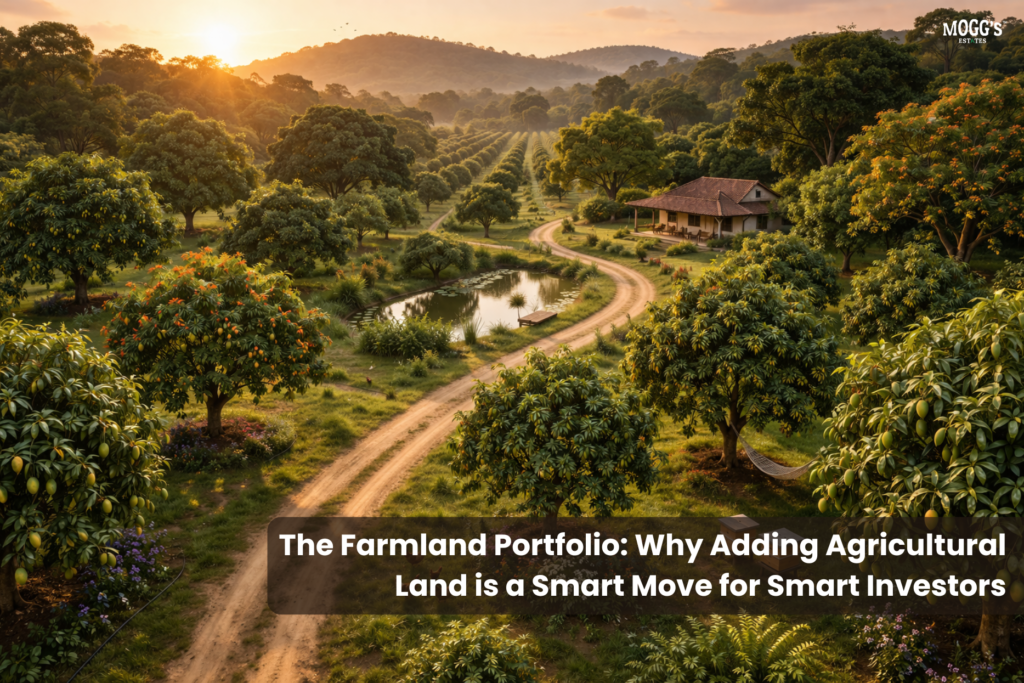
The drive itself felt like a transition, from fast-paced city life to something calmer and more grounded. As he stepped onto the land, he noticed the difference immediately. Rows of mango and coconut trees lined the landscape. Drip irrigation systems quietly nourished the soil. The air felt fresh, and for the first time in a long while, Vikram felt disconnected from notifications and deadlines.
But what truly caught his attention wasn’t just the beauty.
It was the logic behind it.
Rethinking the Modern Investment Portfolio
For years, investors like Vikram were taught to diversify across stocks, mutual funds, and real estate. This traditional approach worked well, but it also came with limitations. Stocks could be volatile. Urban real estate often requires high maintenance and offers moderate rental yields. Both were heavily tied to market cycles and economic conditions.
Farmland, on the other hand, introduced something different.
It wasn’t just another asset; it was a different category altogether.
Adding farmland to a portfolio meant investing in an asset that combined land appreciation, agricultural income, and environmental value. It brought balance to an otherwise city-centric portfolio.
And that’s where the idea of a farmland portfolio began to make sense.
Understanding Managed Farmland
Like most urban investors, Vikram had one major concern: “Who will manage the farm?”
That’s when the concept of Managed Farmland changed everything.
Managed farmland allows investors to own agricultural land while professional experts handle everything, from soil preparation and planting to irrigation, maintenance, and harvest cycles. This eliminates the operational complexity that usually discourages people from investing in agriculture.
At Mogg’s Estates, Vikram learned how structured farmland development works. The land was legally clear, properly planned, and supported by agricultural experts. Crops were chosen based on soil conditions and long-term yield potential. Water management systems were already in place.
This wasn’t traditional farming.
This was premium managed farmland near Bangalore, designed for modern investors.
Why Farmland is Gaining Investor Attention
As Vikram delved deeper, he realised that farmland was quietly becoming one of the most talked-about alternative investments.
Here’s why:
1. Land is Finite
Unlike buildings or financial products, land cannot be created. As Bangalore continues to expand, farmland near Bangalore becomes increasingly valuable due to limited availability.
2. Natural Appreciation
Agricultural land near growing cities often appreciates over time. As infrastructure develops, connectivity improves, and demand increases, land value follows.
3. Dual Income Potential
Farmland offers the possibility of both land appreciation and agricultural income. Fruit-bearing trees such as mango and coconut generate seasonal returns, adding another layer of value.
4. Diversification
Farmland behaves differently from stocks and urban real estate. It provides balance during market fluctuations and reduces overall portfolio risk.
5. Tangible Ownership
Unlike digital assets, farmland is something real. You can walk on it, experience it, and watch it grow.
For Vikram, this combination was compelling.
The Emotional Edge of Farmland
One weekend, Vikram brought his parents to visit the farmland.
His father, who grew up in a village, walked slowly across the land, touching the soil as if reconnecting with something he had left behind years ago. His mother smiled as she watched the trees swaying gently in the breeze.
That moment changed Vikram’s perspective.
This wasn’t just an investment.
It was a connection.
Farmland offers something most modern assets cannot, an emotional return. It becomes a place where families gather, where children learn about nature, and where memories are created.
This is one reason many investors now consider farmland not just an asset but a legacy.
What Makes the Best Farmland Near Bangalore?
As demand increases, choosing the right farmland becomes critical.
Not all agricultural land is suitable for investment. The best farmland near Bangalore typically includes:
- Clear and verified legal documentation
- Reliable water sources and irrigation systems
- Fertile soil and scientific crop planning
- Professional farm management
- Long-term sustainability practices
Projects developed by Mogg’s Estates focus on these essential elements. Their approach ensures that investors receive not just land, but a well-structured agricultural ecosystem.
This reduces risk and enhances long-term value.
Farmland as a Long-Term Strategy
Unlike stocks, which can fluctuate daily, or properties, which depend on rental demand, farmland operates on a different timeline.
Trees grow steadily.
Soil improves gradually.
Harvest cycles repeat season after season.
This slow and consistent growth creates stability. It encourages investors to think beyond short-term gains and focus on long-term wealth creation.
For Vikram, this was a refreshing change.
He no longer felt the need to track market movements constantly. His farmland investment quietly worked in the background, growing in value and productivity.
Sustainability Meets Profitability
Modern investors are increasingly conscious of environmental impact.
Farmland offers a unique opportunity to align financial goals with sustainability. Practices such as drip irrigation, organic soil enrichment, and responsible farming not only improve productivity but also protect natural resources.
Managed farmland projects often incorporate these practices to ensure long-term soil health and water conservation.
This means that investors are not just earning returns, they are contributing to a greener future.
The Shift in Investor Mindset
Months after his initial visit, Vikram made his decision.
He added one acre of premium managed farmland near Bangalore to his portfolio through Mogg’s Estates.
It wasn’t a rushed decision. It was a strategic one.
He still maintained his stock investments. He still owned his apartment. But now, his portfolio felt complete.
Balanced.
Grounded.
Real.
Over time, he noticed a shift not just in his investments but also in his mindset. He began to value patience over speed. Stability over speculation. Growth over quick gains.
More Than Just an Investment
Today, when Vikram visits his farmland, he doesn’t think about market charts or ROI percentages.
He walks through rows of growing trees.
He sees the land evolving.
He feels a sense of ownership that no digital asset ever gave him.
And he understands something that many modern investors are beginning to realise:
A smart portfolio is not just about maximising returns.
It is about balancing risk, creating stability, and owning assets that stand the test of time.
The Future of Farmland Investment
As Bangalore continues to grow and urban life becomes more complex, the demand for meaningful investments will only increase.
Farmland is no longer seen as outdated or rural.
It is becoming a modern, strategic, and sustainable investment choice.
With structured developments like those offered by Mogg’s Estates, managed farmland is now accessible to professionals seeking the benefits of land ownership without the operational challenges.
For those searching for farmland near Bangalore, the opportunity lies not just in appreciation but in transformation.
Transformation of portfolios.
Transformation of perspectives.
And sometimes, the transformation of life itself.