It began as a joke on a balcony.
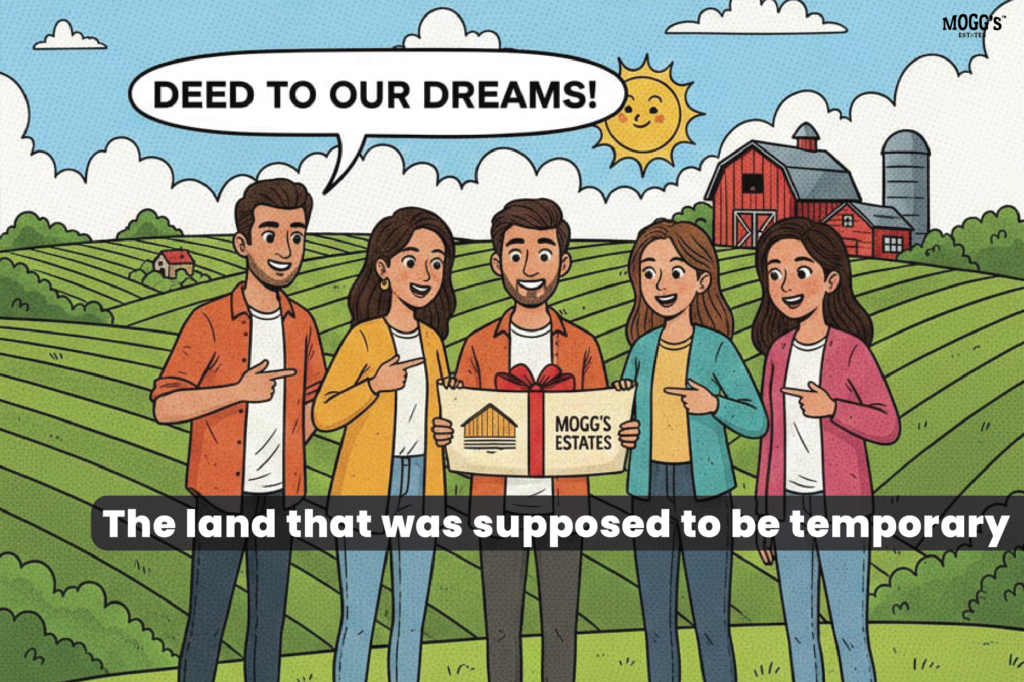
Five friends in their early twenties, passing around cutting chai after work, complaining about rent, bosses, relationships, and the strange pressure of becoming adults all at once. Someone casually said, “We should invest in something together before we waste all our salaries on food and trips.” Everyone laughed. Someone else said, “Land, maybe.” They laughed harder.
At that point in life, land felt like something their parents talked about. Not them. They were busy people with busy lives and big dreams. The closest they came to ownership was renting apartments and reselling iPhones every two years.
But that joke stuck around.
Over the next few weeks, it became a half-serious conversation. They looked at stocks and quickly got bored. Crypto scared two of them. One friend kept talking about how his uncle bought farmland years ago and never stopped. So they started searching. Not seriously. Just out of curiosity.
That is how Terra Hill Farms first appeared on their screens.
A forty-acre managed farmland near Kunigal. About 45 minutes from Nelamangala on the Bengaluru-Mangaluru Expressway. With cycling trails, forest gardens, a swimming pool, a plantation, water bodies and community spaces. It sounded too calm for their chaotic energy. It sounded like something they would visit for a picnic and forget.
Someone jokingly said, “Imagine all five of us owning land together.”
They laughed again.
Three months later, they were standing on red soil with dust on their shoes, signing documents.
They told everyone it was temporary.
A decision made without patience
None of them went into it with a thirty-year vision. They put in small amounts. They split responsibilities. They told themselves they would exit in a few years when the price went up, fast appreciation. Clean profit. Exit.
That was the plan.
They visited the land once in the first year. I took photos. Planted saplings that felt smaller than their excitement. Promised to return soon. Life swept them back into deadlines, promotions, breakups, new jobs, and new cities.
The land stayed where it was.
Quiet. Growing.
It was Mogg’s Estates that kept sending them updates. Plantation photos. Irrigation work. Growing green cover. Soil work. Infrastructure updates. They responded in the group chat with thumbs-up emojis, then went back to their lives.
The land became background noise.
When life begins to scatter people
In the next ten years, everything changed.
One of them moved abroad. Another got married and left the city. One started a business and lost money before he made any. The two stayed back in Bengaluru but stopped meeting as often as before.
Their group chat slowly filled with baby photos, anniversary wishes, and forwarded reels instead of plans.
At some point, one of them suggested selling the land and splitting the money. They were all older now. Responsibilities were heavier. EMIs had entered their lives. The land felt like a distant financial entry instead of a dream.
They checked the value and paused.
It was already worth far more than what they had expected. Still, they waited.
Something about selling it felt rushed. Something felt unfinished.
They postponed the decision.
The land kept growing.
The visit that changed the meaning of ownership
It was after nearly thirteen years that all five of them stood together on that same land again.
This time, with children running ahead of them. With conversations about school admissions and back pain. With quieter laughter but deeper comfort.
What they saw stunned them into silence.
The saplings they once planted were now thick trees. Paths had formed naturally under their shade. The water body reflected a sky they barely looked at anymore. The cycling trail curved through green spaces that felt unreal, so close to the city.
The swimming pool echoed with the voices of other families who now owned nearby plots.
None of this existed when they first bought the land.
They realized something slowly and together.
They had not just bought land.
They had accidentally bought time.
When temporary decisions become permanent anchors
What had started as a casual investment became their strongest shared asset. Through job losses, business failures, childbirths, migrations, financial stress, and emotional shifts, the land stayed untouched and steady.
Whenever any of them felt like they were falling behind in life, the land became proof that something was still growing for them.
They never tracked its value daily. They never panicked over its movement. It simply matured beside them.
That is when one of them finally said it out loud. “This was supposed to be temporary.”
They all smiled.
Temporary decisions built without pressure often become the permanent strengths of life.
Why farmland works when everything else feels unstable:
This is the quiet truth about farmland investment.
It does not demand attention. It does not interrupt your life. It does not ask you to react constantly. It grows in time while market trends rush past.
Unlike fast-moving assets, farmland gives you three rare advantages.
First, it is finite. Land cannot be manufactured.
Second, it is productive. When managed properly, it generates yield and appreciation.
Third, it is emotional. It becomes a place, not just a number.
Managed farmland with developers like Mogg’s Estates makes this even more powerful. You get the benefit of ownership without the burden of daily farming operations. Professionals handle plantation, irrigation, maintenance, sustainability, and infrastructure. You simply watch the asset mature.
Terra Hill Farms is a living example. Terra Hill Farms near Kunigal reflects this entire philosophy.
Located forty-five minutes from Nelamangala on the Bengaluru Mangaluru Expressway, spread across forty acres, it is designed for both lifestyle and long-term appreciation.
With clubhouse access, swimming pool, forest garden, kids’ play areas, trekking trails, camping zones, cycling paths, bonfire spaces, temple area, agri storage, borewells, drip irrigation, and water bodies, the project evolves each year rather than staying static.
What makes such managed farmland powerful is not what it looks like on day one. It is what it becomes over the course of a decade.
Land here does not age like infrastructure. It matures like a living system.
Compounding that feels natural. Most people understand compounding in numbers. What farmland teaches you is compounding in visuals.
You do not just see value increase. You see trees rise. You see soil change texture. You see ecosystems form. You see communities grow around your asset.
Each improvement adds another layer of worth. Each year strengthens the foundation you invested in.
This is why farmland continues to outperform emotional investments driven by trends. It grows in silence and maturity.
From quick profits to generational confidence
At some point during that reunion, one of the five friends said something that completely changed the mood of the visit.
“My daughter thinks this land was always ours.”
That simple sentence shifted everything.
What had once been a temporary purchase now carried generational meaning. Their children did not see it as a flip or a profit. They saw it as a place that existed before them and would continue after them.
That is when they finally stopped talking about selling.
They began talking about inheritance.
Why do people who own land think differently?
Once you own land, your relationship with time changes.
You stop rushing every decision.
You stop measuring success only in bank balances.
You start thinking in decades instead of quarters.
Farmland teaches patience without forcing it. It shapes generational thinking without pressure. It slowly rewires how you look at money, effort, success, and the future.
That is why seasoned investors almost always keep land in their portfolio. It is not always their most exciting asset. But it is always their most certain one.
The quiet shift happening across India
Across India, young professionals are rediscovering farmland. Not as farmers, but as long-term owners. People who want tangible assets in a digital economy. Families who want their children to grow up knowing what ownership truly feels like.
Managed farmland has made this shift accessible. With proper legal structure, professional operations, and lifestyle-focused planning, projects like Terra Hill Farms remove fear and complexity from land ownership.
You do not need agricultural experience. You do not require daily involvement. You simply need the vision to let time do its work.
What the five friends learned without planning it:
They learned that some of the most substantial investments are the ones you do not fully understand at the beginning.
They learned that growth does not always need monitoring. They knew that land grows alongside you, not against you.
Most of all, they learned that wealth is not just about what you earn. It is about what you hold quietly for the future.
A closing truth about temporary decisions:
Many people wait for the perfect moment to invest. Perfect knowledge. Perfect returns. Perfect certainty.
But the truth is more straightforward.
Some of the best assets are bought when you are young, unsure, and unready.
They grow with your doubts. They mature with your life. And by the time you fully understand their value, they already define your stability.
The land that was meant to be temporary became their strongest permanent decision.
If you are looking for an investment that grows without noise, without panic, and without needing your constant attention, managed farmland offers a rare balance of emotional and financial return.
Mogg’s Estates brings this vision to life through thoughtfully planned, managed farmland communities like Terra Hill Farms near Kunigal, just forty-five minutes from Nelamangala on the Bengaluru Mangaluru Expressway.
Because some investments are meant to be temporary, and some quietly become legacy.