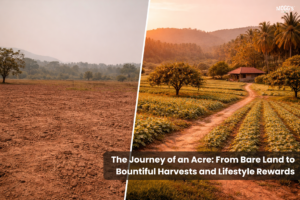
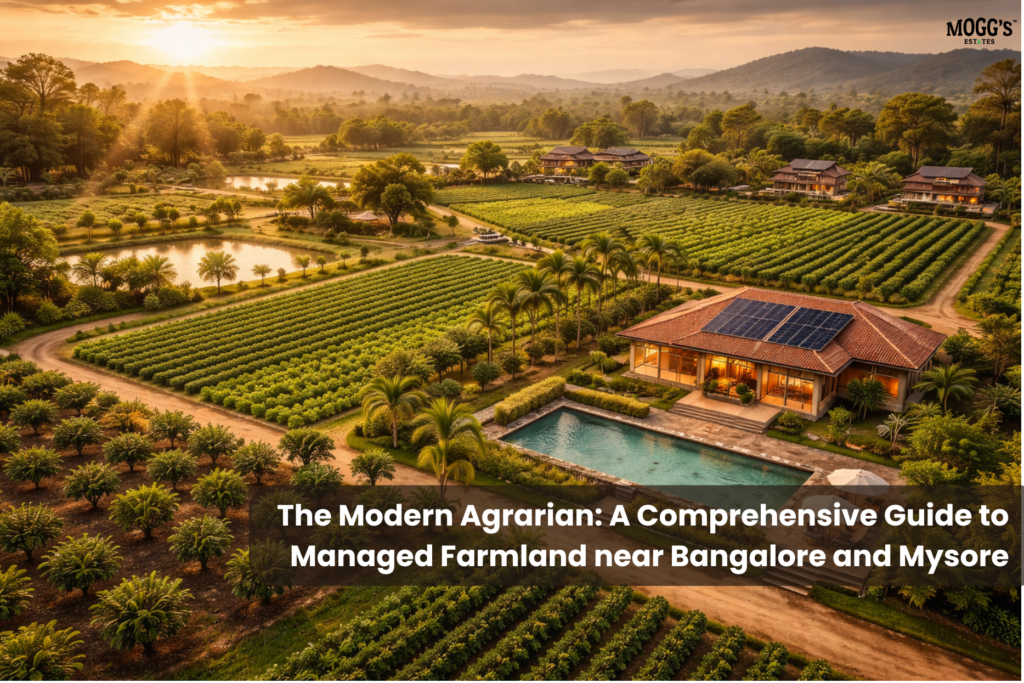
The dream of owning a piece of earth, a place where the air is crisp, the soil is rich, and the pace of life slows down, has never been more alluring. For the urban dweller in Bangalore or Mysore, the shift toward managed farmland isn’t just a trend; it’s a strategic move to reconnect with nature without the traditional headaches of remote land ownership.
But before you trade your laptop for a shovel (or, more accurately, a site visit), there are critical legal, financial, and logistical layers to peel back.
What is Managed Farmland?
In the past, buying agricultural land meant you were the farmer, the security guard, and the irrigation engineer. Managed farmland is a “hassle-free” ownership model where a professional management company handles the heavy lifting.
When you invest in premium managed farmland, you typically get:
* Security: Fenced perimeters and 24/7 onsite personnel.
* Expert Cultivation: Professional agronomists choosing the right crops (Sandalwood, Mahogany, or fruit orchards).
* Infrastructure: Established water lines, electricity, and internal roads.
* Community: Shared amenities like a clubhouse, walking trails, or even a small “weekend home” cottage.
Why the Surge in Bangalore and Mysore?
The corridor between Bangalore and Mysore is becoming the “Gold Coast” of agricultural investment.
1. Farmland near Bangalore
Bangalore’s rapid expansion is pushing the city’s boundaries into neighboring districts, including Hosur, Chikkaballapur, and Kanakapura. Investors are looking for farmland near Bangalore to serve as a “land bank,” an asset that appreciates as the city’s outskirts turn into suburbs.
2. Farmland near Mysore
Mysore offers a more serene, “heritage” vibe. The soil quality in regions like Nanjangud or Hunsur is exceptional, and the climate is slightly more temperate than Bangalore. For those seeking premium managed farmland for high-yield timber or organic farming, Mysore is often the preferred choice due to its higher water table.
Navigating the Legal Labyrinth
Buying agricultural land in Karnataka used to be a bureaucratic mountain. However, recent legislative shifts have opened doors.
The 2020 Amendment (Sections 79 A, B, and C)
Previously, only people from agricultural backgrounds or those with specific income brackets could buy farmland in Karnataka. In a landmark move, the Karnataka Government repealed Sections 79A, B, and C of the Land Reforms Act.
* The Result: Any Indian citizen (or entity) can now purchase agricultural land in Karnataka, regardless of their profession or income.
* The Caveat: While buying is more straightforward, you still cannot use the land for non-agricultural purposes (like building a large factory or a massive resort) without a formal Land Conversion (DC Conversion).
Essential Due Diligence
Even with managed projects, you must verify the following:
* RTC (Pahani): The Record of Rights, Tenancy, and Crops. This confirms the current owner and the land’s nature.
* Akarband: To verify the boundaries and extent of the land.
* Mutation Register: To see the history of ownership transfers.
* Encumbrance Certificate (EC): To ensure the land is free from any legal dues or mortgages.
Choosing the Best Managed Farmland Near You, like Mogg’s Estates, not all managed projects are created equal. When searching for the best managed farmland near me, look beyond the glossy brochures.