For most people living in Bangalore, weekends arrive with a quiet sense of relief. After five days of rushing between offices, meetings, and traffic, Saturday morning is supposed to feel slower. Yet for many professionals, even weekends rarely feel restful. The city remains just as busy, restaurants are crowded, roads are packed with traffic, and the constant noise of urban life continues without pause.
For Rohan Kapoor, a 36-year-old entrepreneur working in Bangalore’s fast-growing startup ecosystem, this routine had become familiar. His weeks were filled with product launches, investor calls, and late nights reviewing numbers. The city had given him opportunity and growth, but over time, it had also created a constant sense of urgency.
One particular weekend, while catching up with a friend, the conversation turned toward something unexpected.
His friend mentioned visiting a managed farmland near Bangalore, a project that allowed individuals to own agricultural land while experienced farmers handled cultivation and maintenance. At first, the idea seemed distant from Rohan’s life. Agriculture felt like something rooted in rural communities, not something urban professionals invested in.
Still, the thought lingered.
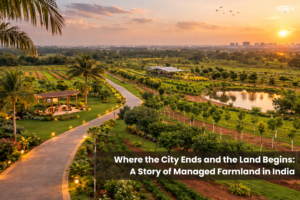
A few weeks later, curiosity led him to visit one of these farmland projects located outside the city. The journey began early on a Saturday morning. As he drove away from the busy roads of Bangalore, the city slowly faded into the distance. Buildings became fewer, traffic eased, and the landscape began to open into stretches of green land and quiet villages.
By the time he reached the farmland, the change in atmosphere was impossible to ignore.
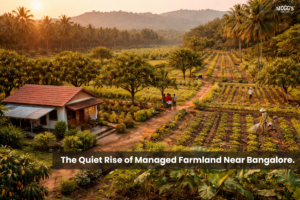
The air felt lighter, the noise of the city had disappeared, and the land stretched wide under an open sky. Rows of young trees lined the property, supported by irrigation systems that quietly delivered water across the fields. Workers were moving through the land, checking plantations and maintaining the soil.
This was not the traditional image of farming Rohan had imagined. Everything seemed organised and thoughtfully designed.
The farm manager explained the idea behind managed farmland. Instead of expecting landowners to cultivate the land themselves, agricultural experts managed the daily operations. Plantation planning, irrigation, harvesting, and soil management were all handled by professionals.
This structure allowed urban professionals to own farmland while continuing their careers in the city.
Across farmlands in India, this model has begun attracting attention from a new generation of investors. Many people living in cities want to reconnect with the land but lack the time and expertise required for traditional farming. Managed farmland bridges this gap by combining land ownership with professional agricultural management.
For Rohan, the idea felt surprisingly practical.
Unlike many modern investments that exist only as numbers on a screen, farmland is something tangible. It grows over time. Trees mature, soil improves, and the landscape evolves with every passing season.
Walking through the farmland, he noticed how carefully the plantations had been planned. Each tree was planted with adequate spacing, allowing sunlight and water to reach the roots properly. Drip irrigation pipes ran along the soil, ensuring efficient water use while preventing unnecessary waste.
The farm manager explained that these practices were part of a larger commitment to sustainable farmlands. Agriculture today faces serious environmental challenges, from water scarcity to declining soil health. Modern farmland projects are increasingly designed to address these issues while maintaining agricultural productivity.
On this farm, organic soil enrichment techniques were used to improve fertility naturally. Water conservation methods ensured that irrigation systems used minimal resources. Biodiversity zones within the property allowed native plants and wildlife to thrive alongside cultivated crops.
The goal was not only to produce crops but also to maintain the long-term health of the land.
This approach reflects a broader transformation taking place across farmlands in India. Sustainable agricultural practices are becoming essential as farmers and investors recognise the importance of protecting natural ecosystems.
Another aspect that interested Rohan was the legal side of farmland ownership. For many years, agricultural land in certain states was difficult for urban residents to purchase due to regulatory restrictions. However, changes in Karnataka’s land policies have made farmland ownership more accessible.
Today, Indian citizens can legally purchase agricultural land without being registered farmers, making legal farmland ownership possible for professionals from various industries.
Of course, responsible farmland projects ensure that all transactions include clear land titles, proper registration, and transparent documentation. Legal clarity is essential for building trust among investors exploring farmland opportunities.
After spending several hours on the farm, Rohan realised that farmland offered something he had not experienced in a long time, stillness.
Unlike the city, where every moment felt rushed, the farmland moved according to natural rhythms. Workers tended to the land patiently, irrigation systems quietly supported plant growth, and the landscape evolved slowly with each season.
Over the following months, Rohan returned to the farmland several times. With each visit, the changes became more noticeable. The saplings planted earlier had begun to grow taller, their leaves expanding into fuller canopies. The soil looked darker and healthier after the monsoon rains.
Watching the land evolve created a different perspective on growth.
In the city, growth is often measured through quick results, quarterly targets, financial gains, and rapid expansion. Farmland tells a different story. Trees grow gradually, soil becomes fertile over time, and harvests follow the rhythm of seasons rather than business cycles.
This slower process can feel surprisingly rewarding.
Across Bangalore and other growing cities in India, many professionals are beginning to discover this connection. The interest in best-managed farmland projects has increased as people search for investments that combine financial stability with environmental responsibility.
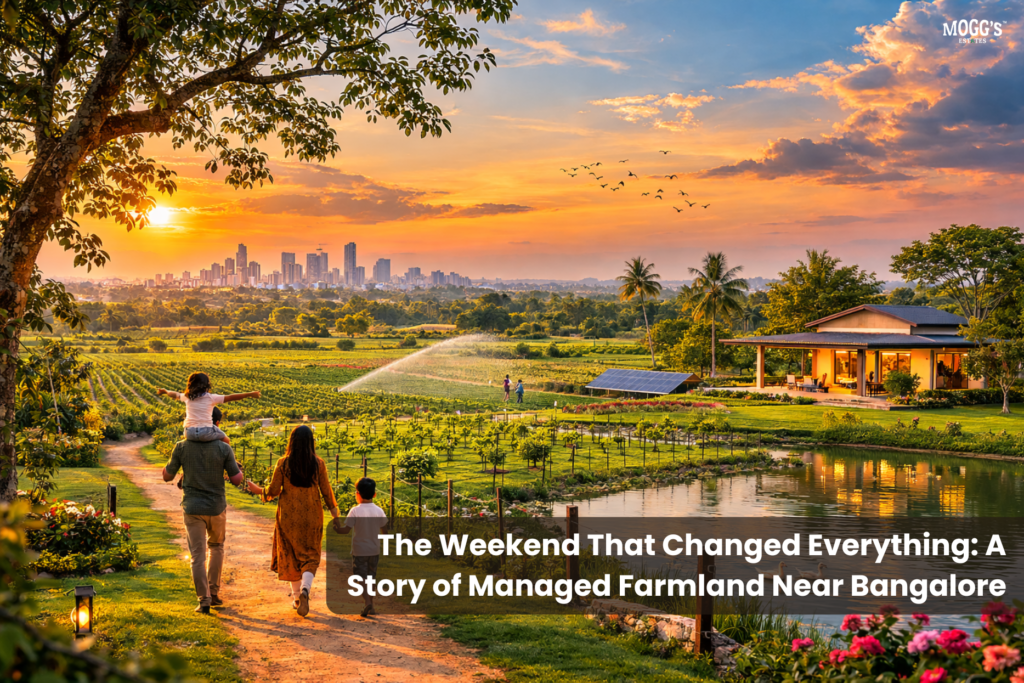
For some investors, farmland represents long-term asset appreciation. For others, it offers a weekend escape from the pressures of city life. Families visit their farmland to walk through plantations, children experience open spaces rarely found in urban neighbourhoods, and landowners watch their property evolve with every season.
What begins as an investment often becomes something more meaningful.
Farmland connects people to the systems that sustain life, soil, water, and agriculture. It reminds them that growth does not always need to be immediate to be valuable.
As cities like Bangalore continue to expand and urban life grows increasingly fast-paced, farmland offers a quiet counterbalance.
Beyond the highways and office towers, rows of young trees continue to grow steadily under open skies, reflecting a future where agriculture, sustainability, and modern lifestyles are learning to grow together.