In most Indian families, investments are openly discussed. Gold bought for weddings is discussed at dinner tables. Stock tips travel through WhatsApp groups. Property purchases become family announcements.
But some families never speak about their investments. No bragging. No updates. No excitement in conversations.
They simply make one decision, quietly, and let time do the rest.
This is the story of one such decision. A silent investment that did not make headlines but changed everything.
The Decision No One Noticed
Rohit and Meera were not financial influencers. They were not high-risk investors. They were working professionals in Bengaluru, balancing careers, EMIs, and family responsibilities like most urban Indian couples.
They invested in mutual funds. They held some gold. Their portfolio looked sensible but ordinary.
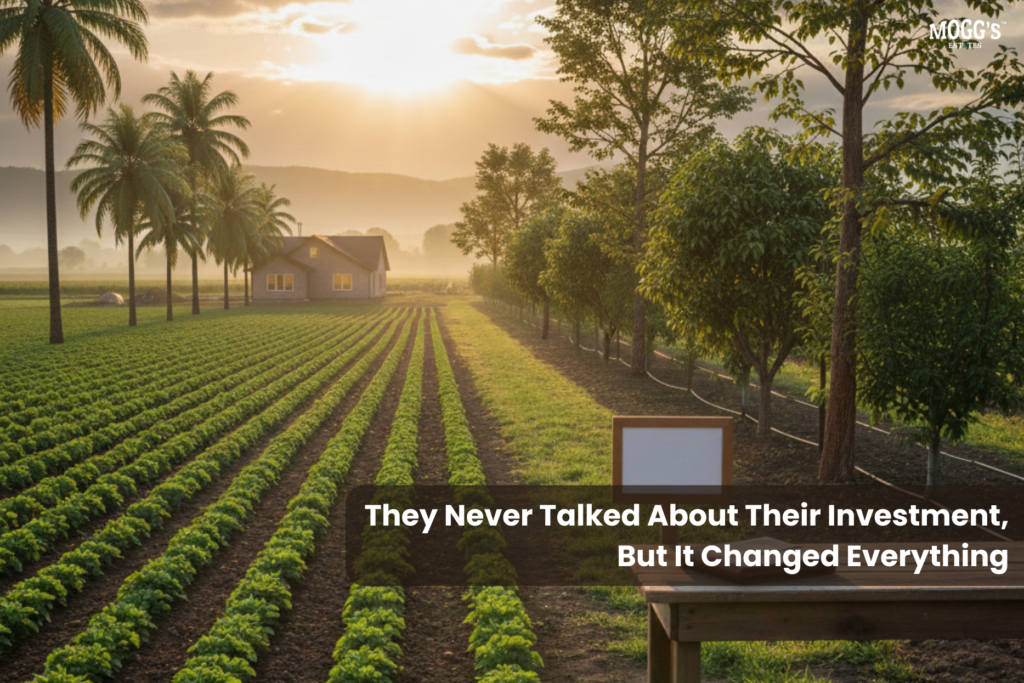
One year, instead of increasing their exposure to volatile assets, they bought farmland.
They did not tell their friends. They did not post about it. They did not even bring it up during family gatherings.
It was not because the decision was small. It was because it was deeply personal.
They wanted something stable. Something that did not demand constant attention. Something that would still matter twenty years later.
Why Silence Was Part of the Strategy
In India, silence around money is often misunderstood. People assume silence means uncertainty or lack of confidence.
In reality, silence often signals conviction.
Rohit and Meera did not want opinions. They did not want validation. They had done their research. They understood that farmland wealth works differently.
Farmland does not move fast. It does not react to trends. It does not reward impatience.
It rewards time.
By staying silent, they protected their decision from noise. They let the investment breathe.
This is why many high-conviction investors practice silent investing.
Farmland as the Ultimate Silent Asset
Farmland does not announce itself. There are no apps sending daily alerts. No red or green arrows. No panic selling.
It exists quietly. It produces. It appreciates slowly.
In the conversation around silent investment in India, farmland stands out as one of the most powerful assets.
It is tangible. It is limited. It is tied to food security and population growth.
Most importantly, farmland is rarely leveraged. This makes it resilient during market crashes.
While stocks fluctuate and urban real estate faces cycles of oversupply, agricultural land continues to hold value.
The First Few Years Felt Uneventful
For the first few years, nothing dramatic happened.
No sudden returns. No massive appreciation headlines.
And that was the point.
Their farmland generated modest agricultural income. The land remained well-maintained. The value grew gradually.
Because the land was professionally managed, they were not involved in daily operations. This is where managed farmland made a difference.
Through a structured approach like the one offered by Mogg’s Estates, farmland ownership became passive rather than operational.
The investment stayed in the background, doing its job.
When Markets Turned Uncertain
Then came market volatility. Stock markets dipped. Real estate conversations slowed. People began questioning their portfolios.
Friends started checking apps multiple times a day. Conversations shifted to fear and uncertainty. Rohit and Meera did not check anything. Their farmland did not demand reassurance.
This is when they realised the true value of their silent investment. It gave them emotional stability. In investing, peace of mind is a return that cannot be measured in percentages.
Silent Wealth Builds Confidence Differently:
Wealth that grows quietly builds a different kind of confidence. It does not make you impulsive. It does not make you reactive. It allows you to think long-term.
As years passed, their farmland appreciated steadily. The land became more valuable as surrounding development increased, and agricultural demand remained strong. But more importantly, the land became a backup. A foundation. It gave them options.
Why farmland wealth is not about flexing, in Indian culture, visible wealth often attracts opinions, expectations, and pressure.
Farmland wealth behaves differently.
It is not flashy. It is not easily comparable. It is not discussed in casual conversations. This protects the investor. Farmland owners are not judged on timing or returns. They are respected for foresight. That respect grows with time.
The Moment everything changed:
Years later, when their children grew older, conversations changed. Education costs increased. Career transitions became real. Long-term planning took priority.
That farmland purchase, once forgotten by everyone else, became central. It was no longer just land. It was security. It was optionality.
They did not need to sell it immediately. They did not need to leverage it. They simply knew it was there. That certainty changed how they made decisions in other areas of life. This is how silent investments change everything.
Today, managed farmland has opened doors for urban investors who value long-term wealth but do not want operational involvement.
Through professional management, clear ownership, and sustainable practices, companies like Mogg’s Estates allow investors to own farmland without daily responsibilities.
This model aligns perfectly with silent investing.
You invest once. You monitor occasionally. You let time do the heavy lifting. The most effective investments are often the least talked about.
Silent investment in India is gaining momentum among professionals, entrepreneurs, and families who think in decades.
They understand that wealth is not built by reacting. It is built by committing early and staying patient. Farmland fits this mindset perfectly. It appreciates slowly. It survives cycles. It carries cultural trust.
Farmland Wealth and Intergenerational Thinking: One of the most powerful aspects of farmland is its ability to transfer value across generations. Stocks are often sold. Gold is divided. Farmland is held.
It becomes a reference point. A family asset. A shared foundation. When investors think about legacy, farmland naturally enters the conversation.
Rohit and Meera never talked about their investment. They never defended it. They never promoted it. They never tracked it obsessively.
They simply trusted time.
And over the years, that quiet decision reshaped their financial confidence, their planning, and their sense of security.
In a world where everyone talks about money, silent investments often win. Farmland wealth in India is not about noise. It is about patience.
And sometimes, the investments that change everything are the ones no one hears about.