For most of his twenties, Nikhil believed wealth was about reach.
How far could you go?
How fast can you grow?
How many milestones could you stack before thirty?
He tracked promotions, investments, trips, and upgrades. His money lived on screens. His goals lived in timelines. Everything moved quickly, and everything felt temporary.
It was not that he was unhappy. He was simply restless.
Somewhere between switching jobs and refreshing market apps, Nikhil began to feel untethered. His life was moving forward, but nothing felt anchored.
That was when his definition of wealth quietly began to change.
The fatigue of chasing more
Nikhil lived in Bengaluru, surrounded by ambition. Conversations revolved around growth, exits, and returns. Every asset was measured by how fast it could multiply.
Stocks were watched daily. Crypto came and went. Real estate felt distant and speculative.
He was doing everything right on paper, yet something felt off.
The faster his money moved, the less grounded he felt.
This is a feeling many urban investors in India are beginning to recognize. Growth without grounding creates anxiety. Speed without stability creates burnout.
Nikhil did not want to stop investing. He wanted to invest differently.
Looking for something real
It started with weekends away from the city. Drives through quieter roads. Long walks. Slower conversations.
On one such trip, he visited a managed farmland project through Mogg’s Estates. He did not go with investment intent. He went out of curiosity.
What he found surprised him.
The land was alive. Not metaphorically. Literally. Crops growing. Soil is being nurtured—systems designed for long-term sustainability.
This was not about quick returns. It was about continuity.
For the first time, an investment did not feel abstract.
Why farmland felt grounded
Farmland ownership does something subtle to the mind. It shifts the focus from immediate results to long-term responsibility.
Land does not respond to urgency. It responds to care.
Nikhil realized that farmland aligned with something deeper he had been missing. A sense of belonging. A feeling of being part of something ongoing rather than constantly chasing the next outcome.
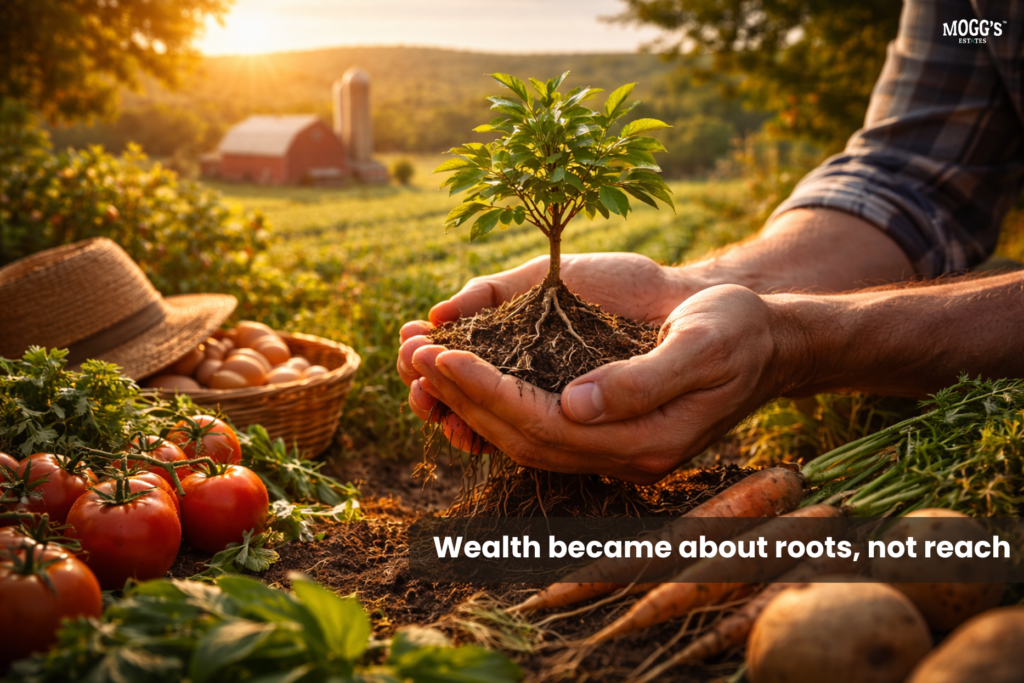
This is where wealth stopped being about reach.
It became about roots.
Sustainability as a wealth principle
Sustainable investment in India is often discussed in environmental terms. But sustainability is also psychological.
Assets that require constant attention create stress. Assets that grow steadily create peace.
Farmland, especially when professionally managed, embodies this principle.
It supports food systems. It respects natural cycles. It appreciates through scarcity and necessity.
Nikhil saw farmland ownership not as an alternative investment, but as a foundational one.
The role of managed farmland
Like many urban professionals, Nikhil had no farming background. He did not want operational complexity. He wanted ownership without daily involvement.
Managed farmland made this possible.
Through Mogg’s Estates, farmland ownership became structured and transparent. Professionals handled agricultural operations. Sustainability practices were embedded into the project design.
This allowed Nikhil to participate without disruption to his city life.
More importantly, it allowed him to invest with intention.
Stability in an uncertain world
Markets fluctuate. Policies change. Trends fade.
Land remains.
Farmland ownership in India has historically offered stability because it is tied to essentials. Food demand grows. Land supply does not.
This creates a quiet resilience that many modern portfolios lack.
For Nikhil, farmland became the stabilizing layer in his investments. Something that did not react to daily noise.
Belonging through ownership
Owning farmland created an unexpected emotional shift.
When Nikhil returned to the land months later, he felt connected, not because of numbers, but because of continuity.
This was not a rented experience. It was ownership. Long term. Real.
In a world where most things are leased, subscribed to, or temporary, ownership creates a sense of belonging.
This is a powerful emotion that modern investing rarely addresses.
Sustainable investment beyond labels
Sustainable investment is often reduced to checklists and certifications. Farmland goes beyond labels.
It supports livelihoods. It encourages responsible land use. It aligns capital with production rather than speculation.
Through managed farmland, investors contribute to agricultural ecosystems while building personal wealth.
This dual impact is why farmland is increasingly seen as a sustainable investment in India.
From accumulation to stewardship
A shift is underway among thoughtful investors.
From accumulation to stewardship.
From chasing returns to preserving value.
Farmland fits this mindset perfectly.
It requires patience. It rewards consistency. It teaches humility.
Nikhil realized that wealth did not need to dominate his attention to be effective. It needed to be placed well and allowed to grow.
Why are more investors choosing roots?
Urban India is saturated with speed. Faster careers. Faster markets. Faster lifestyles.
At the same time, there is a growing desire for grounding. For assets that feel meaningful. For investments that align with personal values.
Farmland ownership provides this balance.
It offers financial stability while reconnecting investors to something fundamental.
The Mogg’s Estates approach
Mogg’s Estates focuses on creating managed farmland projects that prioritize long-term value, sustainability, and responsible ownership.
Their model recognizes that modern investors want more than returns. They want clarity. They want trust. They want assets that make sense emotionally and financially.
By combining professional management with transparent ownership, Mogg’s Estates makes farmland accessible without diluting its essence.
Wealth that feels complete
Years after his first farmland investment, Nikhil continues to invest in markets. He still plans. He still grows.
But something has changed.
His wealth no longer feels fragmented.
Farmland has become the anchor. The part of his portfolio that reminds him why he invests in the first place.
Not to impress. Not to chase. But to build something lasting.
When wealth becomes about roots, not reach, investing becomes calmer. Decisions become clearer. Outcomes become more meaningful.
Farmland ownership offers this shift.
It grounds wealth in reality. It aligns money with sustainability. It creates a sense of belonging in a world of constant motion.
For investors seeking stability, purpose, and long-term value, farmland is not just an asset; it is an investment.
It is a return to what wealth was always meant to be.