On most weekdays, Arjun and Meera measured time in meetings.
Their lives in Bangalore moved at the pace of emails, quarterly targets, traffic signals, and elevator rides to the 18th floor. Their apartment overlooked a skyline of glass towers, beautiful at night, exhausting by morning. Between corporate deadlines and city noise, they had everything they once worked for: stable careers, rising incomes, and a premium address.
But somewhere between appraisals and promotions, a quiet question began to grow.
Is this the only way to build wealth?
They had invested in stocks. They had purchased urban property. They had followed every conventional rule of financial planning. Yet, the more their portfolio expanded, the more intangible it felt. Their wealth lived in statements, dashboards, and PDF reports.
It didn’t feel real.
That question led them to something they had never seriously considered before: managing farmland.
The Weekend That Changed Everything
It started as a casual drive. A friend had mentioned exploring farmland near Bangalore as a diversification option. “Not for farming yourself,” he clarified, “but professionally managed farmland.”
Curiosity replaced skepticism.
Just 60–90 minutes outside the city, the scenery changed. Towers gave way to open skies. Traffic gave way to silence. The air itself felt different, lighter, calmer.
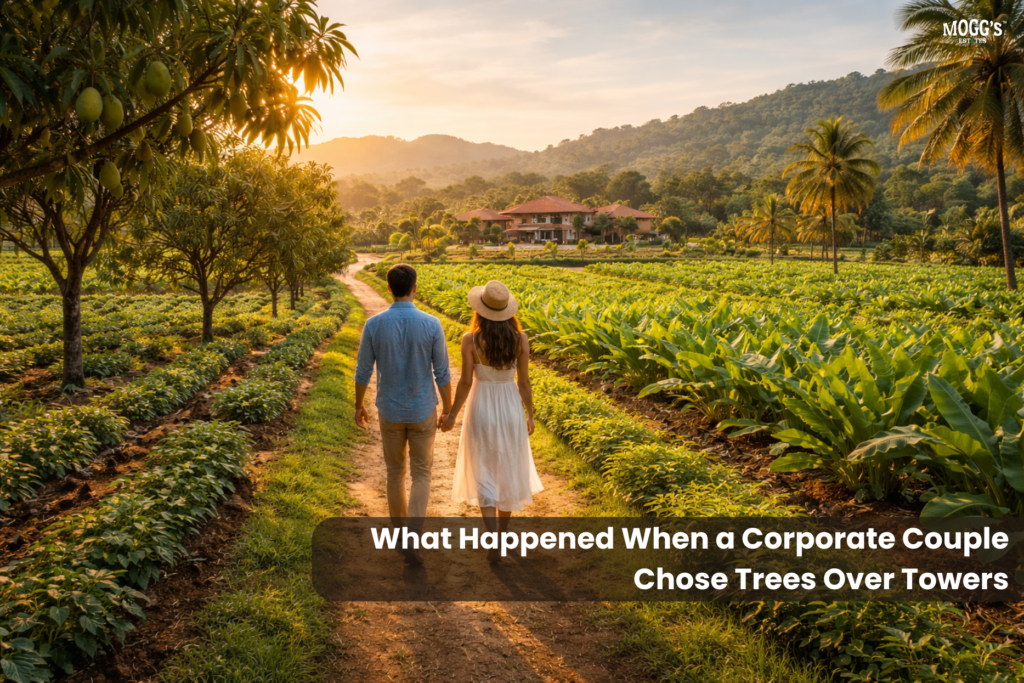
They walked through rows of young trees and thriving crops. There were mango saplings lined neatly, coconut trees swaying in rhythm with the breeze, and drip irrigation systems quietly nourishing the soil.
It wasn’t raw agricultural land. It was structured. Planned. Maintained.
For the first time, Arjun didn’t see land as “rural property.” He saw it as an asset, one that produced, evolved, and breathed.
Understanding Managed Farmland
Before making any decision, they did what corporate professionals do best: research.
They learned that managed farmland is not about quitting your job to become a farmer. It’s about owning agricultural land while professionals handle operations, crop planning, soil management, irrigation, and maintenance.
It combines:
- Tangible land ownership
- Professional agricultural management
- Long-term growth potential
- Sustainable land practices
For urban investors, this model simplifies the process. You don’t need farming experience. You don’t need to supervise daily activity. The land is nurtured systematically.
And suddenly, farmland felt less like a romantic idea and more like a strategic one.
Why Trees Started Making Sense
Stocks had given them growth. Real estate had given them leverage. But farmland offered something neither had fully delivered, balance.
Land does not fluctuate every hour. Trees do not respond to global headlines. Agriculture follows seasons, not social media sentiment.
In an increasingly volatile world, this rhythm felt reassuring.
The more they studied, the more they noticed rising interest in premium managed farmland, especially around expanding cities like Bangalore. Infrastructure growth, better connectivity, and increasing demand for green spaces were shaping new investment conversations.
Search trends for the best farmland near Bangalore were steadily increasing. Corporate professionals like them were looking beyond towers.
And now they understood why.
The Emotional Return No One Talks About
They didn’t expect the emotional shift.
The day they finalized their farmland investment, it felt different from signing apartment paperwork. It wasn’t about square footage or rental yield. It was about stewardship.
On their next visit, Meera stood quietly near the trees planted on their plot.
“These will outlive us,” she said.
There was something powerful about owning land that would grow, season after season. Something meaningful about watching trees mature, fruits appear, and soil enrich over time.
Unlike digital portfolios, this asset had roots.
Literally.
Choosing the Right Partner
Like any investment, farmland required careful evaluation.
They assessed location, water availability, soil quality, and legal clarity. They understood that not all projects were equal. Structured planning and transparent management mattered.
In their exploration, organizations like Mogg’s Estates stood out for focusing on organized farmland developments rather than unplanned agricultural parcels. For first-time farmland investors, having a clear framework made all the difference.
Professional oversight reduced uncertainty. Systematic layouts ensured accessibility. Sustainable practices added long-term credibility.
It transformed farmland ownership from a rural gamble into a modern investment model.
From Weekend Escape to Wealth Strategy
Months passed.
Their weekday lives remained the same: boardrooms, strategy calls, and city traffic. But weekends began to change.
Instead of malls and multiplexes, they found themselves driving toward green landscapes. They walked their land. They tracked tree growth. They learned about crop cycles. They met farm managers who updated them on irrigation and soil health.
The farmland became more than an investment. It became a reset button.
And slowly, it reshaped their definition of wealth.
What They Learned About Diversification
Before farmland, diversification meant spreading capital across asset classes.
After farmland, diversification meant spreading risk across realities.
Stocks move with markets.
Urban property moves with city cycles.
But farmland moves with nature.
That difference matters.
Agricultural land is rooted in a fundamental demand: food. Regardless of economic cycles, the demand continues. While no asset is risk-free, farmland has historically offered resilience due to its essential nature.
For Arjun and Meera, managed farmland became the third pillar in their wealth strategy.
Not replacing stocks.
Not replacing real estate.
But balancing both.
Sustainability Became Personal
They also discovered something unexpected: investing in farmland aligned with their values.
Corporate life had often felt disconnected from environmental impact. But farmland investment supported green cover, soil conservation, and responsible land use.
Watching trees grow on land they owned gave them a sense of participation in something regenerative.
It wasn’t just about ROI.
It was about relevance.
The Long-Term Perspective
Farmland is not a short-term flip. It rewards patience.
Arjun initially approached the investment with performance spreadsheets in mind. But over time, he began thinking in seasons rather than quarters.
Regional growth, infrastructure expansion, and land scarcity around Bangalore suggested long-term potential. However, what mattered more was steady stewardship.
Trees take time.
But so does meaningful wealth.
Why More Corporate Professionals Are Following This Path
Arjun and Meera are not alone.
Across Bangalore, professionals are exploring farmland near Bangalore as part of a balanced portfolio. The appeal lies in:
- Tangible ownership
- Professional management
- Sustainable land use
- Long-term appreciation potential
- Emotional satisfaction
The shift reflects a broader trend: investors seeking assets that combine financial logic with lifestyle value.
And premium managed farmland fits that intersection perfectly.
Towers Still Stand. But Trees Now Grow.
Today, their apartment still overlooks the skyline.
But somewhere beyond the city limits, trees planted in their name are growing quietly.
Their wealth no longer exists only in numbers. It exists in soil, roots, and open skies.
When friends ask why they chose farmland, Arjun smiles.
“We didn’t leave towers,” he says. “We just added trees.”
And perhaps that is the true lesson.
In a world chasing faster returns and higher floors, sometimes the most powerful growth happens at ground level.
With thoughtful developments and structured approaches from companies like Mogg’s Estates, managed farmland is no longer a niche idea. It is becoming a strategic decision, especially for those searching for the best farmland near Bangalore.
Because in the end, wealth isn’t only about height.
Sometimes, it’s about depth.
And nothing grows deeper than roots.