Every evening around seven, the same scene unfolded outside Kavya Nair’s apartment in Bangalore. Cars lined the streets, office commuters hurried toward home, and the glow from nearby office buildings slowly lit up the skyline. From the balcony of her twelfth-floor apartment, the city looked alive and energetic, constantly expanding and reinventing itself.
For years, Kavya had loved that energy. Working as a marketing professional in one of Bangalore’s growing companies meant long days, tight deadlines, and the satisfaction of being part of a fast-moving world.
But somewhere along the way, the constant motion began to feel overwhelming.
Weekends were meant to be breaks from the routine, yet they often felt just as busy as weekdays. Cafés were crowded, parks were full, and even short drives outside the city ended up caught in traffic. The idea of slowing down seemed almost impossible in a place that never truly paused.
One weekend, while catching up with an old college friend, the conversation turned toward something unexpected, farmland.
Her friend spoke about owning a small piece of land outside the city through a managed farmland project. At first, the idea sounded unusual. Farming felt like something that belonged to a completely different world, far removed from office spaces and apartment living.
Yet the more Kavya listened, the more interesting the idea became.
Unlike traditional agriculture, managed farmland allowed individuals to own agricultural land while professionals handled the day-to-day farming activities. Plantation planning, irrigation systems, crop cycles, and land maintenance were all overseen by experienced agricultural teams.
For people living in cities, it meant farmland ownership without the need to become full-time farmers.
Curiosity slowly turned into interest, and within a few weeks, Kavya decided to visit one of the managed farmland projects located outside Bangalore.
The journey itself felt like stepping out of the city’s rhythm.
As the car moved further away from Bangalore’s crowded streets, the skyline slowly faded behind stretches of open roads and greener landscapes. Tall buildings gave way to smaller villages, clusters of trees, and wide fields stretching across the horizon.
By the time she arrived at the farmland site, the change in atmosphere was unmistakable.
The air felt cooler. The sound of traffic had disappeared. Instead, the landscape carried the quiet movement of wind through trees and the distant hum of irrigation pumps running across the farmland.
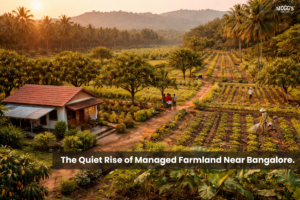
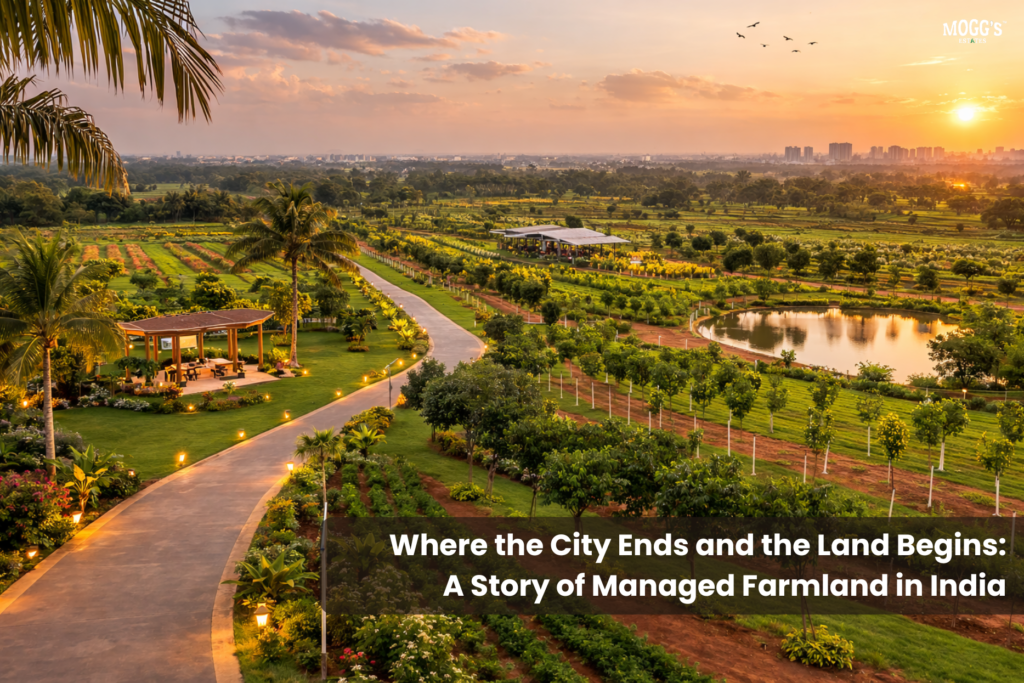
Walking through the property, Kavya noticed how carefully the land had been designed. Rows of plantations stood evenly spaced across the soil, young trees growing steadily under the care of farm workers. Irrigation lines ran across the fields, ensuring that water reached every plant efficiently.
The farm manager explained that this type of agricultural development was becoming increasingly common across farmlands in India.
For decades, agriculture had remained the backbone of the country’s rural economy. However, rapid urbanization had gradually distanced many city residents from the land. Managed farmland was beginning to reconnect these two worlds by allowing urban professionals to own agricultural land while trained farmers managed its operations.
The concept felt surprisingly practical.
Most people living in cities rarely have the time or knowledge required to cultivate farmland themselves. Farming involves careful planning, understanding soil health, managing water resources, and navigating seasonal changes. Without proper expertise, maintaining farmland can become difficult.
Managed farmland addresses this challenge by combining ownership with professional farm management. Investors own the land, while experienced agricultural teams ensure that the farmland remains productive and well maintained.
This structure has gradually made farmland ownership accessible to a wider group of people, particularly professionals living in urban areas.
Projects offering managed farmland near Bangalore have become especially popular because of the city’s growing population and strong economic base. With farmland located within a few hours of the city, landowners can easily visit their property on weekends while continuing their regular careers.
For Kavya, the visit offered something she had not experienced in a long time; space to breathe.
The farmland did not feel rushed or crowded. Instead, it moved according to natural rhythms. Workers carefully tended to plantations, irrigation systems quietly nourished the soil, and the landscape seemed to stretch endlessly beyond the farm’s boundaries.
What impressed her most was the emphasis on sustainability.
Modern agricultural developments are increasingly being designed as sustainability farmlands, where environmental balance is just as important as agricultural productivity. Soil health, water conservation, and biodiversity protection are becoming central to how these farms operate.
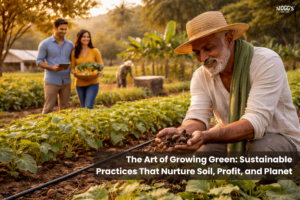
On the farmland Kavya visited, several sustainable practices were already in place. Drip irrigation systems ensured that water was delivered directly to plant roots without unnecessary waste. Organic soil enrichment techniques helped maintain long-term fertility while reducing dependence on chemical fertilizers.
The farmland also included areas designed to preserve natural vegetation, encouraging biodiversity within the ecosystem. Trees, shrubs, and crops were planted in patterns that supported both agricultural output and environmental health.
These practices reflect a broader shift in the future of agriculture. As climate change and environmental challenges grow more significant, sustainability farmlands are becoming essential to protecting natural resources while maintaining food production.
During the visit, Kavya also asked about the legal aspects of farmland ownership. For many people, this remains one of the biggest concerns when considering farmland investments.
Historically, agricultural land ownership in some states was restricted to individuals with farming backgrounds. However, changes in Karnataka’s land policies have made farmland ownership more accessible. Today, Indian citizens can legally purchase agricultural land without being registered farmers.
These changes have significantly increased interest in legal farmland ownership, especially among professionals exploring long-term land investments.
Of course, responsible farmland developers ensure that every property transaction includes clear land titles, proper documentation, and full legal compliance. Transparency remains a crucial factor when purchasing agricultural land.
Over the following months, Kavya returned to the farmland several times. With each visit, she began noticing small but meaningful changes. The saplings she had seen earlier had grown taller, their leaves spreading wider across the rows. Seasonal rains enriched the soil, giving the land a deeper, darker color.
Watching the land evolve over time created a sense of patience rarely experienced in urban life.
Unlike digital investments or financial markets that fluctuate daily, farmland grows gradually. Trees take years to mature, soil takes time to regenerate, and harvest cycles follow the natural rhythms of seasons.
This slower pace is exactly what attracts many investors toward farmland today.
Across India, professionals are increasingly exploring the best managed farmland opportunities available near major cities. These projects combine agricultural productivity with environmental responsibility, creating spaces that support both financial growth and ecological balance.
For some people, farmland represents a stable investment as Mogg’s Estates. For others, it offers an escape from the fast-paced energy of city life. Families visit their farmland on weekends, walk through the plantations, and watch the land evolve season after season.
In a world dominated by rapid development and constant connectivity, farmland offers something rare, stillness.
And somewhere beyond the busy streets of Bangalore, rows of young trees continue growing quietly under open skies, reminding people that not all growth needs to happen quickly to be meaningful.