
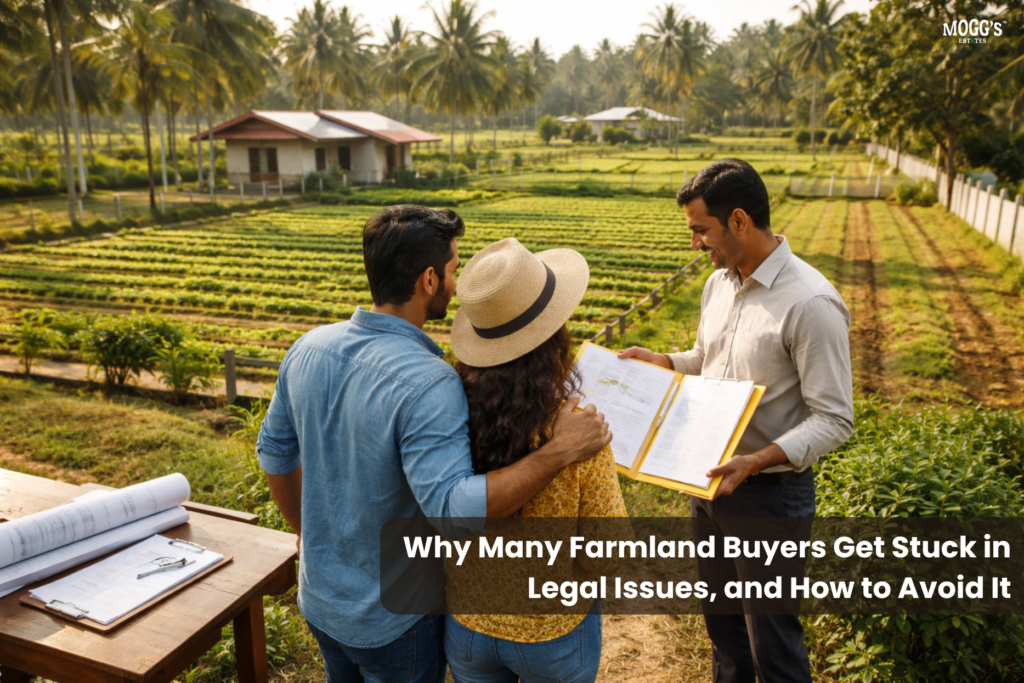
Owning farmland is a dream for many, whether as a long-term investment, a weekend retreat, or a legacy asset. With growing interest in managed farmland and premium managed farmland near Bangalore, more urban buyers are entering the farmland market than ever before.
Yet, despite good intentions, many farmland buyers end up stuck in legal complications. The issue is rarely fraud alone; it’s often unclear legal information, misunderstood land documents, and a lack of structured guidance.
This article explains why legal issues on farmland are so common and how buyers can avoid them with the right approach and awareness.
Why Farmland Legal Issues Are So Common in India
Unlike apartments or plotted layouts, farmland transactions are governed by multiple layers of land laws, revenue records, and usage regulations. For the average buyer, this complexity creates confusion.
1. Farmland Legal Information Is Not Public-Friendly
Most farmland buyers are first-timers with little exposure to rural land laws. Key legal terms like:
- RTC / Pahani
- Survey numbers
- Agricultural zoning
- Land conversion
- Mutation entries
They are frequently used but rarely explained clearly. This lack of simplified, accessible legal knowledge causes buyers to make assumptions, often costly ones.
2. Confusion Between Agricultural Use and Development Rights
Many buyers assume that farmland can be developed freely. In reality, agricultural land has strict usage norms. Construction, farmhouses, and commercial use are regulated and differ by location.
In high-demand regions like premium managed farmland near Bangalore, failing to comply with these rules can result in registration delays, penalties, or land-use restrictions.
3. Incomplete or Poorly Maintained Land Documents
Farmland ownership is deeply tied to historical records. Common issues include:
- Missing ownership continuity
- Unupdated RTCs
- Inheritance without mutation
- Boundary or survey mismatches
Without proper verification, these gaps can lead to disputes years after purchase.
4. Over-Reliance on Verbal Assurances
Buyers are often told:
- “All approvals are clear.”
- “Road access will be sorted.”
- “Conversion isn’t required.”
If documents do not support such claims, they hold no legal value. Many disputes arise when buyers realize these assurances were never formalized.
5. Buying Farmland Without Structured Due Diligence
Individual farmland purchases require coordination with lawyers, surveyors, and revenue departments. Without experience, buyers may miss critical checks.
This is why structured managed farmland models have gained popularity; they reduce dependency on informal processes and provide legal clarity upfront.
Common Legal Problems Faced by Farmland Buyers
Some of the most frequent legal challenges include:
- Land under family or title disputes
- Lack of legal road access
- Incorrect survey numbers or land extent
- Zoning or land-use violations
- Encroachment or government notices
Most of these issues surface after registration, when correction becomes time-consuming and expensive.
How Buyers Can Avoid Farmland Legal Issues
1. Verify Clear Title and Ownership History
Always ensure:
- Clear title for 20–30 years
- No pending litigation
- Proper mutation entries
A lawyer experienced in agricultural land is essential, not just a general real estate advisor.
2. Understand State-Specific Farmland Laws
Farmland rules differ by state. Buyers must verify:
- Agricultural land status
- Zoning regulations
- Usage permissions
- Eligibility norms
Never assume that farmland laws work like urban real estate laws.
3. Demand Complete Transparency in Land Documents
Buyers should have access to:
- RTC / pahani
- Survey sketch
- Encumbrance certificate
- Land-use confirmation
Transparency is a strong indicator of legal soundness.
4. Choose Trusted Managed Farmland Developers
One of the safest ways to avoid legal complications is to choose a premium managed farmland project by a credible developer.
At Mogg’s Estates, legal due diligence is treated as the foundation of every project. From clear titles and verified land records to defined usage guidelines and long-term compliance, Mogg’s Estates focuses on removing legal ambiguity for buyers, especially those new to farmland ownership.
This structured approach helps buyers focus on the benefits of land ownership rather than navigating legal hurdles on their own.
5. Avoid Rushed Decisions
Pressure tactics often lead to poor legal outcomes. A genuine farmland investment will stand the test of due diligence and time.
Why Legal Clarity Matters More Than Pricing
Farmland value is not defined by price alone. Legal clarity determines usability, transferability, and long-term security.
Many buyers today prefer managed farmland near Bangalore because it combines nature, accessibility, and a professionally vetted legal structure, something individual purchases often lack.
Final Thoughts
Farmland remains a powerful asset when approached with the proper knowledge. The reason many buyers get stuck in legal issues is not a lack of intent, but a lack of clear, structured legal guidance.
By understanding land documents, respecting local regulations, and choosing reliable managed farmland options from experienced developers like Mogg’s Estates, buyers can enjoy farmland ownership with confidence and peace of mind.
In farmland investment, legal clarity isn’t a formality; it’s the foundation.