Artificial intelligence is emerging as a potential new tool for expanding agricultural credit in India, with State Bank of India Chairman C. S. Setty saying AI could help banks reach farmers and rural customers who may not fit conventional lending models.
Speaking at FIBAC 2026 in Mumbai on August 11, Setty said the next phase of AI adoption in banking should move beyond retail services and extend deeper into rural India, agriculture and small businesses.
The development comes as Indian agriculture increasingly adopts technology across farming, crop monitoring, payments and financial services.
For farmers, better use of data could potentially make access to credit faster and more targeted.
For agricultural businesses, it could create new opportunities to finance farm infrastructure and expansion.
And for the wider agricultural economy, it signals a growing connection between technology, finance and productive farmland.
Also Read Lok Sabha Clears Agriculture Grants 2026–27 as Government Focuses on Farmer Income and Food Security
AI Moves Beyond Traditional Banking
AI has already become increasingly common in areas such as customer service, fraud detection and financial analysis.
The next challenge is taking that technology into parts of the economy where conventional financial models may have less information available.
According to Setty, AI could help banks improve financial access for rural customers, farmers and small businesses whose financial histories may not fit traditional assessment models.
This is particularly relevant to agriculture.
Farmers often operate according to seasonal cycles rather than conventional monthly income patterns.
Their ability to repay a loan can depend on rainfall, crop prices, yields, input costs and market conditions.
A technology-based lending system could potentially analyse a broader range of information when assessing agricultural borrowers.
Farm Loans Could Become More Data-Driven
Agricultural lending has traditionally depended on documentation, credit history, collateral and assessments of repayment capacity.
AI could introduce additional data points into this process.
For example, financial institutions could potentially use information related to farming activity, crop patterns, weather conditions and transaction histories to improve risk assessment.
The objective would not necessarily be to replace traditional lending procedures.
Instead, technology could help banks make more informed decisions.
For farmers, this could eventually translate into more efficient access to working capital.
That capital can be important during the agricultural cycle, when farmers need money for seeds, fertilisers, equipment, irrigation and other farm expenses before revenue is generated.
Why Rural Credit Matters
Agriculture requires capital at different stages of production.
A farmer may need financing before sowing and again after harvesting.
An agricultural entrepreneur may need funding to establish a processing unit or cold-storage facility.
A landowner developing a productive farm may need capital for irrigation, farm infrastructure or plantation development.
Access to suitable credit can therefore influence how quickly agricultural assets can become productive.
SBI already provides agricultural lending products, including crop loans designed to cover production and post-harvest expenses.
The potential use of AI could add another layer to this lending ecosystem.
Technology Could Help Reduce Information Gaps
One of the biggest challenges in rural finance is information.
A bank needs to understand the borrower’s financial position and the risks associated with the proposed loan.
Agriculture can be difficult to assess because farm income is affected by factors outside the farmer’s direct control.
Weather is one example.
Market prices are another.
Crop disease and input costs can also affect profitability.
Data-driven systems could potentially help financial institutions analyse these factors more efficiently.
Satellite data, weather information, transaction records and agricultural databases could eventually contribute to more sophisticated risk models.
This could make agricultural lending more responsive to actual farm conditions.
The Shift Could Benefit Agricultural Infrastructure
The impact of better agricultural credit could extend beyond crop loans.
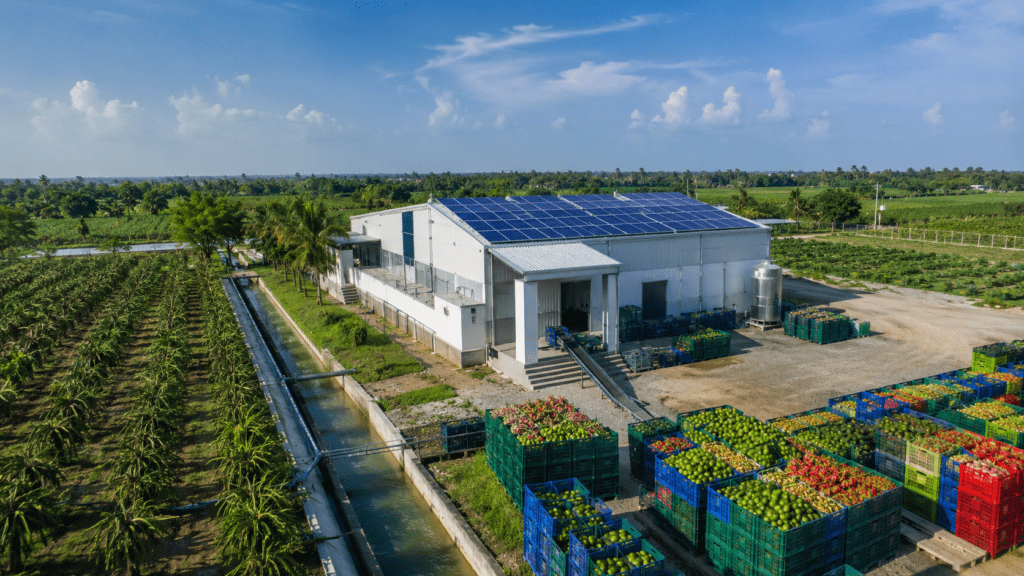
India is investing in infrastructure such as warehouses, cold storage, processing facilities, irrigation systems and other farm-gate assets.
These projects often require substantial upfront capital.
Government-backed programmes such as the Agriculture Infrastructure Fund already provide financial support mechanisms for eligible agricultural infrastructure projects, including interest subvention and credit guarantees.
If technology makes agricultural lending more efficient, it could potentially help more businesses and eligible borrowers access financing for productive farm infrastructure.
That could strengthen the agricultural supply chain.
What It Means for Farmers
For farmers, the most important potential benefit is improved access to appropriate financing.
A farmer who can access timely credit may be better positioned to purchase inputs, invest in irrigation or manage post-harvest expenses.
However, technology alone cannot solve every problem.
Loan affordability remains important.
Repayment schedules need to reflect agricultural cash flows.
And lending decisions must account for the realities of farming rather than relying entirely on automated models.
Setty also highlighted the need for stronger cybersecurity, governance and human oversight as AI adoption expands across banking.
That balance will be particularly important in agriculture, where financial decisions can directly affect farmers’ livelihoods.
A New Link Between Technology and Farmland
The development also highlights how the concept of agricultural assets is changing.
Farmland is no longer being viewed only through its physical characteristics.
Location, soil, water and crop productivity remain fundamental.
But digital information is becoming increasingly important as well.
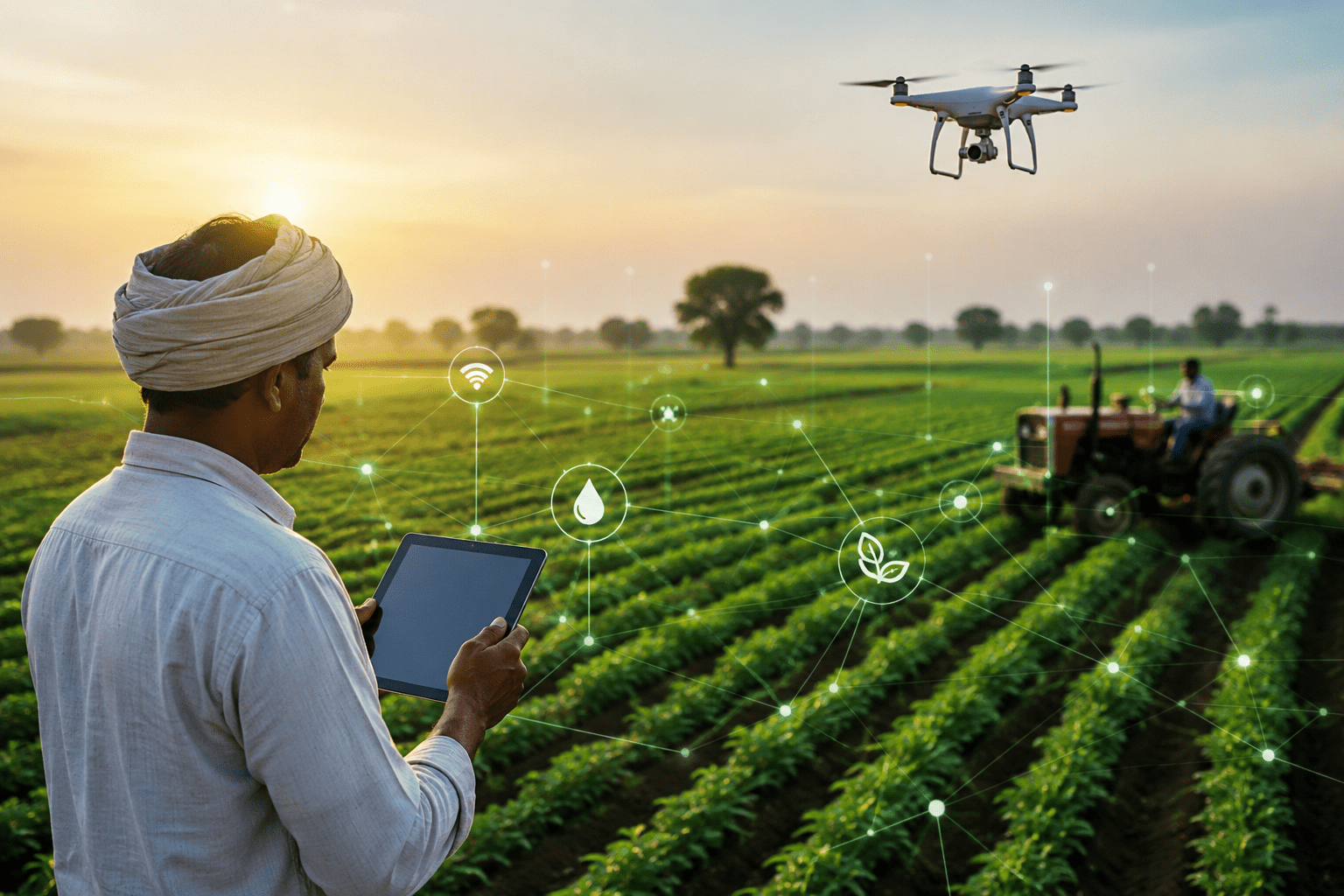
Modern farm management can involve satellite monitoring, weather forecasting, digital payments, irrigation technology and data-based crop planning.
Financial technology could become another part of this ecosystem.
Together, these developments could make agricultural operations easier to monitor and finance.
Implications for Farmland Investment
The growing use of technology in agricultural finance may also have implications for farmland investment.
Investors evaluating agricultural land traditionally examine factors such as location, connectivity, water availability, soil quality and legal documentation.
Increasingly, the operational side of the asset also matters.
Can the land be productively cultivated?
Is there reliable water?
Can modern agricultural infrastructure be developed?
Can farm operations be efficiently monitored?
These questions are becoming more relevant as agriculture becomes more technology-driven.
This does not mean AI or easier credit automatically increases farmland value.
Land prices continue to depend on location, demand, regulations, infrastructure and other market fundamentals.
But technology could make productive agricultural assets easier to manage and finance.
Managed Farmland Could Benefit From Better Financial Infrastructure
The development is particularly interesting for the growing managed farmland segment.
Managed farmland typically involves organised agricultural operations, including crop planning, irrigation, plantation maintenance, soil management and farm monitoring.
As financial technology develops, professionally managed agricultural properties could potentially become easier to evaluate from an operational perspective because more farm-level information can be recorded and monitored.
Again, this does not guarantee investment returns.
Agriculture remains exposed to weather, market and operational risks.
But better data can improve decision-making.
India’s Rural Economy Is Becoming More Digital
The move towards AI-enabled agricultural finance is part of a much broader digital transformation.
Farmers are increasingly interacting with digital payment systems.
Government agricultural services are becoming digitised.
Crop information is being collected through technology.
Satellite imagery is being used for agricultural monitoring.
And financial institutions are exploring ways to use technology to serve rural customers more effectively.
The result is an agricultural economy that is becoming increasingly connected.
Land, crops, finance and technology are no longer operating as completely separate systems.
What Happens Next?
The adoption of AI in agricultural lending will depend on how accurately these systems can assess farm-level risks while protecting customers’ data.
Banks will also need to maintain human oversight and ensure that technology does not exclude borrowers simply because their financial histories are unconventional.
If implemented responsibly, however, AI could help financial institutions understand agricultural borrowers in greater detail.
That could make rural credit more accessible and potentially support investment in productive farm activities.
For farmers, the development could mean better access to capital.
For agricultural businesses, it could improve financing opportunities.
And for the broader farmland economy, it highlights a growing trend: