Sustainable living has moved higher on the environmental agenda after BRICS countries adopted a series of new initiatives focused on greener lifestyles, resilient ecosystems and stronger cooperation on environmental challenges.
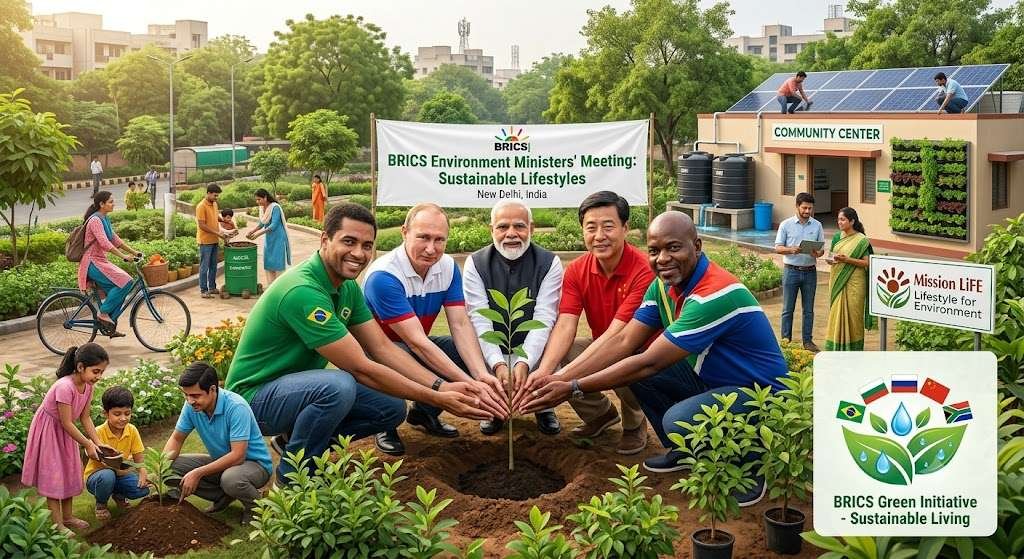
The development followed the 12th BRICS Environment Ministers’ Meeting, held in New Delhi on August 18, 2026, under India’s BRICS chairship. The meeting concluded with the adoption of a joint ministerial statement and the launch of four knowledge compendiums covering areas including sustainable lifestyles, landscape management, ecosystem resilience and forest-fire preparedness.
One of the key outcomes was the establishment of a framework for sharing knowledge, research and innovation around sustainable lifestyles.
The idea reflects a growing recognition that environmental protection is not limited to government policies or large-scale conservation projects. Everyday decisions made by individuals, families and communities can also influence energy consumption, waste generation, water use and the pressure placed on natural resources.
From reducing household waste to choosing energy-efficient products, conserving water and avoiding unnecessary consumption, sustainable living is increasingly becoming part of the wider climate conversation.
The BRICS initiative aims to encourage countries to exchange practical knowledge and approaches that can help make environmentally responsible lifestyles easier to adopt.
Another major area highlighted during the meeting was integrated landscape management.
Instead of treating forests, agricultural land, grasslands and other ecosystems as separate units, integrated landscape management looks at how different parts of an ecosystem interact.
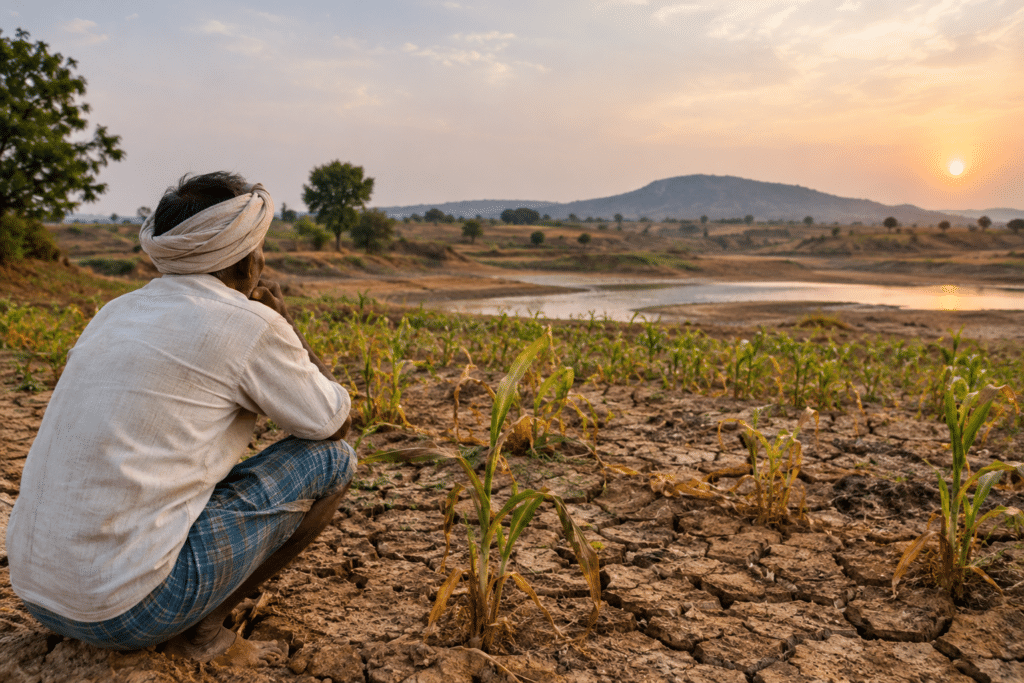
This approach is particularly important as land degradation, water stress, biodiversity loss and climate change increasingly affect communities at the same time.
The BRICS countries adopted principles aimed at combating desertification, promoting sustainable land management and strengthening ecosystem resilience.
For people living in cities, the issue may appear distant. However, healthy landscapes influence everyday life through water availability, food production, air quality, biodiversity and climate regulation.
Environmental policies often sound distant from daily routines. But the shift towards sustainable lifestyles could make environmental responsibility much more personal.
A household that reduces food waste, a community that protects trees, a residential society that harvests rainwater or a business that reduces unnecessary plastic use can all contribute to resource conservation.
India’s Mission LiFE, or Lifestyle for Environment, has similarly focused on encouraging behavioural changes around saving energy, conserving water, reducing waste, limiting single-use plastic and adopting sustainable food systems. The government highlighted these areas in a July 2026 update on the programme.
The BRICS meeting also placed attention on forest-fire preparedness and response.
Wildfires can damage forests, threaten biodiversity, affect air quality and disrupt communities. As climate and weather conditions change, improving preparedness becomes increasingly important.
The new BRICS cooperation framework seeks to encourage countries to share knowledge and strengthen their ability to respond to such environmental threats.
This has a direct lifestyle connection as well. Healthy forests and natural landscapes provide recreational spaces, support wildlife and contribute to the environmental quality of surrounding communities.
The renewed focus on sustainable living comes at a time when people are increasingly paying attention to the quality of the spaces around them.
Green neighbourhoods, tree-lined streets, open landscapes, community gardens and nature-based recreation are becoming important parts of conversations around better living.
For urban residents especially, access to natural spaces can offer an alternative to highly built-up environments. It can also encourage people to become more conscious of water, soil, trees and biodiversity.
This does not mean that everyone needs to move away from cities. Instead, it highlights the importance of bringing environmental thinking into everyday decisions about homes, communities, travel and leisure.
The latest BRICS initiative represents a broader shift in the environmental conversation. Governments are increasingly looking beyond regulation and infrastructure and towards behavioural change.
The message is simple: environmental protection is not only something that happens inside forests or at international climate meetings. It also happens at home, in neighbourhoods, workplaces and communities.
As countries work together on sustainable lifestyles and ecosystem resilience, individuals are likely to play a larger role in the environmental transition.
For India and other rapidly developing economies, the challenge will be to balance economic growth with responsible use of natural resources.
The BRICS environmental discussions suggest that the future of sustainability may depend not only on new technologies and government programmes, but also on the everyday choices people make.
Living sustainably may no longer be viewed simply as an environmental responsibility. It is increasingly becoming part of what it means to live well.