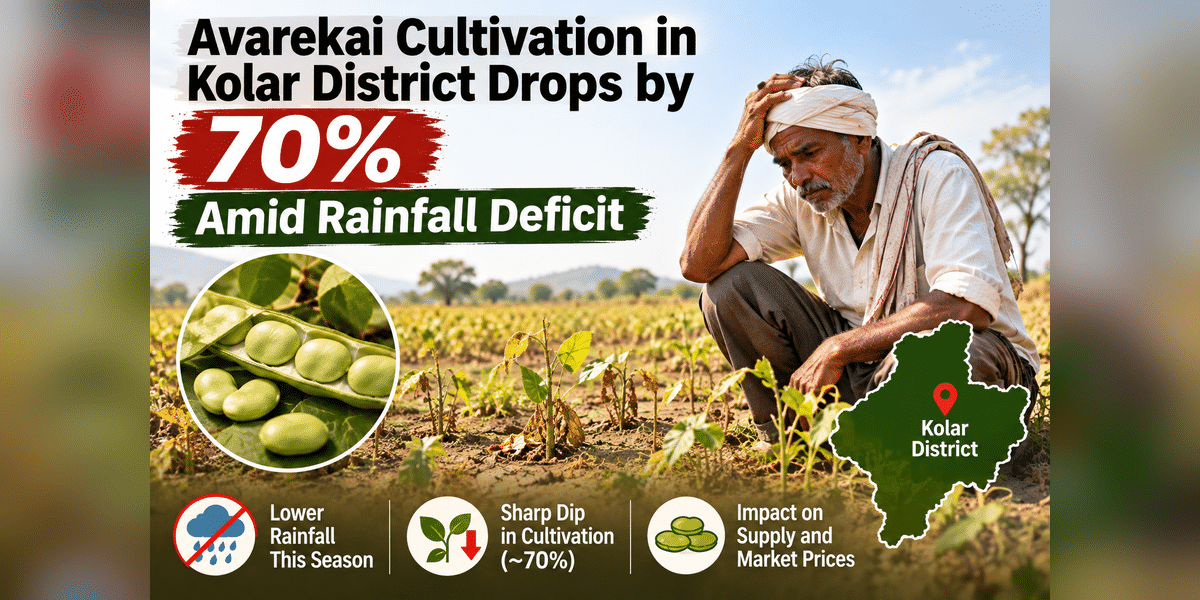
Avarekai cultivation in Kolar district has fallen by 70% as a rainfall deficit has left farmers with fewer fields planted. The drop affects a crop that is a seasonal favourite across Karnataka and in nearby Bengaluru.
Avarekai, also known as field beans or hyacinth beans, is a popular legume in Karnataka. It is sold fresh during the winter season and is widely used in local cooking. Demand tends to rise around the festival of Sankranti in January, which makes the crop economically important for growers.
Avarekai is a rain-dependent crop. Farmers rely on timely rainfall for sowing and early growth. When the monsoon falls short, growers may delay sowing, reduce the area under cultivation, or lose seedlings that fail to establish. A shortfall in rainfall can therefore reduce both the area planted and the eventual harvest.
A fall of this size means that most of the expected avarekai area in Kolar has not been planted. For farmers, the loss goes beyond a lower harvest. Seed, land preparation, and labour costs may already have been spent, and a poor season can add to existing debt.
A smaller local supply can push prices higher. If fewer beans reach markets in Bengaluru, buyers may turn to produce from other regions, which could affect prices and availability during the peak season.
The outlook for farmers will depend on rainfall in the coming weeks and on any relief or crop support announced by the state government. Growers in Kolar and across Karnataka are watching closely for updates.