
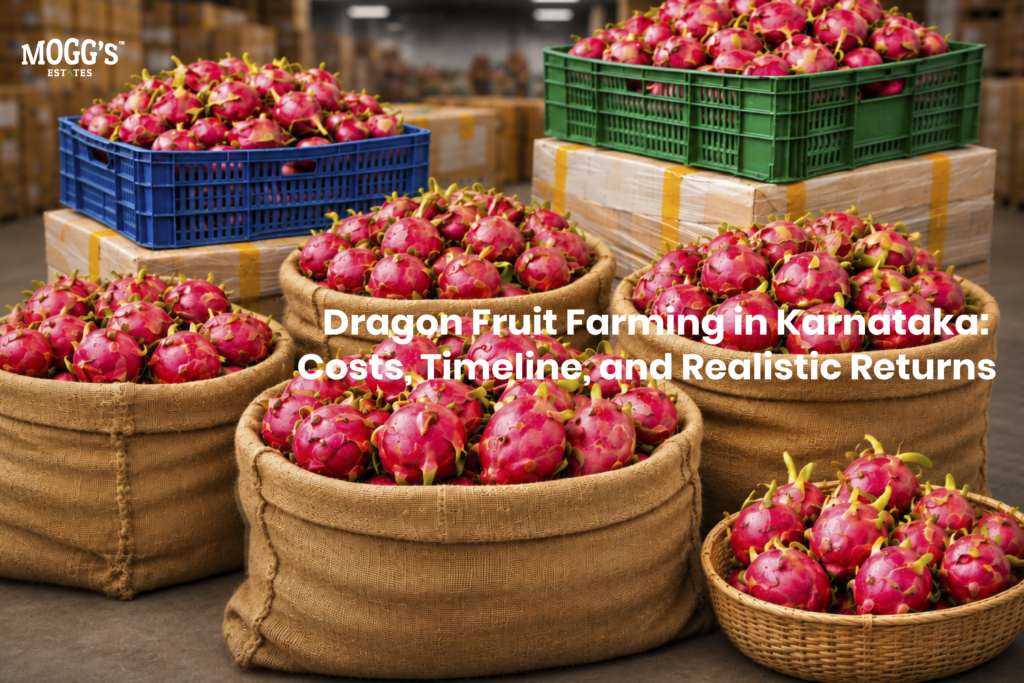
Dragon fruit farming in Karnataka has drawn growing interest from farmers and investors who want a fruit crop with a shorter wait to the first harvest than many tree crops. The crop is also intensive. It needs support structures, careful pruning, hand pollination in many systems, and reliable irrigation. This guide explains the decisions that matter most: where to plant, what to budget, how long the crop takes to fruit, how yield and profit are estimated, and which market risks to check before you commit.
Quick answer: Dragon fruit farming in Karnataka suits well-drained land with dependable irrigation and a nearby market. Plants usually begin to fruit within about one to two years of planting, and commercial yields build over the following years. Costs depend on planting material, support posts, drip irrigation, labour, and inputs. Profit depends on yield per acre, fruit quality, and market prices, which can change sharply. Test a low-price scenario with local figures before you plant, and treat any published number as a starting point rather than a guarantee.
Why Growers Consider Dragon Fruit
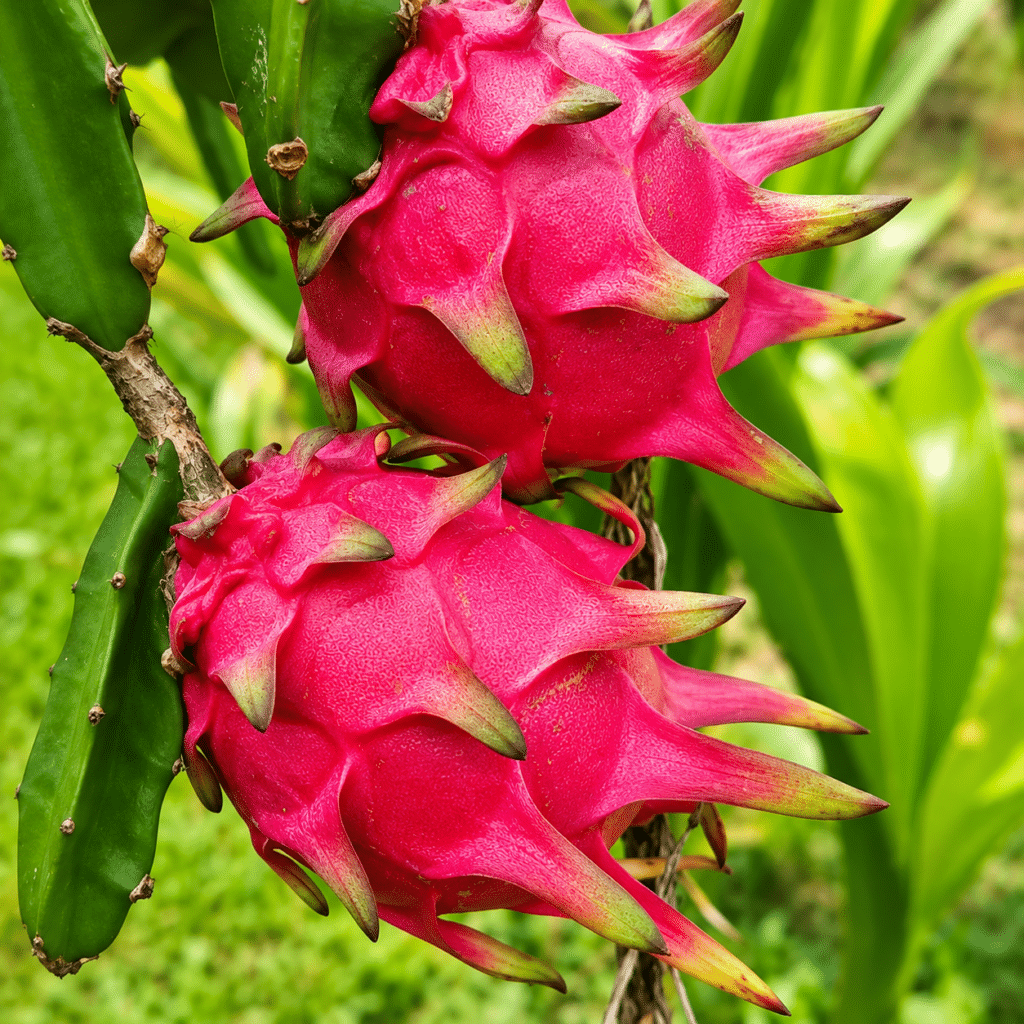
Dragon fruit, a climbing cactus, offers several features that attract growers. Its first harvest comes sooner than that of many tree crops. Its fruit is visually distinctive and has a market in some local and urban outlets. Once established, the plant tolerates dry conditions better than many fruit crops, and a well-managed plant can stay productive for many years.
These strengths come with trade-offs. Dragon fruit is a managed crop, not a low-input one. Its support structures, pruning schedule, and pollination work demand steady attention. Its market is also less established than those for mango or coconut in many parts of Karnataka. A grower who understands both the strengths and the trade-offs can plan more realistically.
Choosing Land and Climate for Dragon Fruit
Good land makes the crop easier to manage. Look for four conditions when you assess a plot.
Good drainage. Waterlogging damages roots and can kill plants. Test how water moves across the plot after heavy rain, and avoid low spots where it pools.
Reliable irrigation. Drip systems are the usual choice, and water must be available through the dry season. Check the borewell or other source, its yield, and its reliability before you plant.
Adequate sunlight. The plant needs good light, but growers must manage heat stress and sunburn on the fruit and stems, especially in the hottest months.
Practical access. Support structures, harvesting, and transport all depend on a workable road. A plot that is hard to reach during the harvest season adds cost and risk.
Before you plant, ask a local agriculture officer or a Krishi Vigyan Kendra whether the soil and climate of your plot suit the crop. Their assessment costs little and can prevent expensive mistakes.
Setup Costs to Budget For
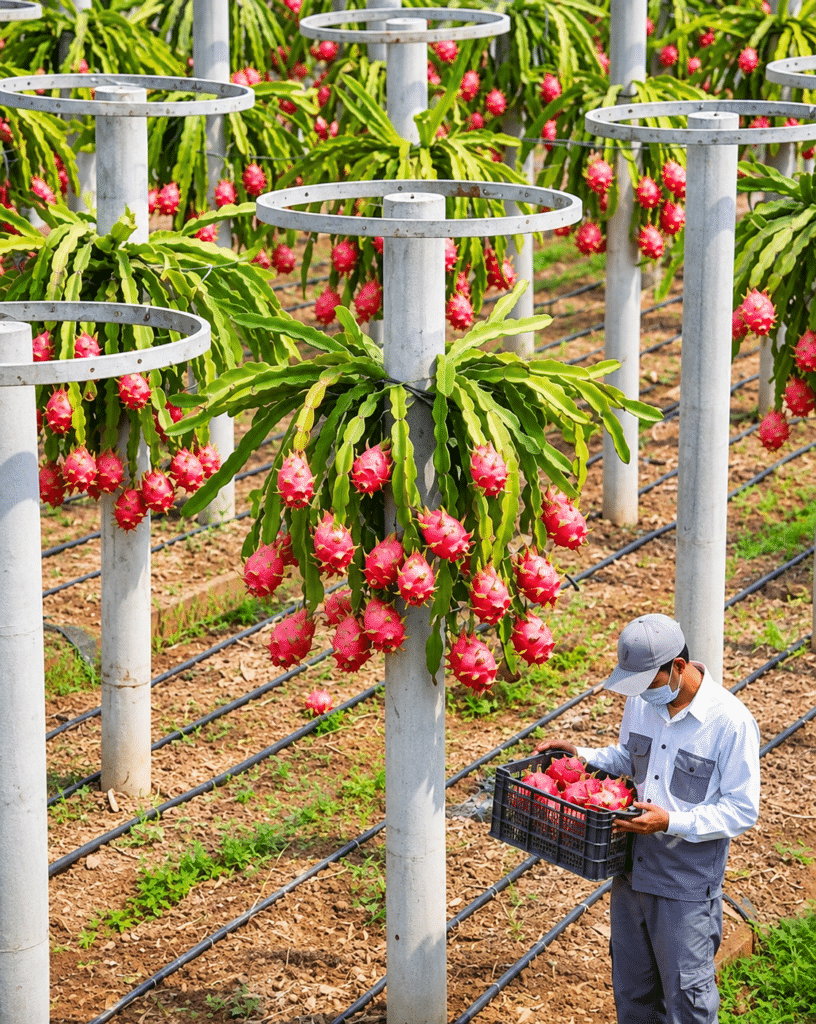
Setup costs vary widely with plot size, design, and supplier. Budget for each of the following components:
- Planting material: cuttings or saplings of a suitable variety
- Support structures: concrete posts and a frame or trellis that carries the vines
- Irrigation: drip lines, filters, a pump, and a water source
- Land preparation: clearing, ploughing, and marking the planting layout
- Fertilizer and organic inputs: an ongoing nutrition plan
- Pest and disease control: monitoring and treatment
- Labour: pruning, pollination, harvesting, and grading
- Packaging and transport: post-harvest costs
Get at least three quotes for planting material and support structures. Ask each supplier for the variety name, the source of the planting material, and any guarantee on plant health. A cheap cutting from an unknown source can cost far more in lost years than a verified one would have cost at the start.
Support structures deserve particular attention. Their cost is often underestimated, because they must carry a heavy, climbing crop for many years. Ask suppliers how the posts are anchored, how the frame is designed, and how the structure handles wind and fruit load.
How Long Does Dragon Fruit Take to Fruit?
Dragon fruit farming typically begin to flower and fruit within about one to two years of planting. The exact timing depends on the variety, the age and quality of the cutting, and the care the plant receives. Commercial yields usually build over the following years rather than arriving in full at once.
Ask your supplier for the expected timeline for the specific variety you plan to grow. Treat that timeline as an estimate until your own plot confirms it. Keep records of flowering, fruit set, and harvest so that you can compare your actual results with the supplier’s claims.
What Affects Dragon Fruit Yield per Acre
Yield per acre varies widely from plot to plot. The main factors are these:
- Variety and the quality of the planting material
- Plant spacing and the number of plants per acre
- Quality of the support structure and the pruning practice
- Pollination, which is often supported by hand in intensive systems
- Irrigation and nutrition through the year
- Pest and disease control
- Weather, including heat stress and unseasonal rain
Do not use a yield figure from a brochure without asking how it was measured, over how many years, and under what management. A figure from a mature, well-managed plantation tells you little about a young plot in its first two seasons. Ask for the measurement method, the plant count, and the year-by-year figures.
How to Estimate Dragon Fruit Profit Realistically
Profit equals revenue minus all costs over the period you measure. Estimating it well takes several steps.
- Spread the setup costs. Divide the structures, irrigation, and planting costs over the expected productive life of the plantation.
- List annual operating costs. Include labour, inputs, water, pest control, packaging, and transport.
- Estimate yield per acre. Use a reliable local source, such as a trained grower or an extension officer, rather than a single brochure.
- Estimate a price range. Base it on current local and wholesale prices, and test a low case.
- Calculate net return. Work out the result under both the central case and the low case.
If the low case produces a loss, make a plan to manage that risk before you plant. That plan might involve a smaller first planting, a second sales channel, or a reserve budget for the early years when income is small.
Be cautious with any profit-per-acre figure that does not show its assumptions. Ask for the yield, the price, and the cost behind it.
Dragon Fruit Market India: What to Check First
Dragon fruit prices can swing with supply, season, and demand. A market that looks strong in one year can become crowded the next. Before you plant, answer these questions:
- Who buys fruit locally, and at what price?
- Is there a wholesale channel, a retailer network, or a processing buyer?
- Can you sell directly to consumers, through a farm stall or online orders?
- How long does the fruit keep after harvest, and how will you transport it?
A written offtake agreement with a buyer, even a modest one, reduces the risk of planting without a market. Without one, the crop becomes a gamble on future prices.
Common Mistakes in Dragon Fruit Farming
Several errors appear repeatedly in new plantations. Avoiding them saves money and time.
Planting without a tested market: Confirm buyers and prices before the first cutting goes into the ground.
Using untreated or unsuitable planting material: Buy from a verified source, and ask about plant health.
Skipping drainage checks: A plot that waterlogs will struggle, however good the rest of the plan looks.
Underestimating support structure costs: Budget for sturdy posts and a frame that will last years.
Ignoring pollination and pruning schedules: These tasks decide fruit set and plant shape, and missing them costs yield.
Expecting full yields in the early years: Plan a slow ramp-up in income, and keep cash for the lean years.
Dragon Fruit and Managed Farmland
Some buyers consider managed farmland and wonder whether dragon fruit is part of the plan. If you are looking at a managed project, ask whether dragon fruit is part of the operator’s plan. If it is, ask for the variety, the planting records, the yield data, and the sales channel. A crop name in a brochure is not evidence of a working plantation.
Ask the same questions of any management team. Who handles pollination and pruning? Who sells the fruit? What do owners receive, and when? Get the answers in writing before you rely on them.
Key Takeaways
- Dragon fruit farming in Karnataka suits well-drained land, reliable drip irrigation, and a market that you have tested before planting.
- Plants usually begin fruiting within one to two years, and commercial yields build over the following years.
- Setup costs include planting material, support structures, irrigation, labour, and inputs. Get several quotes.
- Yield per acre depends on variety, plant density, pruning, pollination, irrigation, and weather.
- Estimate profit using a low-price case, and plan for the risk before you plant.
- Confirm buyers and prices in writing, and check any managed farm’s dragon fruit plan with records.
FAQs:
How long does dragon fruit take to bear fruit?
Plants usually begin fruiting within about one to two years of planting, depending on the variety and the care given. Commercial yields build over the following years.
What is the cost of dragon fruit farming per acre?
The cost varies with design, materials, and labour. Get local quotes for planting material, support structures, and drip irrigation before you estimate the total.
Is dragon fruit farming profitable in Karnataka?
It can be, but profit depends on yield, fruit quality, market price, and costs. Test a low-price scenario before you decide.
What is a realistic dragon fruit yield per acre?
Yield varies with variety, plant density, management, and weather. Ask for measured figures from comparable local plantations, including the number of plants and the years of data.
Does dragon fruit need a lot of water?
It tolerates dry conditions once established, but it still needs reliable irrigation, usually drip, especially in the early years.
Can I grow dragon fruit without experience?
You can learn, but a local extension officer, a trained grower, or a tested plan is strongly recommended before a large planting.