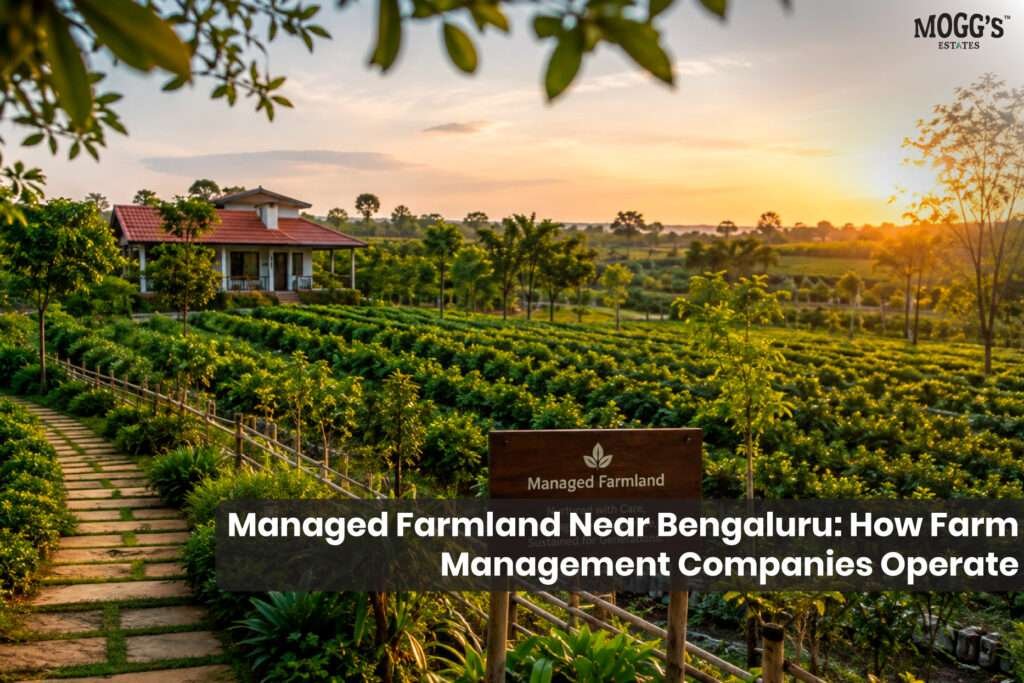
How Farm Management Companies Operate
Owning agricultural land is very different from owning a conventional property. A piece of farmland needs regular attention to remain productive, well maintained and connected to its agricultural purpose.
For many people living in Bengaluru, the idea of owning land outside the city is attractive. It can offer an opportunity to spend time closer to nature, create a weekend retreat or hold agricultural land for the long term. However, managing a farm personally requires time, knowledge, labour and consistent supervision.
This is where managed farmland becomes relevant.
A farm management company takes responsibility for the day-to-day agricultural activities agreed with the landowner. Depending on the model, this can include plantation, irrigation, soil care, crop monitoring, maintenance, labour coordination and harvesting.
For people exploring farmland near Bengaluru, understanding how these companies operate is important before making a decision.
What Is Managed Farmland?
Managed farmland is agricultural land where professional teams oversee the farming and maintenance activities on behalf of the landowner.
Instead of the owner personally arranging workers, irrigation, plantation and regular maintenance, these activities can be coordinated through a farm management company.
A typical management system may include:
- Soil preparation and maintenance
- Plantation and crop management
- Irrigation
- Farm labour coordination
- Pest and weed monitoring
- Farm infrastructure maintenance
- Regular inspections
- Harvesting
- Farm updates and reporting
The exact services depend on the company and the management agreement.
The important point is that managed farmland is not simply about owning land. It is about creating a structured system to manage the land after ownership.
How Does a Farm Management Company Work?
A professional farm management company generally follows a planned process.
1. Understanding the Land
Every farm has different characteristics.
Before deciding what to cultivate, the management team may assess the soil, water availability, terrain, drainage, existing vegetation and accessibility.
This information helps determine what type of farming activity is suitable for the property.
The objective is not simply to plant something on the land. It is to create an agricultural plan that matches the property’s natural conditions.
2. Planning the Farm
Once the land is assessed, the management team develops an operating plan.
This can include decisions about:
- Crop or plantation selection
- Planting patterns
- Irrigation requirements
- Soil inputs
- Labour requirements
- Maintenance schedules
- Pest monitoring
- Harvesting timelines
Good planning is important because every part of farming is connected.
For example, the crop selected determines its water requirements. Water availability influences irrigation planning, while irrigation and soil health affect plant growth.
Soil and Water Management
Healthy soil and responsible water management are two of the foundations of successful agriculture.
Farm management teams may coordinate soil testing, composting, mulching, nutrient management and weed control. These activities help maintain the growing environment over time.
Water management is equally important.
Depending on the farm, irrigation may involve drip systems, pumps, pipelines, water storage or rainwater harvesting.
The goal is not simply to use more water. It is to use available water efficiently and provide crops with the appropriate amount at the right time.
For managed farmland near Bengaluru, this becomes particularly important because farming conditions can change considerably between seasons.
Plantation and Crop Management
After the land is prepared, plantation or cultivation begins.
Depending on the agricultural model, the farm may include fruit trees, timber plantations, seasonal crops or other agricultural activities.
Farm teams can coordinate:
- Planting
- Irrigation
- Fertilisation
- Mulching
- Pruning
- Weed management
- Pest monitoring
- Plant health checks
Different crops require different approaches. A fruit orchard, for example, requires a different maintenance cycle from seasonal vegetables.
This is why professional management can help maintain consistency throughout the agricultural cycle.
Managing Farm Labour
Farming requires people on the ground.
Workers may be needed for planting, irrigation, pruning, cleaning, harvesting and general maintenance.
For a landowner living in Bengaluru, personally coordinating these activities can be challenging, especially when the farm is located outside the city.
A farm management company can coordinate workers and supervisors, allowing routine activities to continue even when the owner is away.
This is one of the practical advantages of a managed farmland model.
The owner can remain connected to the asset without having to personally handle every agricultural task.
Maintaining the Farm Property
A farm is more than its crops.
The surrounding infrastructure also requires regular maintenance.
Depending on the management arrangement, this may include:
- Fencing
- Farm roads
- Irrigation lines
- Water systems
- Gates
- Equipment
- Common areas
- Drainage
- General cleanliness
For larger managed farmland communities, maintaining shared infrastructure can be particularly important.
Regular maintenance helps keep the property functional and improves the overall experience for landowners visiting their farms.
Farm Monitoring and Reporting
Professional farm management also involves monitoring.
Farm teams can regularly check plant health, soil moisture, irrigation systems, pest activity and general farm conditions.
Some companies also provide photographs, digital updates or periodic reports to landowners.
This creates greater visibility for people who cannot visit frequently.
For an owner, knowing what is happening on the farm is important. It allows them to stay informed about plantation progress, maintenance activities and the overall condition of the property.
Technology can support this process through digital records, weather information, sensors and other monitoring systems. However, on-ground supervision remains an important part of effective farm management.
Can Managed Farmland Also Be a Weekend Destination?
For many buyers, farmland is not only about agriculture.
A well-planned farm can also become a place to spend weekends with family and friends.
Some managed farmland communities may incorporate lifestyle elements such as walking areas, landscaped spaces, farm experiences or access to a resort-style environment.
This creates a different relationship with land.
Instead of visiting a conventional urban property, owners can spend time in a natural setting while remaining connected to an active agricultural landscape.
However, buyers should always check the specific facilities, permissions and usage conditions offered by a project before making assumptions about what can be built or used on agricultural land.
Why Managed Farmland Near Bengaluru Is Gaining Attention
Bengaluru’s expanding urban environment has encouraged many people to look beyond the city for spaces that offer nature, openness and a slower pace of life.
This has increased interest in managed farmland near Bengaluru.
The appeal can come from several factors:
- Ownership of agricultural land
- Proximity to Bengaluru
- Weekend access
- Connection with nature
- Agricultural activity
- Family experiences
- Long-term asset ownership
For some buyers, the attraction is the combination of land and lifestyle.
For others, it is the opportunity to own agricultural land without personally managing every operational detail.
What Should Buyers Check?
Before purchasing managed farmland, buyers should look beyond brochures and photographs.
It is important to understand the legal ownership structure, land documents, access, water availability and management agreement.
Ask questions such as:
- Who owns the land?
- What exactly is included in the management service?
- What are the recurring management charges?
- Who manages the farm workers?
- Which crops or trees will be cultivated?
- How is irrigation handled?
- How often is the farm monitored?
- How are maintenance expenses managed?
- How is agricultural produce handled?
- Are projected returns guaranteed or only estimates?
These questions help buyers understand the difference between owning farmland and having that farmland professionally managed.
Managed Farmland Is About Long-Term Care
The real value of farm management lies in consistency.
A farm requires attention throughout the year. Irrigation cannot wait because an owner is travelling. Plants need monitoring even when the owner is busy. Infrastructure needs maintenance regardless of whether the owner is visiting.
A professional farm management company creates a system to handle these recurring responsibilities.
It does not remove the risks associated with agriculture. Weather, crop health, water availability, labour costs and market conditions can all influence farming outcomes.
Instead, professional management provides structure and continuity.
Conclusion
Managed farmland near Bengaluru brings together two important ideas: agricultural land ownership and professional farm management.
From soil preparation and irrigation to plantation, labour coordination, maintenance and monitoring, a farm requires continuous attention.
For people searching for farmland near Bengaluru, understanding this management process can be just as important as evaluating the location, connectivity and land itself.
The question is not only where the farmland is.
It is also how the farmland will be managed after you own it.
With the right management structure, agricultural land can remain actively maintained while giving owners the opportunity to spend more time in nature and enjoy the experience of farm ownership.
For those looking beyond conventional urban property, managed farmland offers a way to connect ownership with agriculture, lifestyle and long-term land stewardship.