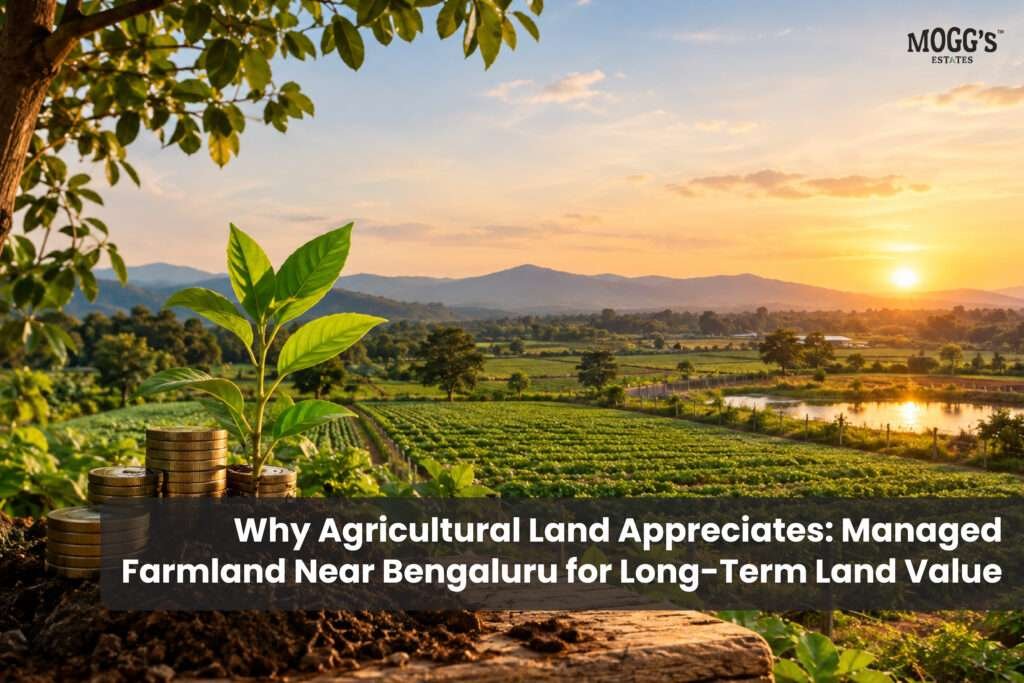
Why Agricultural Land Appreciates Over Time
What makes a piece of agricultural land more valuable over time? Is it the soil, the location, the trees, or the development happening around it?
The answer involves several factors. Agricultural land appreciation depends on location, accessibility, infrastructure, land quality, demand, and legal conditions. While no land investment guarantees returns, understanding these factors helps buyers make informed ownership decisions.
Today, people explore land for different reasons. Some want to grow crops. Others want a weekend retreat or a closer connection to nature. This growing interest makes Farmland Ownership an important consideration for people exploring long-term land ownership.
For those interested in managed farmland near Bengaluru, the real question is not simply how much land costs today. It is how the land’s location, purpose, and management may influence its future value.
1. Land Scarcity Can Influence Property Value
Land is a limited resource. As cities grow and infrastructure develops, suitable land in accessible locations may attract increased demand.
However, land scarcity alone does not guarantee appreciation. Legal status, accessibility, water availability, and local market conditions also influence land value.
Consider two agricultural properties in different locations. One has reliable road access, suitable soil, and nearby development. The other has limited access and fewer supporting facilities. Their future demand may differ.
This is why people exploring Agricultural Land Ownership should examine more than the size of a property.
Important questions include:
-
Where is the land located?
-
How accessible is the property?
-
What is its legal status?
-
What agricultural activities are suitable?
-
What factors could influence future demand?
Land ownership becomes more meaningful when buyers understand the property beyond its boundaries.
2. Location and Infrastructure Shape Land Demand
Location plays an important role in agricultural land appreciation.
Properties near growing urban areas may attract buyers seeking convenient access to nature and rural surroundings. Bengaluru’s expanding urban region includes agricultural areas, infrastructure corridors, and developing communities.
However, being close to a city does not automatically increase land value. Road quality, water availability, legal documentation, and market demand also matter.
For someone researching Farm Ownership, the right question is not simply, “How close is the land to Bengaluru?”
A more useful question is:
“What makes this location suitable for its intended use, today and in the future?”
Improved connectivity can support farm visits, transportation, and agricultural operations. Still, buyers should verify infrastructure plans rather than assume that every proposed project will be completed.
3. Agricultural Productivity Adds Practical Value
Agricultural land is different from property that exists only for resale or construction.
Its value may also relate to soil quality, water resources, crop suitability, and ongoing agricultural activity.
For people who want to Own Farmland, understanding productivity is important. A well-managed farm may support cultivation and provide a meaningful connection to agriculture.
Yet agricultural productivity and market appreciation are not the same.
Crop income can change because of weather, operating expenses, market prices, and water availability. Similarly, land prices can rise or fall depending on demand and local conditions.
A productive property can offer agricultural benefits without guaranteeing financial returns.
This distinction helps buyers evaluate land more realistically. The question becomes not only how much the land might be worth later, but also how it functions today.
4. Professional Management Supports Farmland Ownership
Land ownership often comes with responsibilities that are easy to overlook.
A farm needs regular attention. Crops may require maintenance, irrigation systems need monitoring, and the property may need ongoing care.
For owners who live far away or have busy schedules, managing these activities independently can be challenging.
This is where managed farmland can offer a structured approach.
A professional management model may include agricultural planning, maintenance coordination, crop care, and property oversight. The services depend on the project and the agreement with the management company.
At Mogg’s Estates, the managed farmland approach focuses on agricultural asset management and supporting landowners through farm-related operations.
For individuals planning to Own Agricultural Land, understanding the management structure is essential.
Before purchasing, ask about:
-
Farm maintenance responsibilities.
-
Agricultural planning and crop selection.
-
Owner updates and communication.
-
Maintenance charges.
-
Services included in the ownership agreement.
Professional management can make farmland ownership more practical. However, it cannot guarantee appreciation or eliminate the risks of owning land.
5. What Makes Premium Farmland Appealing?
What makes farmland feel premium?
It may be the location, agricultural setting, maintenance, accessibility, or facilities available to owners.
People looking for Private Farmland may value personal space and a quieter environment. Others exploring Premium Farmland may prefer a combination of agricultural surroundings and lifestyle amenities.
These preferences can influence buyer interest, but they do not establish a guaranteed resale value.
A premium property should be evaluated through its actual features rather than its marketing description.
Buyers should check the quality of the land, ownership documentation, maintenance arrangements, and any additional costs.
The experience of owning farmland should match the expectations created before purchase.
6. Farm Plots Require Careful Evaluation
A farm plot is not simply a smaller version of every other property.
Its permitted use, access, legal classification, and agricultural suitability are important considerations.
People interested in Farm Plots may have different goals. Some may want to cultivate crops, while others may prefer a nature-based retreat.
Similarly, those researching Agricultural Plots should understand the applicable land-use rules before making a purchase.
The size of the plot alone does not determine its value. A smaller property with better access and suitable land conditions may serve a different purpose from a larger property in a less accessible location.
Before exploring Farm Plots for Investment, buyers should verify ownership documents, applicable regulations, ongoing expenses, and realistic market conditions.
A clear understanding of the property is more valuable than an assumption about future appreciation.
7. Weekend Farmland Connects Ownership With Lifestyle
For some people, land ownership is about more than financial objectives.
It is about having a place to visit, spending time outdoors, and experiencing a different pace of life.
Weekend Farmland can appeal to owners who want to spend time in agricultural surroundings. A Weekend Farm may also provide opportunities for family visits, nature experiences, and outdoor activities, depending on the project’s facilities.
Accessibility is an important factor. A property that is difficult to reach may become less practical for frequent visits.
Owners should also consider maintenance, safety, water availability, and the facilities offered.
The lifestyle value of farmland can be meaningful. However, it should be considered separately from any expectation of financial appreciation.
8. Rural Lifestyle and Nature-Based Ownership
The idea of a rural lifestyle investment combines land ownership with an interest in nature and agricultural surroundings.
Some buyers are drawn to a Farm Lifestyle because they want to spend more time outdoors, learn about farming, and enjoy a slower pace of life.
Others explore Rural Lifestyle Investment as a way to combine land ownership with nature-oriented experiences.
These preferences can influence the type of property a buyer chooses. However, rural land ownership still involves practical considerations, including travel distance, maintenance, water availability, and local regulations.
A property should be evaluated according to its actual facilities and services rather than broad promises about the rural lifestyle.
When managed responsibly, agricultural communities can offer an environment where owners experience nature while benefiting from structured property maintenance.
9. Nature Investment and Sustainable Living
Agricultural land connects people with natural resources.
Soil, water, trees, and biodiversity influence the health of a farming environment. Responsible management can help support the land’s long-term agricultural use.
For people interested in Nature Investment, environmental practices may be an important part of their ownership priorities.
Likewise, Sustainable Living Farmland can appeal to individuals who want to spend time in an environment that incorporates agriculture and nature-focused practices.
Before purchasing, buyers should ask:
-
How is water managed?
-
What crops are selected?
-
How is soil health maintained?
-
What measures support responsible land use?
Sustainability can support responsible land management, but it does not guarantee a rise in property value.
10. What Should Buyers Check Before Purchasing?
Agricultural land appreciation depends on conditions that can change over time.
A property may have favourable features, but buyers should still evaluate its risks and ownership requirements.
Before purchasing, consider the following:
Location: Is the property accessible, and does it suit the intended use?
Documentation: Have ownership records and relevant legal details been verified?
Land quality: Is the soil suitable for the planned agricultural activities?
Water availability: Is there a reliable and legally appropriate water source?
Management: What services are included, and what costs remain with the owner?
Market conditions: Is there evidence of demand, or is the appreciation expectation based only on assumptions?
For anyone considering farmland ownership near Bengaluru, these questions can help create a more informed decision-making process.
The goal is not to predict the future with certainty. It is to understand the property well enough to make a considered decision.
Agricultural Land Appreciation Begins With Informed Ownership
Agricultural land appreciation is influenced by more than location or current market prices. Land quality, infrastructure, accessibility, demand, and professional management can all affect a property’s practical value and future appeal.
Managed farmland near Bengaluru offers an opportunity to explore agricultural ownership alongside farm management and nature-focused experiences.
However, appreciation is never guaranteed. Every property requires individual due diligence, and buyers should understand the legal, financial, and operational responsibilities involved.
Whether you are exploring Farmland Ownership, Premium Farmland, or a Nature Investment, the most important step is to understand what you are purchasing.
Land is not valuable only because it exists. Its value is shaped by its location, its use, its management, and the conditions that surround it.