Buying land is a major decision. Whether you are exploring farmland near Bengaluru, considering a second home, or looking at land as a long-term asset, understanding the property documents is essential.
One document that often appears during a farmland purchase is the RTC.
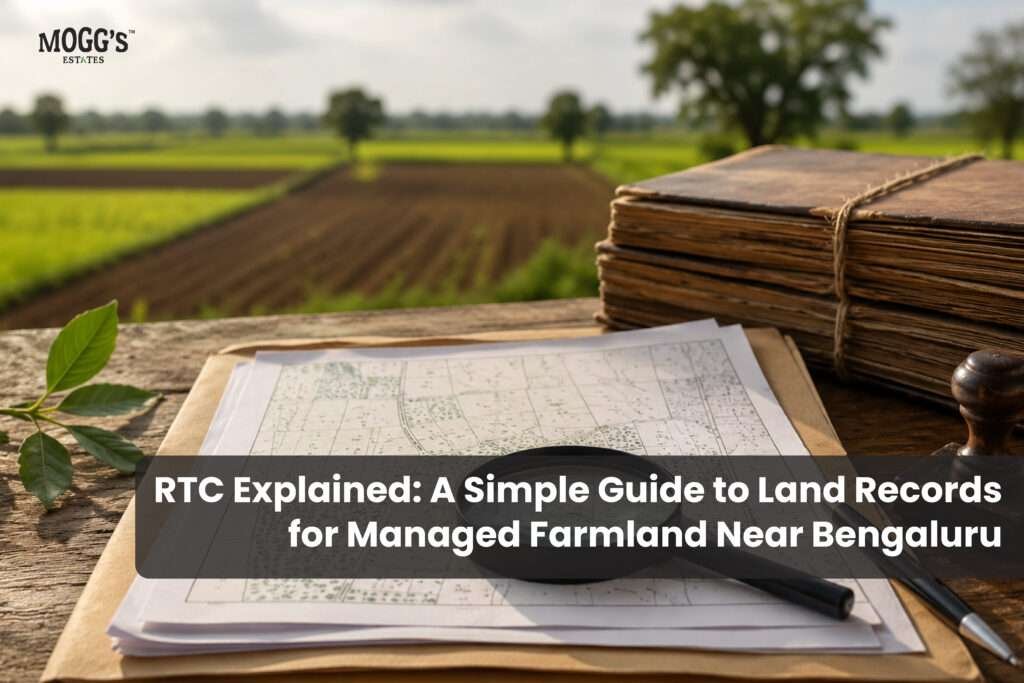
RTC stands for Record of Rights, Tenancy and Crops. In Karnataka, it is an important land record that provides details about agricultural land, its ownership, cultivation, and related information.
For anyone exploring managed farmland near Bengaluru, understanding RTC records can make the buying process easier and more transparent.
In this guide, we explain what an RTC is, what information it contains, why it matters, and what buyers should check before purchasing agricultural land.
What Is an RTC?
An RTC is an official land record maintained by the Karnataka government.
It is commonly known as Pahani. The document contains important information about a parcel of agricultural land.
An RTC can show details such as:
- Landowner information
- Survey number
- Land area
- Type of land
- Details of crops grown
- Tenancy information
- Land revenue details
- Certain rights and liabilities connected to the property
In simple terms, an RTC helps establish the recorded status of agricultural land.
For buyers looking at Bengaluru’s farmland and surrounding areas, checking the RTC is an important part of understanding the property before making a decision.
Why Is RTC Important When Buying Farmland?
Agricultural land is different from many other types of real estate.
A residential property may mainly involve documents such as the sale deed, khata and building approvals. Agricultural land can involve additional records related to cultivation, land classification and revenue records.
That is why an RTC can be particularly useful.
Before purchasing farmland for sale, buyers should understand what the land records say about the property.
An RTC can help buyers verify whether the details they have been given match the official land records.
However, an RTC should not be viewed as the only document required for a property transaction. A proper legal and title verification should consider multiple documents and records.
What Information Does an RTC Contain?
An RTC generally contains several important details.
1. Owner Details
The RTC records the names of persons associated with ownership or rights over the land.
This is one of the first details buyers may want to check.
The names should be compared with other relevant property documents. If there are differences, the issue should be investigated before proceeding.
2. Survey Number
Every agricultural property is associated with a survey number.
The survey number helps identify the specific parcel of land.
When evaluating managed farmland near Bengaluru, buyers should make sure the survey number mentioned in the RTC matches the survey number in other property documents.
3. Land Area
The RTC records the extent of land associated with the survey number.
This is important because the area mentioned in marketing material, agreements and official records should be consistent.
Even a small discrepancy deserves clarification before a purchase.
4. Land Classification
Land records can contain information about the nature and classification of the property.
This is particularly important when buying agricultural land.
Buyers should understand the permitted use of the land and whether their intended development or construction plans are legally allowed.
5. Crop Details
As the name suggests, the RTC can contain information relating to crops grown on the land.
This provides useful agricultural context.
For buyers interested in managed farmland, crop information can also help them understand how the land has been used over time.
6. Tenancy and Other Rights
RTC records may also contain information relating to tenancy and certain rights associated with the land.
These details can be important during due diligence.
If a property has existing rights, claims or tenancy-related entries, buyers should seek professional legal advice before proceeding.
RTC and Managed Farmland Near Bengaluru
The demand for land around Bengaluru has grown as the city continues to expand.
Locations around Kanakapura, Hoskote, Kunigal and Maddur, among other areas, are attracting attention from people looking for agricultural land, weekend destinations and long-term property opportunities.
At the same time, buyers are becoming more interested in managed farmland.
Managed farmland can combine land ownership with professional farm management and maintenance services, depending on the project structure.
However, the presence of management services does not remove the need for proper documentation.
If you are considering managed farmland near Bengaluru, the land records should still be carefully reviewed.
The RTC is one part of that process.
RTC vs Sale Deed: Are They the Same?
No.
An RTC and a sale deed serve different purposes.
A sale deed is a legal document used to transfer ownership of property from one party to another.
An RTC is a revenue record containing information about rights, tenancy and cultivation associated with agricultural land.
Both can be important, but they should not be treated as interchangeable.
For example, an RTC may provide useful information about the recorded landowner and agricultural details. The sale deed provides evidence of the transaction and transfer of rights.
Therefore, buyers should review both along with other relevant documents.
What Should Buyers Check Before Purchasing Farmland?
If you are researching farmland near Bengaluru, avoid making your decision based only on location, price or the appearance of the property.
Instead, take a broader approach.
Check the Survey Number
Confirm that the survey number in the RTC matches the sale deed and other property records.
Verify the Land Extent
Compare the recorded area with the area being offered for purchase.
Check Ownership Details
Make sure the seller’s details correspond with the available ownership documents.
Review Encumbrances
An encumbrance search can help identify registered transactions, mortgages or other recorded interests affecting the property.
Understand Land Use
Agricultural land has specific legal considerations.
If your objective includes building a farmhouse or another structure, verify what is legally permitted before making assumptions.
For those searching for a farmhouse near Bengaluru, this distinction is particularly important.
Seek Legal Verification
Property documentation can be complicated.
A qualified property lawyer can review the title, revenue records and other documents and identify potential concerns.
This is especially valuable when the purchase involves agricultural land.
Can RTC Alone Prove Clear Title?
It is important to understand this distinction.
An RTC is an important revenue record, but it should not be treated as a complete substitute for title verification.
A clear property transaction generally requires examination of several documents and records.
Depending on the property, due diligence may include reviewing:
- Parent or previous title documents
- Sale deeds
- RTC/Pahani
- Mutation records
- Encumbrance Certificate
- Survey records
- Land conversion documents, where applicable
- Applicable approvals and permissions
The exact documents required can vary depending on the property and proposed use.
Therefore, buyers should rely on professional legal advice rather than a single document.
Why RTC Matters for Farmland Investment
For people considering an investment on farmland, documentation is just as important as location and potential returns.
Land may have attractive surroundings, good connectivity and strong lifestyle appeal. However, those factors should come after basic legal and documentary due diligence.
A well-documented property provides greater clarity.
It also helps buyers understand what they are actually purchasing.
This becomes even more important when farmland is being purchased as a long-term asset.
Instead of looking only at today’s price, buyers can consider the property’s documentation, location, accessibility, agricultural potential and overall ownership structure.
Farmland, Nature and Long-Term Ownership
Farmland offers something that conventional urban property often cannot: a direct connection with open land and nature.
For many Bengaluru residents, owning agricultural land is not simply about property.
It can also be about having a place away from the city’s pace.
A well-managed agricultural property can provide opportunities to spend time outdoors, experience farming and reconnect with the environment.
This lifestyle aspect is one reason interest in farmland around Bengaluru continues to grow.
However, the natural appeal of a property should always be balanced with proper legal and financial due diligence.
A Simple RTC Checklist for Buyers
Before purchasing agricultural land, keep this checklist handy:
RTC/Pahani – Check ownership, survey number, area and agricultural details.
Sale Deed – Verify the ownership transfer document.
Mutation Records – Check whether relevant changes in ownership have been recorded.
Encumbrance Certificate – Review registered transactions and encumbrances.
Survey Records – Confirm the property’s boundaries and measurements.
Land Use – Understand the applicable rules for agricultural land and any proposed development.
Legal Opinion – Have the documents reviewed by a qualified property lawyer.
This simple process can help reduce avoidable risks.
Final Thoughts
Understanding an RTC does not need to be complicated.
Think of it as an important window into the recorded history and status of agricultural land.
For anyone exploring Bengaluru’s farmland, knowing how to read and verify an RTC can make property research more informed.
Whether you are considering farmland for sale, managed farmland near Bengaluru, or a property for a nature-focused weekend lifestyle, documentation should always be part of the decision-making process.
A beautiful piece of land may attract your attention. A well-verified piece of land gives you greater confidence.
So, before you make an investment on farmland, look beyond the location and the landscape. Check the records, understand the ownership, verify the land details and seek professional advice where necessary.
Because when it comes to land, what you can see matters — but what the records say matters just as much.